UP Govt Rolls Out Third-Party Audit Scheme To Ease Compliance Burden, MSMEs To Benefit
Updated: Apr 28, 2026 02:13:51pm

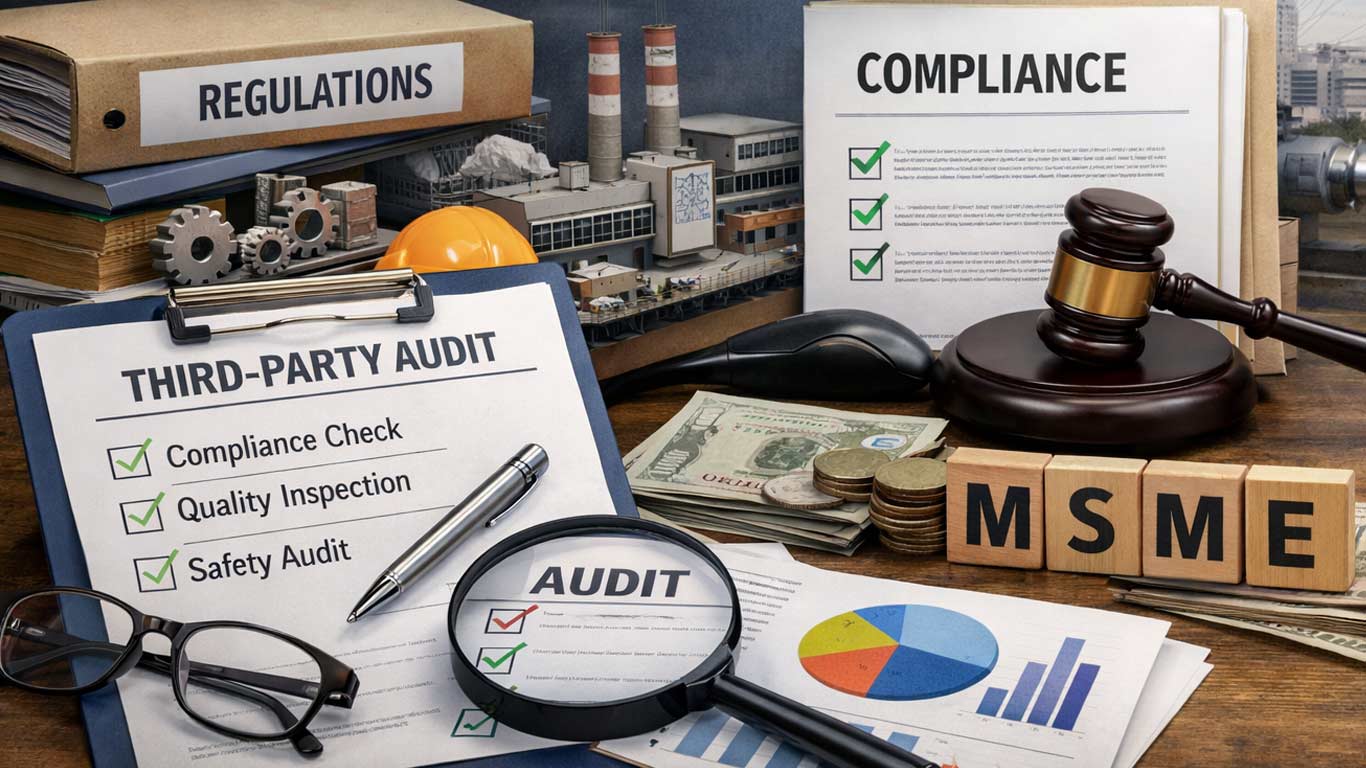
UP Govt Rolls Out Third-Party Audit Scheme To Ease Compliance Burden, MSMEs To Benefit
Lucknow, Apr 28 (KNN) To promote industrial growth and attract investment, the Uttar Pradesh state government has introduced a Third-Party Audit Scheme aimed at making compliance more transparent and less burdensome for businesses.
Under the new system, no immediate punitive action will be taken against industrial establishments. Instead, units will first receive a notice with an opportunity to rectify issues, followed by a second notice if needed.
Prosecution will only begin after approval from a senior authority, reducing undue pressure on industries.
The national federation for Indian MSMEs, Federation of Indian Micro and Small & Medium Enterprises (FISME) has welcomed the scheme, noting that it had long advocated the need for such a reform with both central and state governments.
Transparent, Digital Auditor Selection
The selection of third-party auditors—both labour and technical—has been made fully online to ensure transparency. So far, 13 institutions have been empanelled. Additionally, compliance auditors can now be appointed under a formal government order to assist employers.
Risk-Based Inspection Framework
Industrial units have been classified into three categories, with low-risk units employing 10 to 50 workers subject to self-certification-based inspections once every five years under key labour laws such as the Motor Vehicles Act, Contract Labour Act, Beedi and Cigar Act, Inter-State Migrant Workers Act, and the Factories Act.
Medium-risk units with 50 to 100 workers will undergo third-party audits every three years, while high-risk units, including those with over 100 workers or operating in hazardous industries, will be subject to annual or need-based inspections by the department.
Expected Impact
According to the Labour Department, the scheme will reduce fear of arbitrary inspections, improve ease of doing business, and enhance investor confidence while maintaining regulatory oversight.
Relief for MSMEs
The policy reduces inspection frequency for low-risk micro, small and medium enterprises (MSMEs) by allowing self-certification with inspections only once every five years, thereby lowering compliance costs and disruptions.
It also mandates notices and opportunities for rectification before prosecution, easing regulatory pressure and concerns over arbitrary action.
(KNN Bureau)








 Loading...