ADB Lowers India's FY27 Growth Projection To 6.6%, Flags Energy Price Risks
Updated: Jul 10, 2026 12:52:49pm

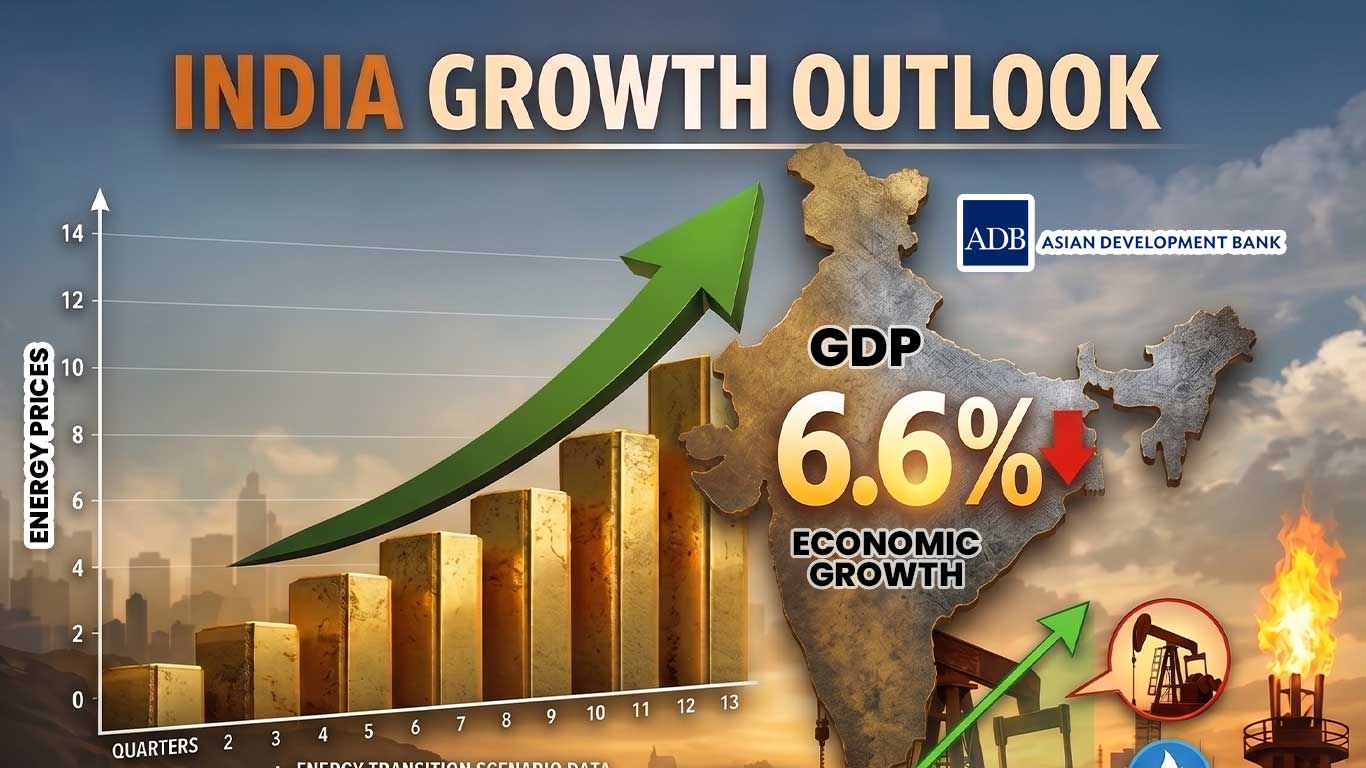
ADB Lowers India's FY27 Growth Projection To 6.6%, Flags Energy Price Risks
New Delhi, Jul 10 (KNN) The Asian Development Bank (ADB) has lowered India's GDP growth forecast for FY27 to 6.6 percent from the 6.9 percent projected in April, citing higher oil and transportation costs that are expected to weigh on consumer spending and private demand.
ADB Cuts India's FY27 Growth Forecast
Despite the downward revision, the ADB's forecast remains above the International Monetary Fund's (IMF) latest estimate of 6.4 percent for the fiscal year.
In its July edition of the Asian Development Outlook, the ADB said elevated energy prices are reducing household purchasing power and dampening private consumption. It also flagged geopolitical tensions and weather-related risks to agriculture as key downside risks to the growth outlook.
Growth Outlook Supported by Reforms and Investment
The multilateral lender, however, expects India to remain among the world's fastest-growing major economies, reported Business Standard.
It said growth will continue to be supported by policy measures to attract foreign investment, fuel tax reductions, targeted credit support, strong services exports and sustained public capital expenditure.
The ADB retained its FY28 growth forecast for India at 7.3 percent, unchanged from its earlier projection and higher than the IMF's estimate of 6.7 percent.
It said improved global conditions and greater export competitiveness arising from trade agreements are expected to support medium-term growth.
Inflation Forecast Raised, Regional Outlook Softens
The bank also revised its FY27 inflation forecast upward to 5.2 percent from 4.5 percent, reflecting higher oil and food prices as well as the impact of a weaker rupee. Its FY28 inflation projection remains unchanged at 4 percent.
For the broader region, the ADB lowered South Asia's growth forecast for 2026 to 6.0 percent from 6.3 percent, citing higher oil prices, rising freight costs and uncertainty surrounding remittance flows.
The lender also reduced its growth forecast for developing Asia and the Pacific to 4.9 percent from 5.1 percent, stating that the prolonged conflict in West Asia has disrupted energy supplies and supply chains, increasing production costs and slowing economic activity.
(KNN Bureau)








 Loading...