GST Council May Ease GST Compliance With Faster Registrations, Refunds And ITC
Updated: Oct 05, 2026 02:42:39pm

GST Council May Ease GST Compliance With Faster Registrations, Refunds And ITC
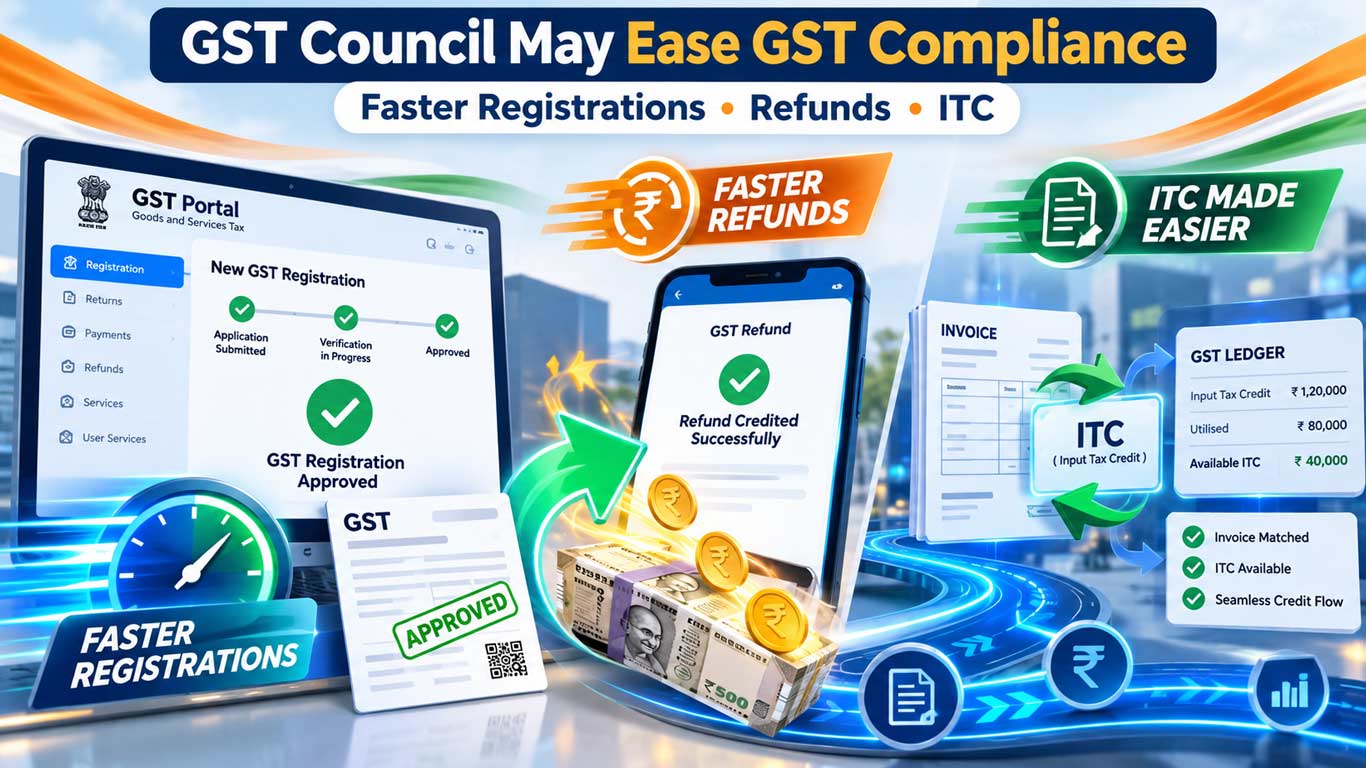
New Delhi, Oct 5 (KNN) The GST Council is likely to consider a broad GST 2.0 reform package aimed at simplifying compliance, speeding up registrations and refunds, easing ITC access and reducing litigation and official discretion.
The reforms, shaped by Centre-state consultations, seek to make GST more technology-driven and reduce the burden on smaller businesses. Rate changes are unlikely, while periodic revisions may shift to an annual cycle from April 1.
A key proposal is deemed acknowledgement for GST registration and refund applications if authorities do not respond within 10 days.
E-way Bill Interception Rules May Be Tightened
The Council may consider safeguards for intercepting goods vehicles under the e-way bill system. Trucks would generally be stopped only in the state of origin or destination, subject to specified conditions, reported Times Of India.
The proposal aims to reduce unnecessary stoppages, delays and potential harassment of drivers, while lowering the risk of damage to sensitive or fragile cargo, including semiconductor shipments.
60% GST Registration Applications Could Be Cleared Within Three Days
The GST registration process could be streamlined, with a proposal to clear 60 per cent of applications within three days.
The changes may simplify applications for businesses operating across multiple states and streamline updates to directors, partners and addresses. Detailed scrutiny may be limited to changes involving the principal place of business, subject to specified conditions.
Suspension Rules May Be Eased for Rectified Defaults
The government is considering removing certain technical grounds for GST registration suspension. Taxpayers suspended for specified compliance defaults, including non-filing of returns, could have their registrations restored if they rectify the default within a month.
The cancellation process is also proposed to be simplified, initially for smaller taxpayers.
GST Refunds on Plant and Machinery Under Consideration
The Council may consider GST refunds on plant and machinery to support capital-intensive projects such as semiconductor manufacturing and refineries by easing cash-flow pressures.
For exporters, refund claims could receive system-driven acknowledgement within 10 days, with deemed approval if authorities do not respond.
This could speed up the release of up to 90 per cent of eligible refunds, supported by integration of RBI, customs and zone-based data to reduce manual processing.
ITC Rules May Shift Focus to Supplier-Side Defaults
The government is considering changes to the ITC framework to protect genuine buyers from supplier-side tax defaults. Under the proposal, buyers could retain eligible ITC, while tax recovery would target suppliers who collect GST but fail to deposit it. The move could benefit MSMEs and reduce GST litigation.
The reforms may also restore ITC benefits for sectors including outdoor catering, health and life insurance and telecom towers. Hotels and gyms operating under management contracts could also claim ITC in specified cases, potentially lowering business costs and the tax burden passed on to customers.
GST Treatment of Cross-Border Services May Be Clarified
The Council may clarify the definition of services to treat suppliers and recipients as the same entity in specified cases, simplifying GST treatment for exporters using branch offices and reducing cross-border service disputes.
Testing, certification and similar services for overseas customers may also qualify as exports based on the customer’s location.
Proposals are also expected for warehousing in free trade zones and e-commerce businesses, including cab and delivery services, with greater flexibility in choosing applicable business models.
GST Notices Below Rs 10,000 May Be Restricted
The reform package aims to reduce low-value GST disputes. Notices may not be issued for amounts below Rs 10,000, which account for nearly one-fifth of cases, with the measure potentially extending to pending appeals and easing compliance for smaller businesses.
Taxpayers who choose to pay disputed amounts instead of contesting them may have the payment treated as a charge rather than a penalty. The proposals also seek to give taxpayers an opportunity to be heard before their electronic ledger is blocked, which can restrict access to available ITC.
Four Key GST Processes Targeted for Greater Automation
The proposed reforms cover four key stages of interaction between businesses and tax authorities, registration, filing and correction of returns, refunds and ITC claims, and tax demands.
If approved, the measures would represent a significant overhaul of GST administration, with the focus shifting towards greater automation, faster processing and reduced discretion rather than changes in tax rates.
(KNN Bureau)








 Loading...