GST, IBC And Digital Push Strengthen India’s Business Environment: CII President
Updated: Jun 11, 2026 01:23:10pm

GST, IBC And Digital Push Strengthen India’s Business Environment: CII President
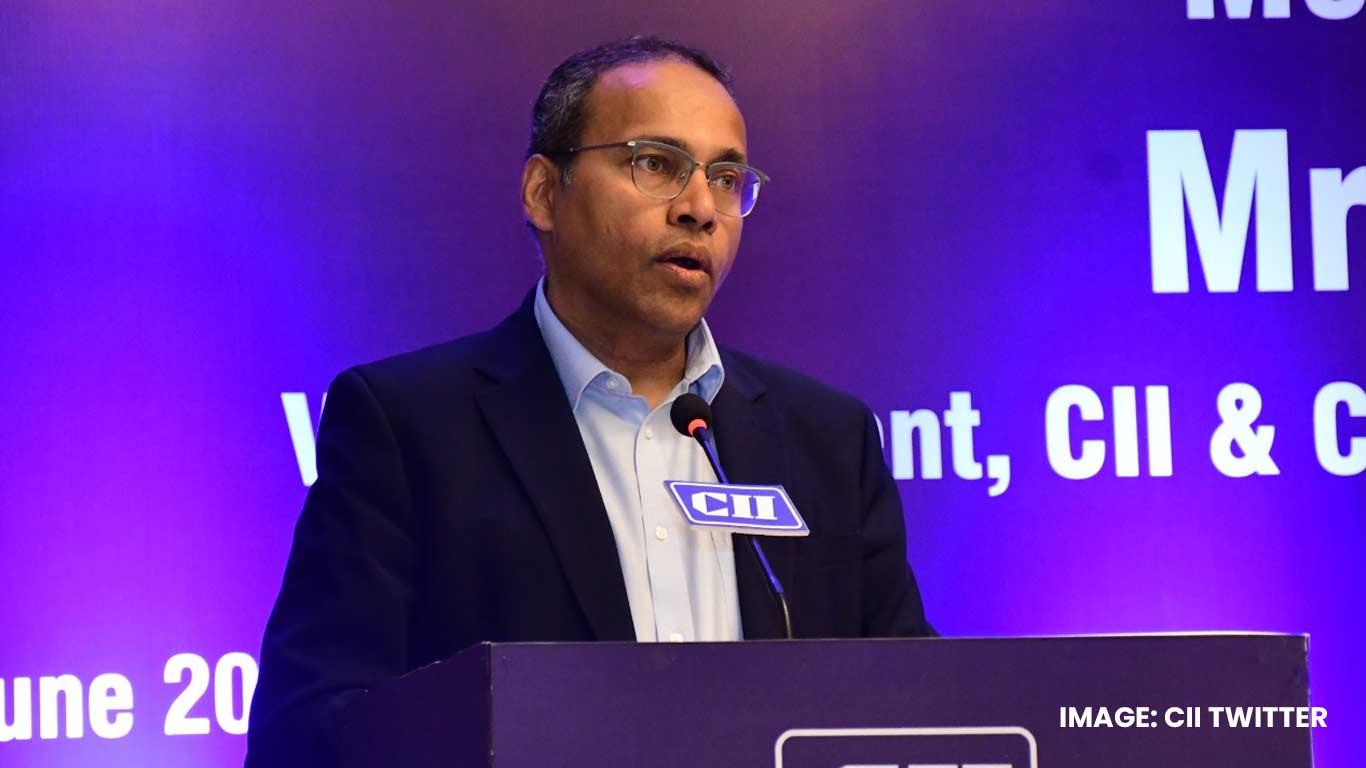
New Delhi, Jun 11 (KNN) India’s economic transformation over the past twelve years has moved from incremental reforms to deep structural change, strengthening competitiveness, formalisation and ease of doing business, said Confederation of Indian Industry (CII) President R Mukundan.
Reform-Driven Growth Strengthens Business Environment
In a statement, Mukundan said India’s policy direction has consistently focused on reducing complexity in regulations, lowering business costs and improving the predictability of the business environment.
He noted that reforms such as the Goods and Services Tax (GST) have unified India’s indirect tax system into a single national market, improving supply chain efficiency and reducing barriers to interstate trade.
Digital compliance systems, he added, have further enhanced transparency and operational efficiency.
IBC Improves Credit Discipline And Capital Efficiency
Highlighting financial sector reforms, Mukundan said the Insolvency and Bankruptcy Code (IBC) has strengthened credit discipline and enabled resolution of nearly Rs 12 lakh crore of stressed assets, improving investor confidence and capital allocation efficiency.
He also pointed to the government’s push for trust-based governance through decriminalisation measures and regulatory simplification, including the Jan Vishwas framework, which decriminalises minor offences across multiple laws and rationalises hundreds of compliance provisions.
The consolidation of labour laws into four Labour Codes has further streamlined regulatory processes.
Mukundan said India’s digital public infrastructure has become a global benchmark, supported by initiatives in digital identity, financial inclusion and mobile connectivity.
Manufacturing Push Attracts Investment And Boosts Output
On the manufacturing front, he said initiatives such as Make in India and the Production Linked Incentive (PLI) scheme have strengthened industrial capacity and global competitiveness.
He noted that between 2014 and 2024, India attracted nearly USD 667 billion in foreign direct investment, while PLI-linked sectors generated production worth over Rs 13 lakh crore.
He added that India’s trade strategy is becoming increasingly outward-oriented, supported by free trade agreements with partners including the UAE, Australia, Oman, EFTA countries and the United Kingdom.
Mukundan also highlighted the growing role of MSMEs, supported by improved credit access, Udyam registration and schemes such as the Emergency Credit Line Guarantee Scheme (ECLGS), which have enhanced their ability to participate in domestic and global value chains.
Green Transition Creates New Industrial Opportunities
On sustainability, he said India’s green transition is creating new opportunities for industry, with the country targeting 500 GW of non-fossil fuel capacity by 2030.
He cited the National Green Hydrogen Mission, which aims to position India as a global hub for green hydrogen, with around 8,000 tonnes per annum of production capacity already commissioned.
He said these reforms collectively lay a strong foundation for India’s long-term growth trajectory as the country moves towards the vision of Viksit Bharat 2047.
(KNN Bureau)






 Loading...


