India Must Replace Subsidy Dependence With Structural Reforms To Withstand Global Crises: Think Tank
Updated: May 28, 2026 01:10:57pm

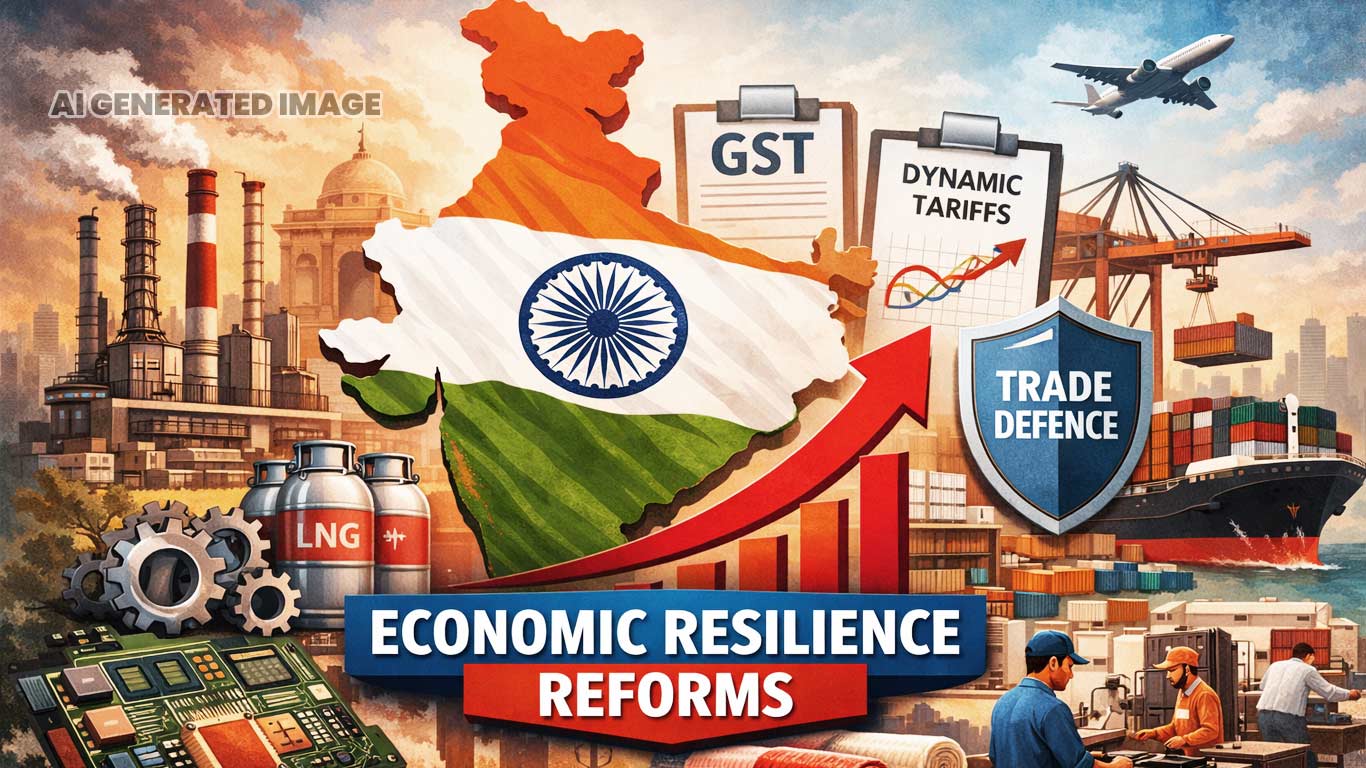
India Must Replace Subsidy Dependence With Structural Reforms To Withstand Global Crises: Think Tank
New Delhi, May 28 (KNN) India should overhaul its approach to managing global economic shocks by prioritising targeted structural reforms over repeated reliance on fiscal subsidies, according to a white paper by Think Change Forum (TCF) on the ongoing West Asia crisis.
The white paper titled ‘Economic Ringfence Amid the West Asia Crisis: A Three-Point Agenda for Export Competitiveness, Import Discipline and Trade Defence’, has argued that rising geopolitical tensions are laying bare deep structural vulnerabilities in India's economy — particularly its dependence on imported energy, industrial feedstocks, and global supply chains, ANI reported.
The paper warned that India's longstanding approach of deploying open-ended subsidies to cushion global shocks is no longer sustainable.
"The traditional fiscal response — relying on open-ended subsidies to buffer these shocks — no longer sustains," it said, calling instead for reforms that improve domestic manufacturing competitiveness and reduce structural exposure to external disruptions.
Fixing the Inverted Duty Structure
In one of its recommendations, the think tank emphasised the need to correct India’s inverted duty structure, wherein import duties on raw materials are frequently higher than those on finished goods.
TCF described this as "not a theoretical anomaly" but a widespread problem across India's manufacturing sector, affecting industries including electronics, chemicals, textiles, and agri-processing.
The paper proposed a 12-month correction window for inverted duties and recommended introducing Dynamic Tariff Calibration — a mechanism that would automatically reduce import tariffs on essential industrial intermediaries when global commodity prices rise sharply beyond a pre-announced trigger.
It argued this would allow Indian manufacturers to remain competitive during periods of price volatility without large-scale fiscal intervention.
Bringing Natural Gas Under GST
The paper also called for the inclusion of natural gas under the Goods and Services Tax (GST) framework, stating, "The exclusion of petroleum products and natural gas from the GST framework is the single largest structural anomaly in India's indirect tax architecture.”
According to TCF, the existing taxation structure imposes hidden operational costs on sectors such as fertilisers, chemicals, food processing, and construction through cascading taxes, ultimately undermining industrial competitiveness. Bringing natural gas under GST, the paper argued, would reduce these embedded costs and improve efficiency across manufacturing.
A Selective Economic Doctrine
The third plank of the paper's agenda is a shift towards what it terms a ‘Selective Economic Doctrine’ — keeping India open to critical technology and strategic imports while actively defending domestic markets against foreign dumping and predatory pricing.
"Openness where global integration feeds essential technology, energy, and raw materials. Intervention via immediate trade-remedy enforcement where foreign dumping distorts domestic markets and destroys capacity," the paper added.
TCF urged India to use the current period of geopolitical uncertainty as a strategic opportunity to strengthen domestic industrial ecosystems and reduce long-term dependence on volatile global supply chains — transitioning, in its words, from a ‘price-taker’ to a ‘resilience-builder’ in global trade.
(KNN Bureau)







 Loading...


