India’s Wholesale Inflation Inching Up To Double-digit, Hits 9.68% In May
Updated: Jun 15, 2026 04:41:11pm

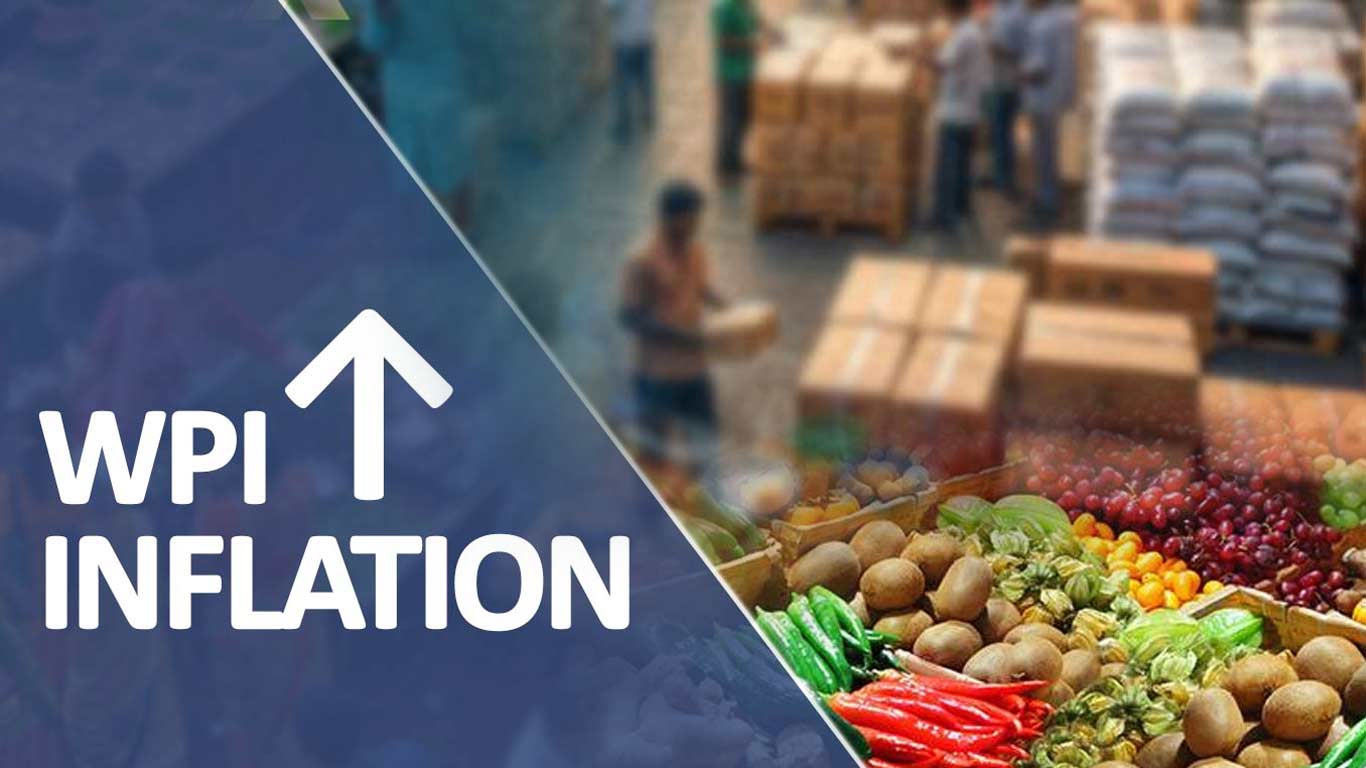
India’s Wholesale Inflation Inching Up To Double-digit, Hits 9.68% In May
New Delhi, Jun 15 (KNN) India's wholesale inflation rose sharply to 9.68 per cent in May 2026 from 8.26 per cent in April, according to provisional Wholesale Price Index (WPI) data released by the Ministry of Commerce and Industry.
The surge was driven primarily by rising energy costs amid the ongoing West Asia crisis.
Energy Prices Lead the Rise
The Fuel and Power group, which accounts for 14.11 per cent of the WPI basket, recorded inflation of 30.33 per cent in May, up from 24.89 per cent in April.
Within the group, crude petroleum and natural gas prices surged 61.51 per cent year-on-year, while mineral oils rose 49.82 per cent — a sharp reversal from deflationary readings as recently as February 2026.
Electricity prices continued to decline at -1.85 per cent and coal prices fell marginally by -2.26 per cent, partially offsetting the broader energy-driven pressure.
Manufacturing and Food Prices Build Up
The manufactured products group, the largest component of the WPI basket at a weight of 63.13 per cent, saw inflation climb to 7.48 per cent from 6.68 per cent in April.
The sharpest pressures came from tobacco products at 13.59 per cent, chemicals and chemical products at 13.40 per cent, electrical equipment at 11.32 per cent and basic metals at 12.30 per cent. Computer, electronic and optical products were the only manufactured sub-group to remain in deflation at -0.19 per cent.
Food prices also showed signs of building pressure. The composite WPI Food Index rose to 4.49 per cent in May from 3.11 per cent in April. Primary articles inflation moved up to 4.99 per cent from 3.78 per cent, with non-food articles rising 9.49 per cent.
New WPI Series Introduced
The May data marks the first release under a revised WPI series with a new base year of 2022-23, replacing the earlier 2011-12 series.
The updated basket has been expanded to 957 items from 697 previously and now includes renewable energy sources such as solar and wind power, as well as nuclear electricity.
The government has also introduced new Producer Price Indices (PPIs) covering output, input and seven services sectors.
The Department for Promotion of Industry and Internal Trade (DPIIT) noted that the WPI will continue to be published alongside PPIs for five years before being phased out, in line with IMF recommendations and global practices.
(KNN Bureau)








 Loading...