Rajya Sabha Passes Indian Ports Bill 2025, Replacing Century-Old Colonial-Era Legislation
Updated: Aug 19, 2025 02:36:21pm

Rajya Sabha Passes Indian Ports Bill 2025, Replacing Century-Old Colonial-Era Legislation
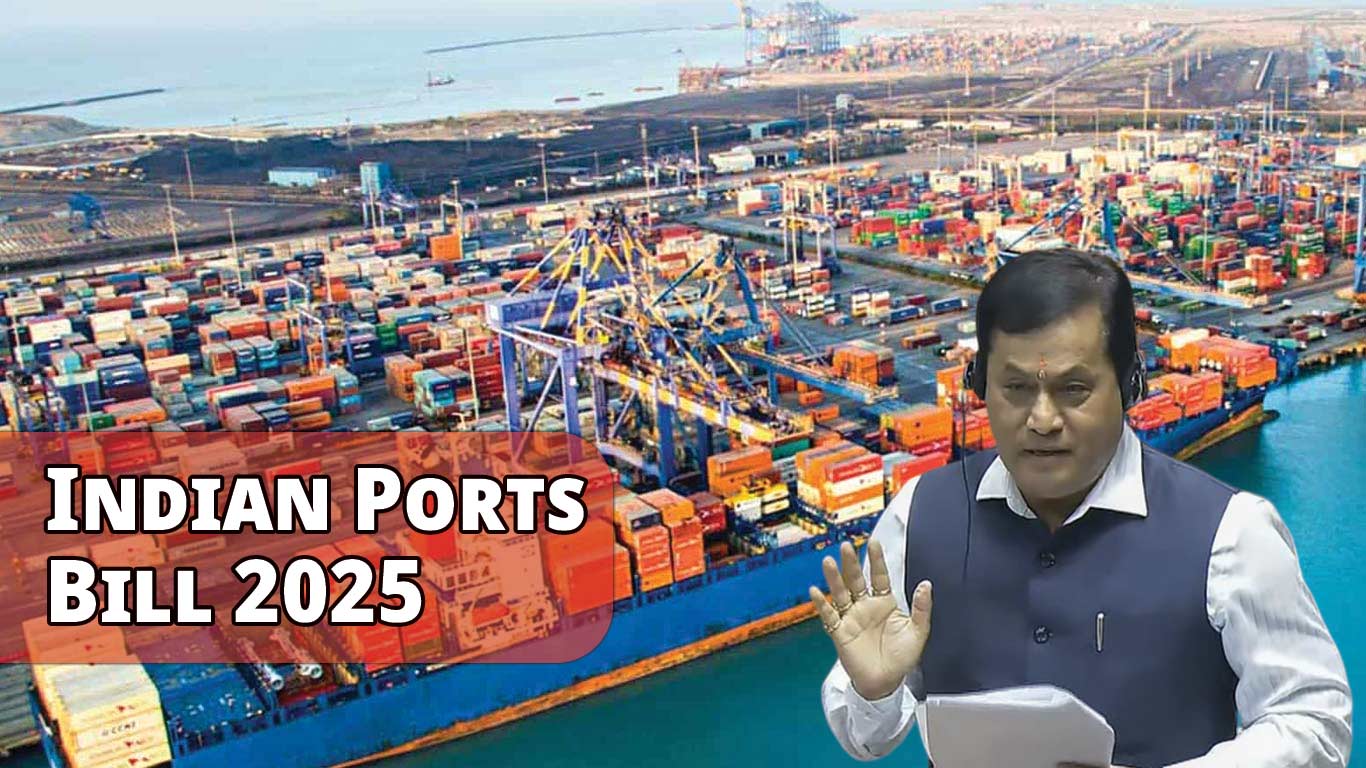
New Delhi, Aug 19 (KNN) The Rajya Sabha has approved the Indian Ports Bill 2025, marking a significant legislative milestone that will replace the Indian Ports Act of 1908 and modernise India's maritime regulatory framework.
The bill, which had previously received approval from the Lok Sabha, now awaits presidential assent before becoming law.
Union Minister for Ports, Shipping and Waterways Sarbananda Sonowal presented the legislation to the upper house, describing it as a transformative reform for India's maritime sector.
The new law aims to enhance governance structures at Indian ports, improve coordination between central and state authorities, and strengthen investor confidence in the country's maritime infrastructure.
India's port sector has experienced substantial growth over the past decade, with cargo handling at major ports reaching a record 855 million tonnes in the financial year 2024-25, compared to 581 million tonnes in 2014-15.
Port capacity has increased by approximately 87 percent during this period, while average ship turnaround times have been reduced to 48 hours, aligning with international standards.
The legislation establishes the Maritime State Development Council as a statutory consultative body to facilitate coordination between federal and state governments.
This council will be responsible for preparing a National Perspective Plan to ensure integrated port development across the country's maritime infrastructure.
Under the new framework, coastal states will be authorised to establish State Maritime Boards, creating standardised governance structures across India's 12 major ports and more than 200 non-major ports.
The bill also introduces Dispute Resolution Committees to provide timely, sector-specific resolution mechanisms for maritime-related conflicts.
Environmental compliance features prominently in the new legislation, mandating adherence to international conventions including MARPOL and Ballast Water Management protocols. Ports will be required to maintain comprehensive emergency preparedness systems and implement digital infrastructure including Maritime Single Window systems and advanced vessel traffic management technologies.
The reform initiative supports the government's broader development objectives, particularly the goal of transforming India into a developed nation by 2047.
Officials indicate that the new law is designed to enhance trade competitiveness, attract private sector investment, generate employment opportunities, and integrate sustainability principles into shipping and port operations.
The passage of the Indian Ports Bill 2025 represents one of the most significant structural reforms in India's maritime sector since independence, positioning the country to strengthen its role as a major maritime power in the Indo-Pacific region.
(KNN Bureau)











 Loading...


