Rupee Should Absorb Energy Shocks, Monetary Tightening Only If Inflation Rises: IMF
Updated: Oct 30, 2026 02:46:42pm

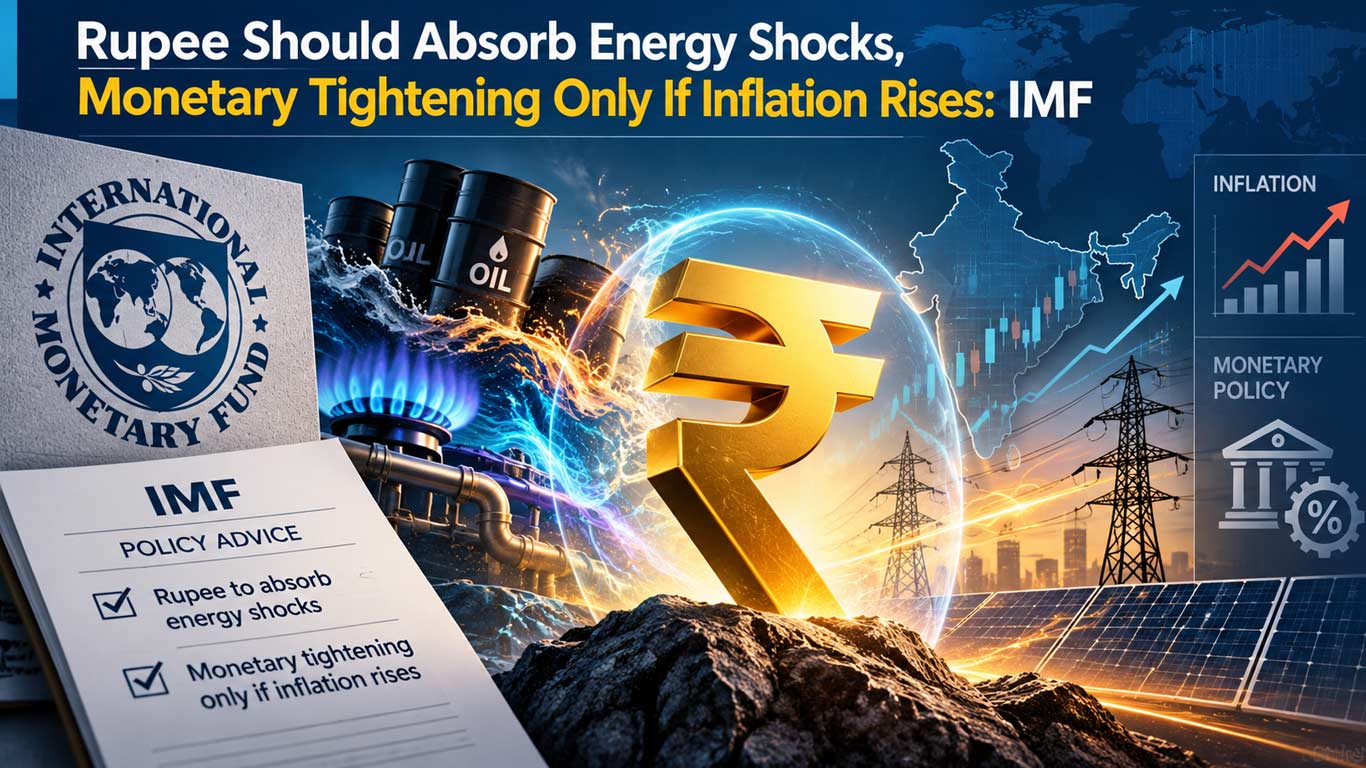
Rupee Should Absorb Energy Shocks, Monetary Tightening Only If Inflation Rises: IMF
New Delhi, Oct 30 (KNN) The International Monetary Fund (IMF) on Thursday said exchange rate flexibility should remain the preferred policy response to help India adjust to energy shocks, amid reports of large-scale Reserve Bank of India (RBI) intervention to support the rupee.
“Our view is that the rupee should be the first line of defence in the face of these shocks. So, allowing the exchange rate to move freely to reflect the impact of these shocks is important to help the Indian economy adjust to the shocks,” IMF Communications Director Julie Kozack told reporters.
Kozack said monetary policy tightening could be considered to preserve price stability if rupee depreciation began feeding into inflation, reported PTI.
Rupee should absorb energy shocks: IMF
According to reports, the RBI has used around USD 90 billion since June this year to support the rupee. The reported intervention included sales in the spot market and currency swaps to absorb surplus liquidity.
Kozack said that if significant rupee depreciation resulted in broad-based price increases, the IMF would recommend considering monetary tightening to contain inflation.
“If significant rupee depreciation leads to broad-based increases in inflation, then our advice would be that monetary policy tightening could be considered to preserve price stability, that is, if depreciation starts to feed into inflation,” she said.
Intervention appropriate during disorderly market conditions
Kozack said foreign exchange intervention could be appropriate when market conditions become disorderly, in line with the IMF's Integrated Policy Framework.
“But in the case of India, our view is that exchange rate flexibility remains the preferable policy response,” she said.
(KNN Bureau)








 Loading...