Union Budget 2027-28: Industry Bodies Push for Advanced Manufacturing, MSME Support, and R&D Incentives
Updated: Nov 18, 2026 04:09:02pm

Union Budget 2027-28: Industry Bodies Push for Advanced Manufacturing, MSME Support, and R&D Incentives
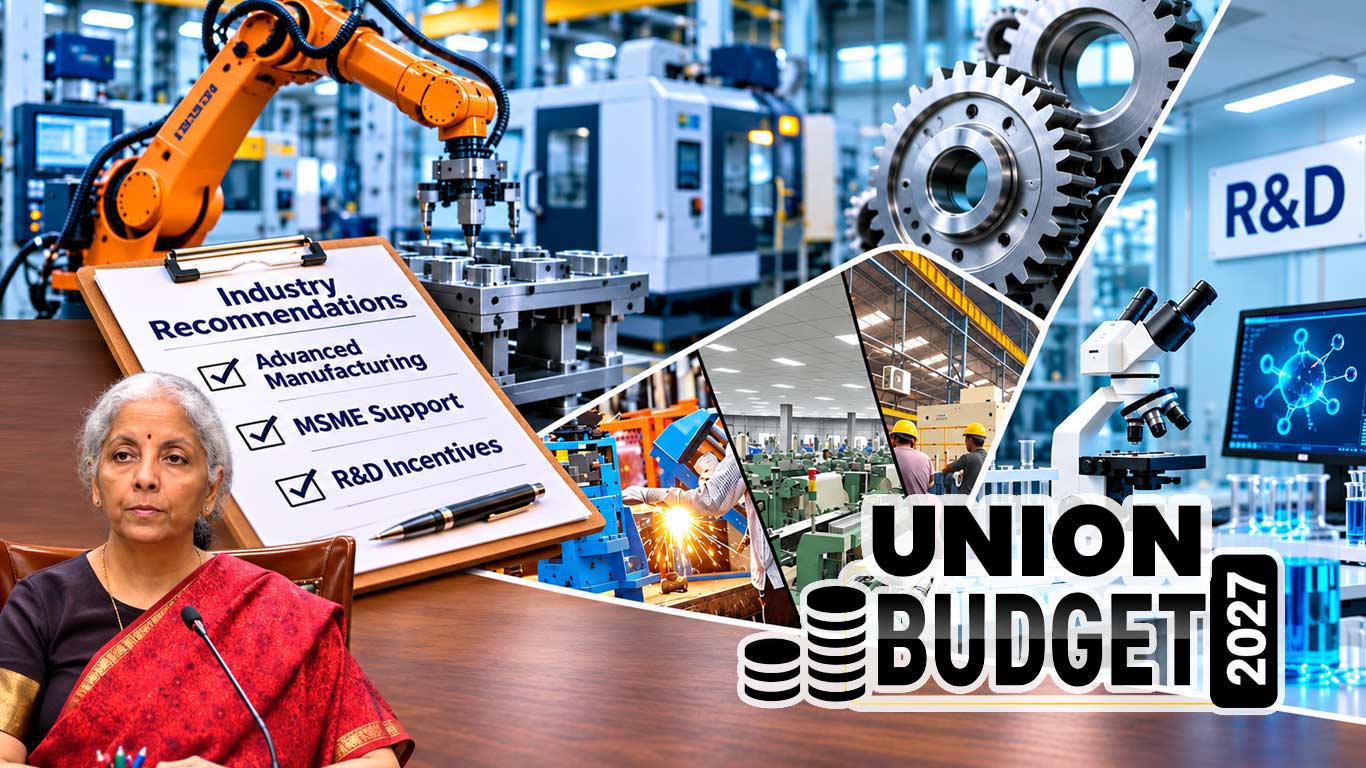
New Delhi, Nov 18 (KNN) Industry bodies have urged the government to prioritise advanced manufacturing, research and development (R&D), MSME competitiveness and energy security in the Union Budget 2027-28. The recommendations were made during pre-Budget consultations with Finance Minister Nirmala Sitharaman on Tuesday.
Industry representatives also called for better access to long-term finance, expansion of domestic manufacturing capacity and regulatory reforms to encourage investment, strengthen self-reliance and improve India's global competitiveness as mentioned by The Financial Express.
Support for MSMEs and Startups
In a separate meeting, MSME and startup representatives sought greater financial support for businesses adopting green energy. They also proposed penalties for industries exceeding carbon emission limits and better funding for green startups.
Stakeholders called for extending the existing three-year tax holiday for startups and providing additional financial support to DeepTech companies.
Manufacturing Incentives and Tax Benefits
The Federation of Indian Chambers of Commerce and Industry (FICCI) proposed a Development Finance Framework for Manufacturing to provide dedicated capital support and credit enhancement for affordable, long-term loans.
It also recommended a Strategic Manufacturing Capacity Development Programme and a dedicated production-linked incentive (PLI) scheme for Advanced Chemistry Cell (ACC) components.
The Confederation of Indian Industry (CII) sought targeted tax incentives for additional capital investment, R&D expenditure and employment generation. Its proposals include accelerated depreciation on new plant and machinery, higher weighted deductions for incremental R&D spending and time-bound corporate tax benefits for companies creating additional employment, verified through EPFO records.
The Associated Chambers of Commerce and Industry of India (ASSOCHAM) recommended a dedicated PLI scheme for robotics, automation equipment, sensors, precision components and related technologies. It also called for the reintroduction of weighted deductions for R&D expenditure.
Energy Security and Import Dependence
Industry bodies stressed the need to strengthen energy security, support electric vehicle manufacturing and reduce import dependence. FICCI identified 10 foundational sectors with significant import dependence, together accounting for nearly 36 percent of India's non-petroleum imports. It also identified 36 priority products and segments for domestic capacity creation or expansion.
ASSOCHAM proposed allowing electric vehicles to be registered and financed without batteries. It also sought a 3 percent interest subvention for MSME fleet owners and loan tenures of seven to eight years, in line with battery warranties.
Tax Reforms and Fiscal Priorities
On taxation, CII called for binding timelines to resolve nearly five lakh pending first appeals, faster release of legitimate tax refunds and the establishment of a Board of Tax Certainty to provide time-bound rulings on complex transactions.
CII also recommended a fiscal deficit target of around 4 percent of GDP in FY28, alongside continued debt reduction. It called for maintaining central government capital expenditure at no less than 3 percent of GDP to sustain economic growth.
(KNN Bureau)







 Loading...