UPI Dominates Digital Payments In Urban India, But Digital Credit Adoption Lags: Report
Updated: Oct 14, 2026 04:37:13pm

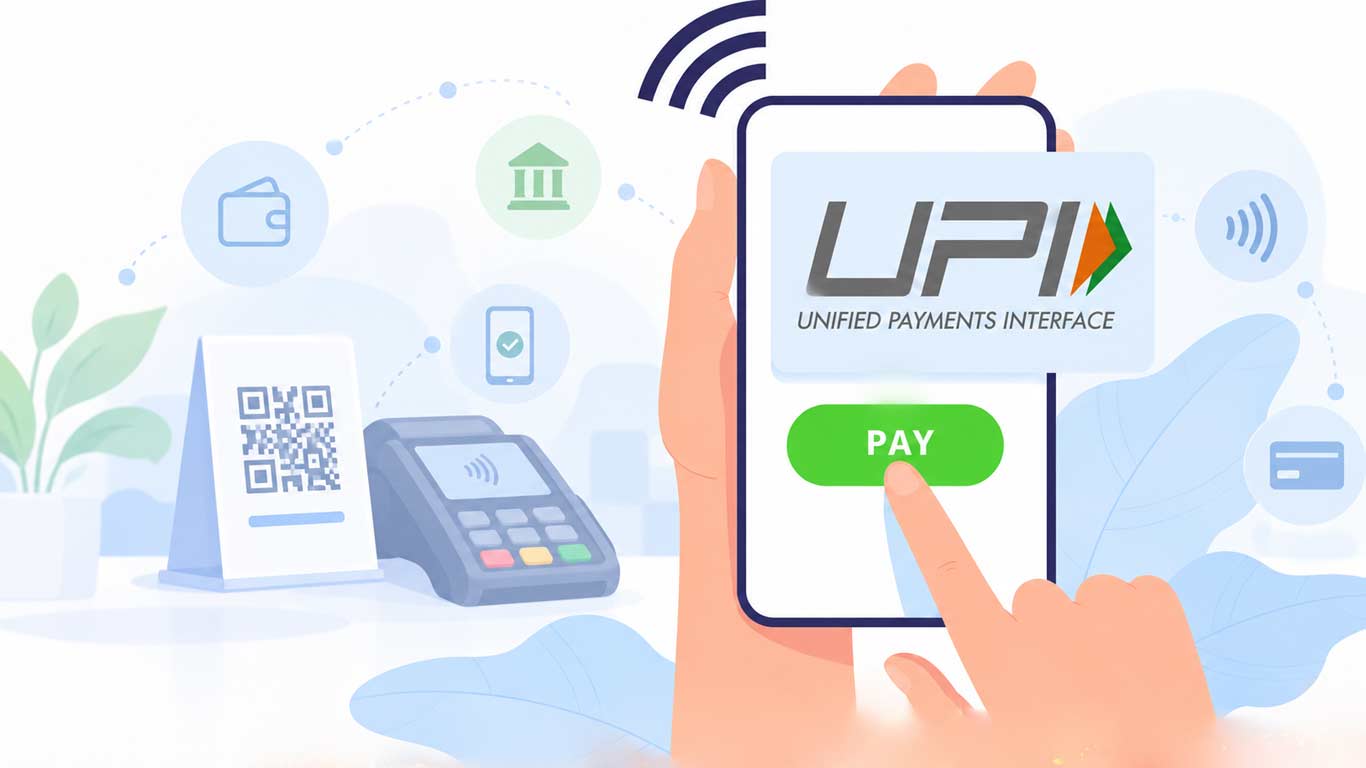
UPI Dominates Digital Payments In Urban India, But Digital Credit Adoption Lags: Report
New Delhi, Oct 14 (KNN) UPI dominates digital payments across five of six spending categories among urban Indians, but trust in digital credit remains limited, with only 31 per cent of consumers using it despite 88 per cent awareness, according to the How Urban India Pays Report 2026 by Amazon Pay and Pahlé India Foundation.
Based on a survey of 5,149 consumers and 1,054 merchants across 100 cities in 20 states, the report found that 75 per cent of respondents had used at least one financial product through their payment app.
The report introduced the Digital Credit Inclusion Index 2026, placing India in the ‘Emerging and Served’ category with a score of 55.85 out of 100. India scored 61.24 for access, 57.17 for adoption and 49.16 for impact, highlighting the gap between wider access and meaningful financial benefits.
Trust Gap Limits Digital Credit Adoption
Consumers rated payment apps 4.11 out of five for security and 3.98 for payments, but confidence fell to 3.10 when the same platforms offered credit, reported The Business Standard.
However, 51.5 per cent said they would borrow through payment apps if fraud protection were guaranteed, while 16.7 per cent would still avoid it.
Vikas Bansal, CEO, Amazon Pay India, said consumers were increasingly using buy now, pay later (BNPL) and equated monthly instalment (EMI) options to manage everyday expenses and spread costs. He added that 75 per cent of Amazon Pay customers were from Tier-2 and Tier-3 cities.
Rajiv Kumar, chairman, Pahlé India Foundation, said extending trust in digital payments to borrowing, savings and investments would be crucial to the next phase of digital finance.
The report identified transparent disclosures, stronger cybersecurity and credit assessment models suited to informal incomes as key measures to improve digital financial inclusion.
UPI Dominates Everyday Spending
UPI was the most-used payment method for e-commerce, used by 71 per cent of respondents. Other major spending categories included dining and travel (54 per cent), fuel and transport (53 per cent), medical and pharmacy purchases (53 per cent), and groceries (49 per cent).
The survey found that 52 per cent of consumers preferred a single app for payments, investments, insurance and credit, while 33 per cent were open to using one if it offered features comparable to dedicated platforms.
Festive Spending And Regional Trends
Festive spending increased significantly, with 77 per cent of respondents spending at least 50 per cent more than usual. Around 46 per cent spent 1.5–2 times their regular budgets, while 6 per cent spent more than three times as much.
Tier-2 cities led digital credit adoption across surveyed products, with buy now, pay later (BNPL) usage at 60 per cent and credit applications at 41 per cent.
Tier-2 cities scored 58.64 on the Digital Credit Inclusion Index, ahead of Tier-3 cities at 55.77 and Tier-1 cities at 53.10. Coimbatore recorded the highest use of installment financing for electronics and appliances at 70 per cent, followed by Kochi at 45 per cent.
Informal Earners Face Credit Access Challenges
The report found that gig workers and other informal earners actively use digital finance but continue to face credit access challenges.
Around 67.5 per cent of gig workers regularly used UPI Lite, while 23 per cent said they would first turn to a digital loan app during a cash crunch, 3.4 times the national average. Another 43 per cent said digital credit had improved their financial independence.
Informal earners, including gig workers, daily-wage workers, homemakers, students and unemployed people, scored around 11 points below salaried and business respondents on the Digital Credit Inclusion Index, highlighting the difficulty of assessing irregular incomes through conventional lending models.
Merchants Report Digital Payment Benefits
Among surveyed merchants, 80.6 per cent were open to digital payments, while 79.5 per cent reported improved efficiency or sales after adoption.
Tier-3 merchants showed the highest acceptance, with 66.4 per cent extremely open to digital payments, compared with 64.3 per cent in metros and Tier-1 cities and 51.7 per cent in Tier-2 cities. Among hesitant merchants, 72.1 per cent cited settlement delays as their primary concern.
(KNN Bureau)







 Loading...