Weak Monsoon And Global Volatility Raise Concerns Over Growth And Inflation
Updated: Jun 20, 2026 02:09:38pm

Weak Monsoon And Global Volatility Raise Concerns Over Growth And Inflation
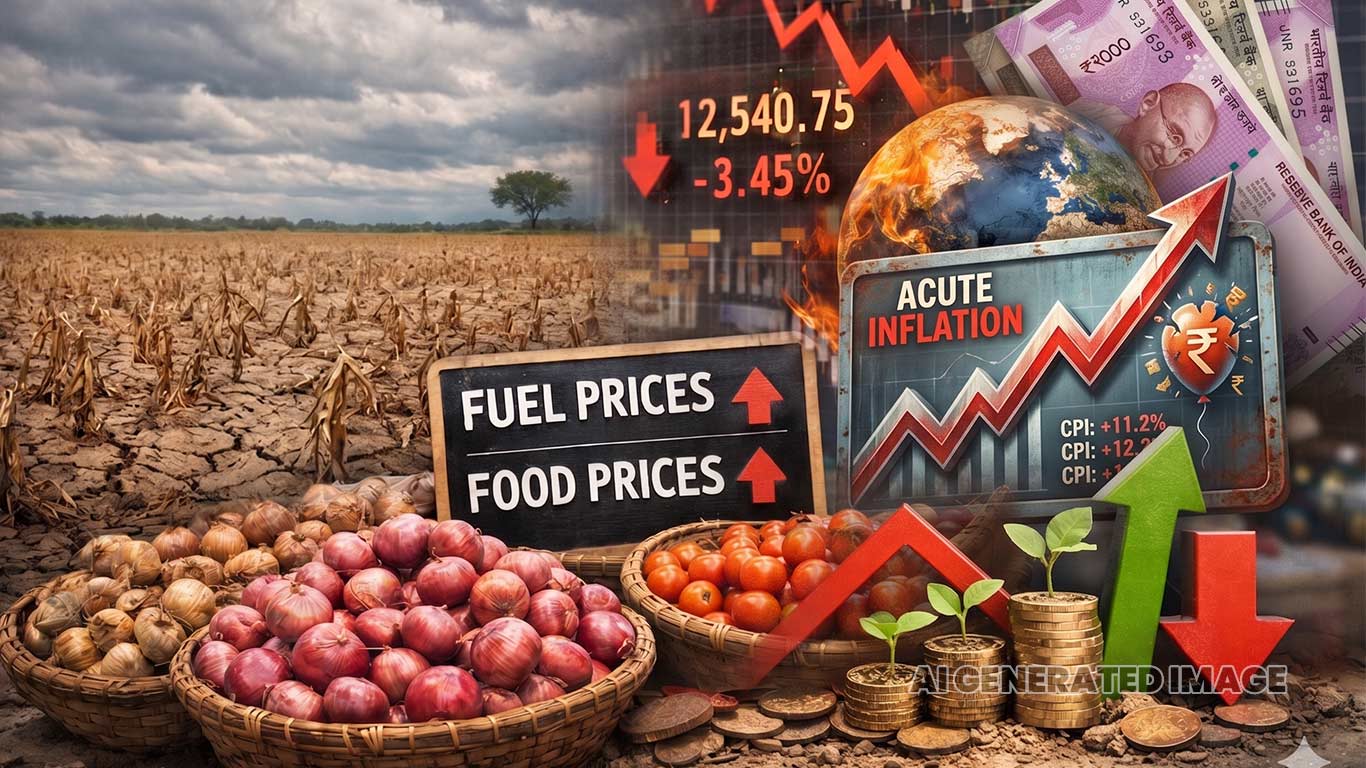
New Delhi, Jun 20 (KNN) India may be heading into a dual economic challenge driven by external commodity volatility linked to West Asia tensions and emerging domestic weather risks, as an uneven southwest monsoon raises concerns over rural demand and inflation.
Uneven Monsoon Raises Weather-Driven Economic Concerns
According to IMD data, the southwest monsoon has stalled over southern Maharashtra, leading to a 41 percent rainfall deficit between June 4 and June 18, reported Business Standard.
The country received 42.6 mm of rainfall against the normal 72.2 mm. IMD has also projected monsoon rainfall at 90 percent of the Long Period Average (LPA) for 2026, which, if realised, would be India’s first below-normal monsoon in three years and the weakest outlook since 2015.
Risk Of Dual Shock From Global And Domestic Factors
Economists have warned that a weak monsoon, potentially linked to El Niño, could pose a broader macroeconomic risk by impacting growth, inflation, consumption and monetary policy amid global commodity volatility.
Although agriculture contributes about 14–16 percent of GDP, it remains crucial for employment, rural incomes and inflation, with nearly 45 percent of the workforce still dependent on it, keeping the economy sensitive to rainfall.
Agriculture Still Central To Rural Demand And Inflation
Experts noted that agriculture typically contract during El Niño years, potentially cutting GDP growth by about 0.9 percentage points through weaker farm output and rural demand.
While higher irrigation coverage (around 55 percent) and a rising share of livestock and fisheries (nearly 45 percent of agricultural GVA) have improved resilience, economists warn that food inflation, rural incomes and consumption remain highly sensitive to monsoon performance due to food’s high CPI weight.
A weak monsoon could hit rain-fed crops like pulses, oilseeds and coarse cereals, with spillovers into rural demand and MSME activity, quickly affecting traders, input suppliers and other linked non-farm sectors.
Inflation Pressures May Intensify
Inflation is also likely to rise in a weak rainfall scenario, with vegetables, pulses and oilseeds facing supply constraints. Higher input costs and weaker rural demand could add to overall price pressures.
There are additional risks from elevated fertiliser prices due to geopolitical tensions and recent increases in MSP.
Buffer Stocks And Irrigation Offer Some Cushion
Economists say India is better placed than in past El Niño episodes, supported by higher reservoir levels, stronger supply management and FCI buffer stocks of about 122 million tonnes of wheat and rice.
However, vulnerability remains uneven, with Odisha, Chhattisgarh, Madhya Pradesh and Uttar Pradesh more exposed than states such as Gujarat, Telangana, Haryana and Rajasthan.
Going forward, IMD forecasts, July–August rainfall patterns, kharif sowing and rural demand indicators will be closely watched, as weather shocks continue to pose risks to inflation, consumption, policy decisions and the FY27 growth outlook.
(KNN Bureau)







 Loading...