No business can survive without active support of IT: SMBs
Updated: Jul 21, 2016 10:02:52am

No business can survive without active support of IT: SMBs
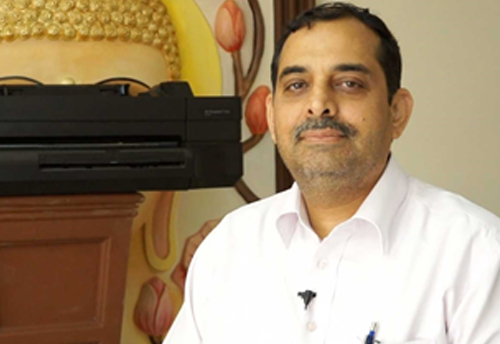
In this age of global competition, SMBs in manufacturing industry have got to be cost-competitive to stay in business. That is the reason they are increasingly using IT to rationalise their costs. However, choosing tech is not that simple. It should meet specific requirements of your business and should not become obsolete before you get your return on investment. Manmohan Gaind, Managing Director, Mahesh Prefab Private Ltd, also General Secretary to Manesar Industries Welfare Association, who has a long experience in running hi-tech manufacturing operations, shares his insights into how technology should be chosen.
Excerpts:
Q: What was the biggest challenge that you faced in your business?
A: We manufacture a product called GFRC (Glass Fibre Reinforce Concrete), which changes the whole façade of the building. In India, we used to make buildings which were either stone clad, or plastered or aluminium clad that were all not very suitable. So, this product, made of cement and reinforced with glass fibre, is fantastic for the buildings and the weather here.
You just put it and forget about the maintenance. It is for life time. And that’s what I do.
Q: Efficiency is considered one of the key aspects of any business. What have you done to atomise the entire business with the help of IT?
A: In manufacturing, fixed costs need to be kept in control otherwise you will be out of business. Our challenge is to make our manufacturing leaner. And in all that, a lot of innovations, a lot of technological help, a lot of support from your people are required. Every day is a new challenge in manufacturing.
Q: As we all know, the role of IT is evolving in factory and business. So, how being interconnected with the help of printers, computers and tablets has helped your business evolve?
A: Look today, no business can survive without active support of IT. Our first computer was an HP computer way back in year 1985. Since then, I think I have purchased hundreds of PCs. And now, as I see, over the years, the PCs will evolve to something different from what they are today.
But yes, today without automation, without computerisation of your whole process, you cannot survive. Even the smallest of businesses have got to have the right communications, have the information flowing from one to other end freely so that people can access it, and minimum mistakes happen, and process becomes efficient.
Q: As we know older employees have difficulty in adapting to new technology. How do you deal with this constraint?
A: Any mix of business has old and new employees. The best part about new employees is that they are completely conversant with all the new gadgets that are there, the different programmes that we use frequently. But yes, the older generation needs to be trained and to adapt to it. And I have seen one of my employees, who started as a site engineer with me, and today, he has mastered AutoCAD drawings. So, we have to encourage old employees to adapt to newer and newer technologies.
Q: Do you have fears of data leakages and, if so, how do you overcome them?
A: Information is most important in business. But leakages of your information could be devastating for your business. So, you have to follow a balanced path. You cannot live without using information and without providing access to information everywhere. But you need to have enough safety in place to prevent unauthorised persons from accessing the data.
Q: Have you used ERP and ERM software in your business? If so, how has been your experience?
A: These are the modern tools you have to work with. They manage different processes of business and ensure there is a smooth flow of things from one section to the other. They also ensure that the process that you are following is tracked on a real time basis. So all those are very important tools and I do not think any small business can survive without them. But the challenge is that all these software come at a high price. And for SMEs, it adds to the cost. But if they can make best use of it, the cost should not be a concern.
Q: How should SMBs choose technology?
A: I don’t think this is a challenge. You should always buy the best and that should be your golden rule because if anything which is going down and you stick to that, you are taking yourself behind. But yes, the latest technologies come at a high price. You have to see what level of advancement you need. If you are looking at the real high tech and your market is not mature enough for that, then you should not go for it. You should instead go for something which is more practical.
But if you are buying for manufacturing, say, you should see that it should at least last you for 10 years. Though in today’s term, that is a long time. But as a conventional manufacturer, I would like to narrate my experience. We just got into a new activity of making a modular wall of cement; we bought a technology from a world leader Elimetic Technologies of Finland. So, the whole driver for us to invest a million euros in this process was that we were getting a technology that would revolutionise the whole building process in the country.
Today, to make a customer accept it, is a big challenge for me. I have to do a lot of convincing. But I’m sure, once 3-4 projects are done, my products will be rolling in the market. So, that is the technology. You have to foresee the future to accept the technology.


 Loading...