BIS Certification Burden On Japanese Firms Signals Need For Wider QCO Review: GTRI
Updated: Aug 31, 2026 03:01:06pm

BIS Certification Burden On Japanese Firms Signals Need For Wider QCO Review: GTRI
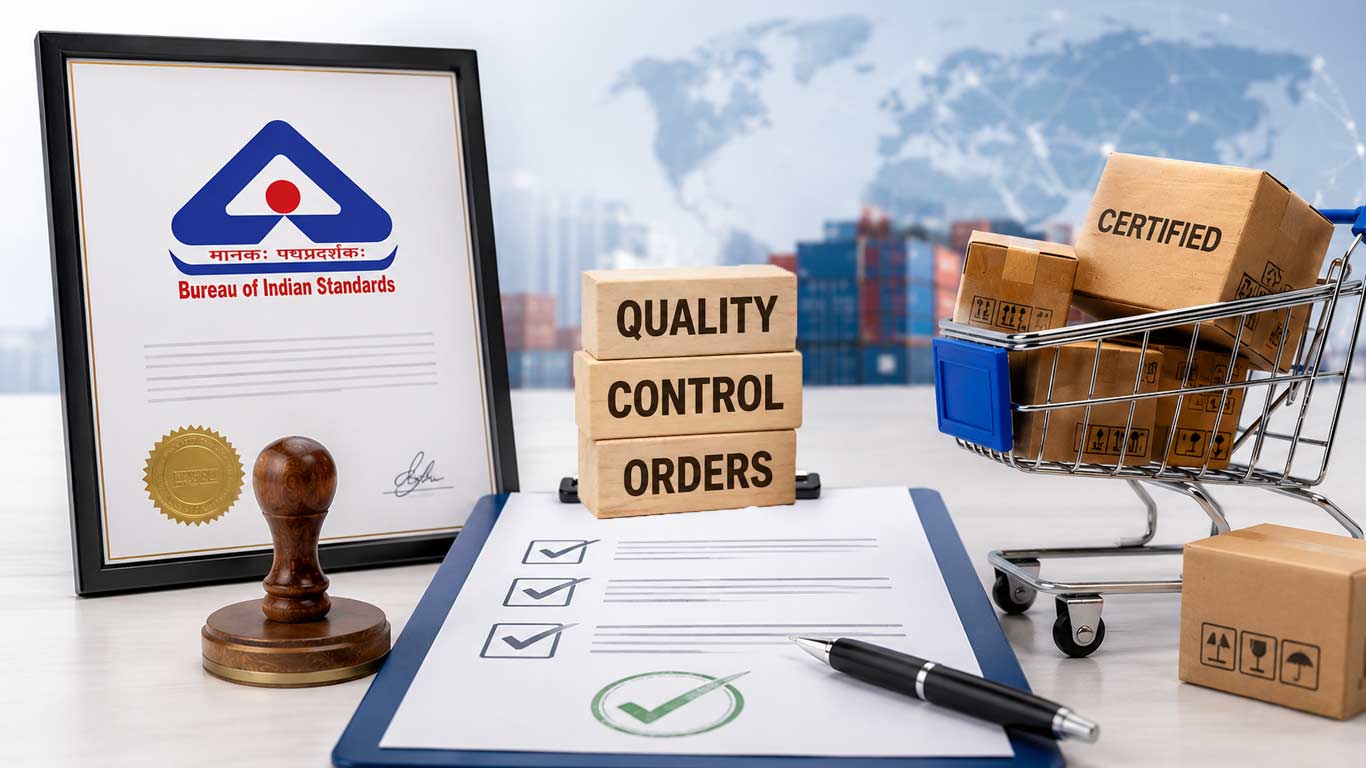
New Delhi, Aug 31 (KNN) Growing concerns among Japanese companies over India’s mandatory Bureau of Indian Standards (BIS) certification requirements point to the need for a broader review of the country’s Quality Control Order (QCO) framework, the Global Trade Research Initiative (GTRI) said in a report.
GTRI Founder Ajay Srivastava, welcomed Commerce and Industry Minister Piyush Goyal’s proposal to ease or waive mandatory certification requirements for high-technology industries, but said sector-specific exemptions would not resolve broader problems with the existing system, ET reported.
Certification Burden Weighs on Manufacturers
Goyal, speaking in Tokyo on August 25, noted that India would develop a framework to ease or waive mandatory quality certification requirements for high-tech industries. The proposal followed concerns raised by Japanese companies over the compliance burden associated with QCOs.
A Japan External Trade Organization (JETRO) survey for fiscal 2025 found that 71.9 per cent of Japanese manufacturers operating in India said BIS certification had affected, or was expected to affect, their operations. The share rose to 92.3 per cent among general-machinery manufacturers and 76.8 per cent among transportation-equipment manufacturers.
Japanese companies identified lengthy approval processes and cumbersome procedures as major concerns, with nearly three-quarters reporting delays or complex requirements, GTRI said in its report. Others cited uncertainty over certification requirements and high compliance costs.
The BIS process may involve product testing, extensive documentation and inspections of overseas factories, with foreign manufacturers bearing these costs even when their products meet Japanese or international standards, the report added.
Supply Chains Also Affected
The certification requirements have also affected supply chains, according to GTRI. Some Japanese companies have changed suppliers because overseas manufacturers were unwilling to obtain India-specific certification for relatively small orders, while others struggled to find Indian suppliers meeting their technical specifications.
The JETRO survey found that 42.7 per cent of affected businesses had experienced suspended sales or delayed deliveries. Companies also reported difficulties obtaining No Objection Certificates for imports that had previously been cleared without full certification.
GTRI emphasised that the compliance burden could be particularly challenging for MSMEs and argued that easing requirements for high-tech industries alone would not resolve broader problems with the QCO framework.
GTRI Seeks Risk-Based Certification
The think tank has called for a shift towards a risk-based regulatory system, under which mandatory prior testing, registration and factory inspections would be reserved for products posing significant risks to health, safety, national security or the environment.
For lower-risk products, GTRI suggested allowing manufacturers to declare conformity with applicable standards, with regulators relying more heavily on market surveillance and penalties for violations.
The report cited the European Union’s conformity-based approach, including the use of the CE marking system, as a possible reference for reform.
Concerns Over Double Certification
GTRI also called for an end to what it described as ‘double certification’, particularly in sectors such as steel where requirements can apply to both inputs and finished products.
The report further argued that products outside the scope of a QCO should be cleared automatically rather than being required to appear on a separate exemption list. It said additional clearances for such products can increase import costs and cause delays.
The think tank also questioned the need for mandatory certification for relatively low-risk consumer products such as footwear and furniture, arguing that excessive compliance requirements could increase costs for businesses and consumers.
Trade Implications
GTRI warned that extensive country-specific certification requirements could eventually create challenges for Indian exporters if trading partners adopt similar measures. Indian manufacturers could face additional testing, licensing, renewal and inspection costs in overseas markets even when their products comply with international standards.
The think tank has therefore called for a comprehensive review of the QCO framework to ensure that quality regulations protect consumers without becoming de facto trade or licensing barriers.
It said wider reforms would be important to reduce compliance costs, support MSMEs and ensure that quality-control measures do not discourage manufacturing investment that India is seeking to attract.
(KNN Bureau)











 Loading...