Global Energy Transition Loses Momentum; India Performs Strongly: WEF Report
Updated: Jun 19, 2026 05:30:39pm

Global Energy Transition Loses Momentum; India Performs Strongly: WEF Report
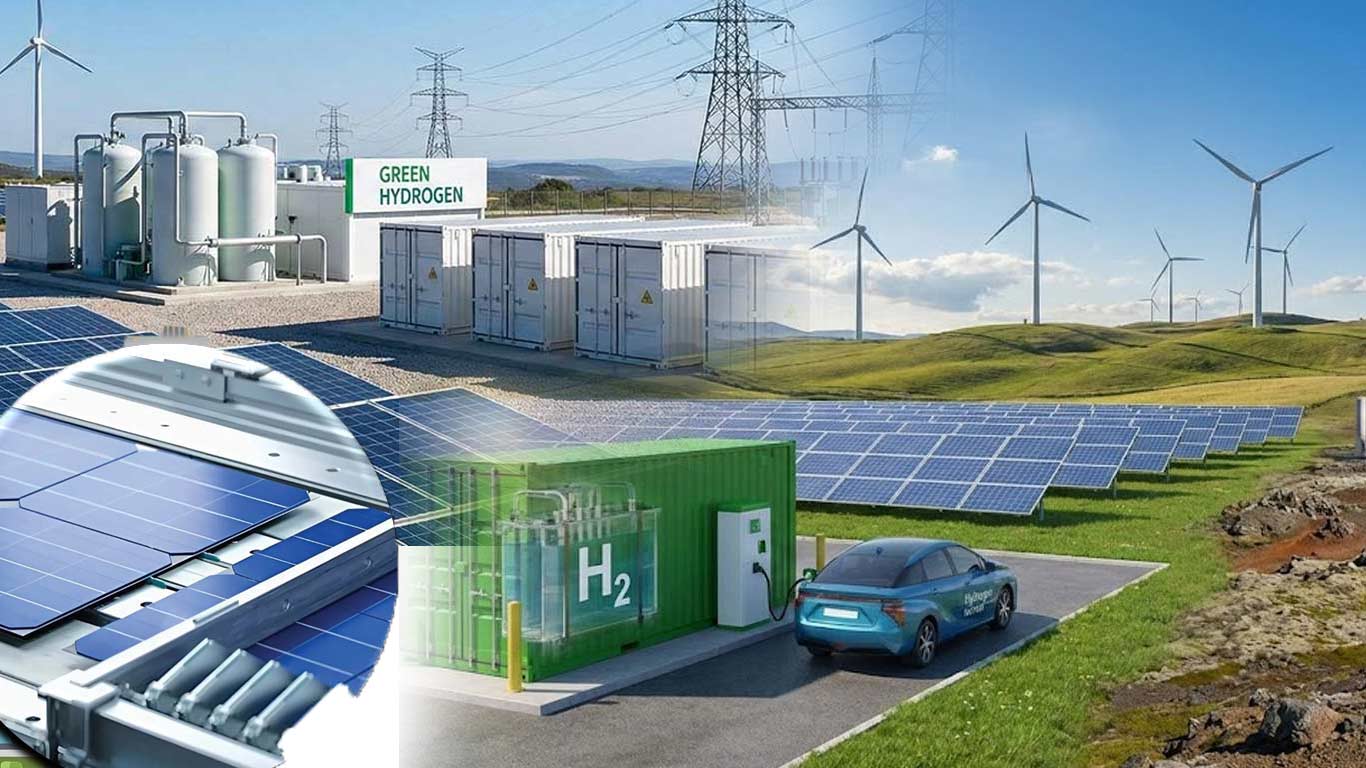
New Delhi, Jun 19 (KNN) The World Economic Forum’s (WEF) latest Energy Transition Index (ETI) report has found that the global efforts to shift towards cleaner and sustainable energy has lost momentum.
As per the report, India is though among the stronger performers in transition readiness among major economies, driven by investments in energy security and affordability.
Benchmarking 120 countries, the ETI showed scores were largely flat in 2026, rising just 0.03 per cent, even as global energy investment hit a record USD 3.3 trillion, including USD 2.3 trillion in clean energy.
The report attributed this to disruptions in the Strait of Hormuz in 2026, geopolitical fragmentation, rising demand and concentrated investment flows, which together have widened the gap between leading and lagging economies.
Security the Only Dimension to Decline
System performance scores rose on average by 0.43 per cent, driven by improvements in equity and sustainability. Equity improved 1.6 per cent on the back of easing affordability pressures, while sustainability advanced 0.6 per cent with steady progress in clean energy share and energy efficiency improving across 92 economies.
Energy security, however, was the only system performance dimension to deteriorate, falling 0.9 per cent, driven by weaker import diversification and grid reliability.
The report noted that only 24 per cent of countries made simultaneous progress across all three system performance dimensions in 2026, down from 28 per cent the previous year.
Transition Readiness Falls for First Time in a Decade
Transition readiness declined 0.76 per cent overall, with four of five readiness dimensions weakening.
Finance and investment recorded the sharpest fall, down 1.8 per cent, with the report noting that 75 per cent of clean energy investment continues to flow to a handful of markets, while countries expected to drive 80 per cent of future demand growth face financing costs two to three times higher than advanced economies.
Innovation declined 1.1 per cent, with diffusion of environment-related technologies falling for a tenth consecutive year, while regulation and political commitment weakened 1.2 per cent amid rising policy instability in advanced economies.
Education and human capital was the only readiness dimension to improve, rising 2.0 per cent, though insufficient to offset declines elsewhere. The report also flagged more than 2,500 gigawatts of renewable energy projects currently stalled in grid connection queues worldwide.
Regional Performance
Advanced economies dominated the rankings, accounting for 14 of the top 20 spots, with Sweden leading for a third consecutive year alongside other Nordic nations. Among major economies, China ranked 14th, the United States placed 19th amid policy uncertainty, and India stood at 70th.
Three Priorities for the Path Ahead
The report outlined three priorities for sustaining and accelerating the energy transition: embedding security, affordability and resilience as core design principles rather than crisis responses; unblocking delivery by accelerating grid expansion and streamlining permitting; and restoring investability through stable policy and better-targeted capital flows toward emerging economies expected to drive future demand growth.
(KNN Bureau)










 Loading...