India Allows Nepal To Import Up To 654 MW Electricity Through Power Exchanges
Updated: Sep 14, 2026 01:01:47pm

India Allows Nepal To Import Up To 654 MW Electricity Through Power Exchanges
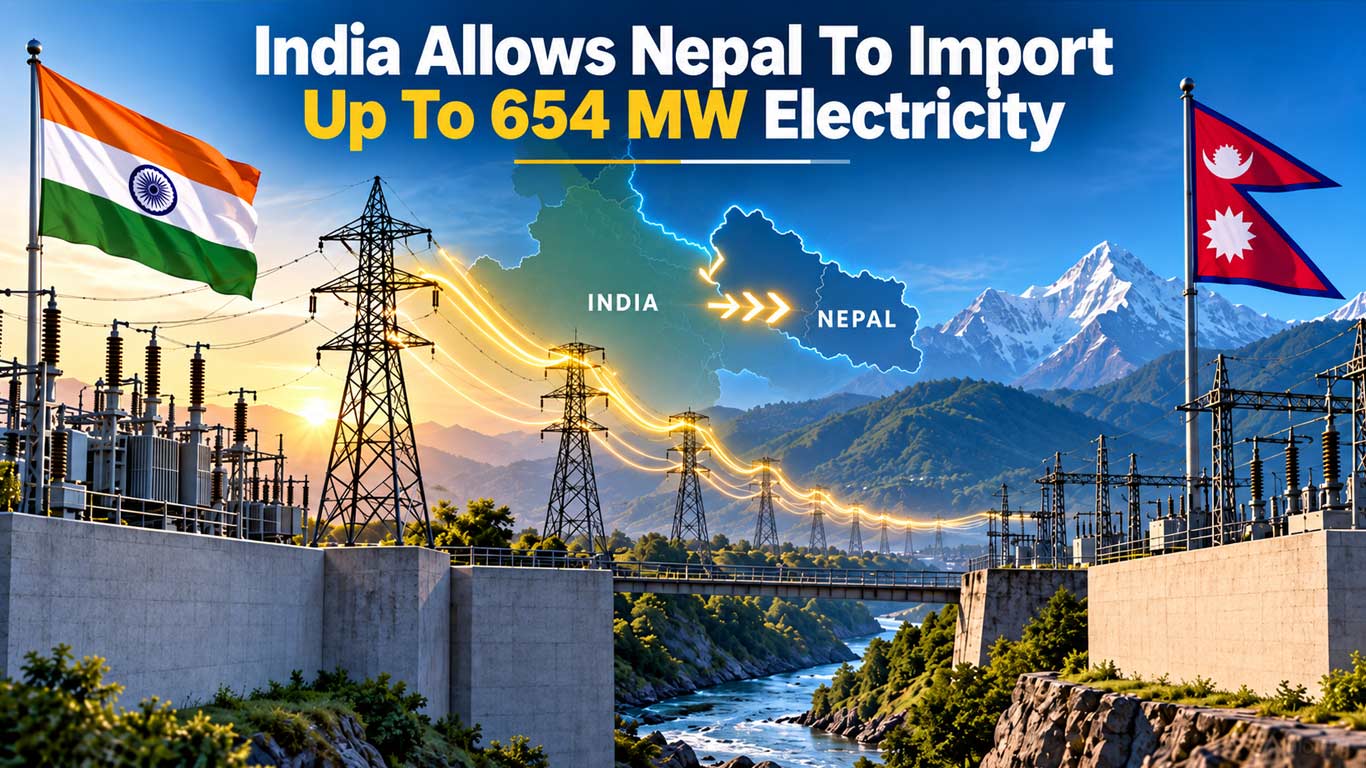
New Delhi, Sep 14 (KNN) India has approved Nepal’s request to begin importing up to around 654 MW of electricity through Indian power exchanges from September 2026, a month earlier than the country’s usual winter import schedule.
The approval follows severe flash floods on August 26 that damaged more than 12 operational hydropower plants in Nepal and reduced its domestic generation capacity by around 550 MW, increasing the risk of power shortages.
Power To Be Procured Through Indian Exchanges
The Nepal Electricity Authority (NEA) will procure the additional electricity during non-solar hours through the Day-Ahead Market (DAM) and Real-Time Market (RTM) segments of Indian power exchanges.
The arrangement is aimed at meeting Nepal’s immediate evening and early-morning power requirements following the disruption to its hydropower generation.
The additional imports will primarily use existing cross-border transmission infrastructure, including the 400 kV Dhalkebar-Muzaffarpur transmission link.
Flood Damage Cuts Nepal’s Power Availability
The August floods, triggered by severe weather in the Trishuli and Lhende Khola river basins, significantly disrupted Nepal’s hydropower infrastructure.
The damage has reduced domestic generation by around 550 MW, while Nepal’s power exports to India have reportedly fallen by nearly 400 MW from peak levels of around 1,000 MW.
Nepal typically exports surplus hydropower to India during the monsoon season and begins seeking import approvals around October as river flows decline during the dry winter months. The latest approval brings forward that schedule to September to address the immediate generation shortfall.
India Says Grid Has Adequate Reserves
The Ministry of Power has indicated that India’s national grid has sufficient reserve capacity to accommodate the additional allocation without affecting domestic grid stability.
The approval comes amid elevated Indian peak electricity demand, particularly during non-solar hours, when demand remains high despite strong daytime solar generation.
The arrangement underscores the growing role of cross-border electricity trade in managing short-term supply disruptions and strengthening regional energy resilience.
(KNN Bureau)










 Loading...