India-EU FTA Allows 100,000 European ICE, Hybrid Cars At Concessional Duties In Year 1
Updated: Sep 14, 2026 02:02:24pm

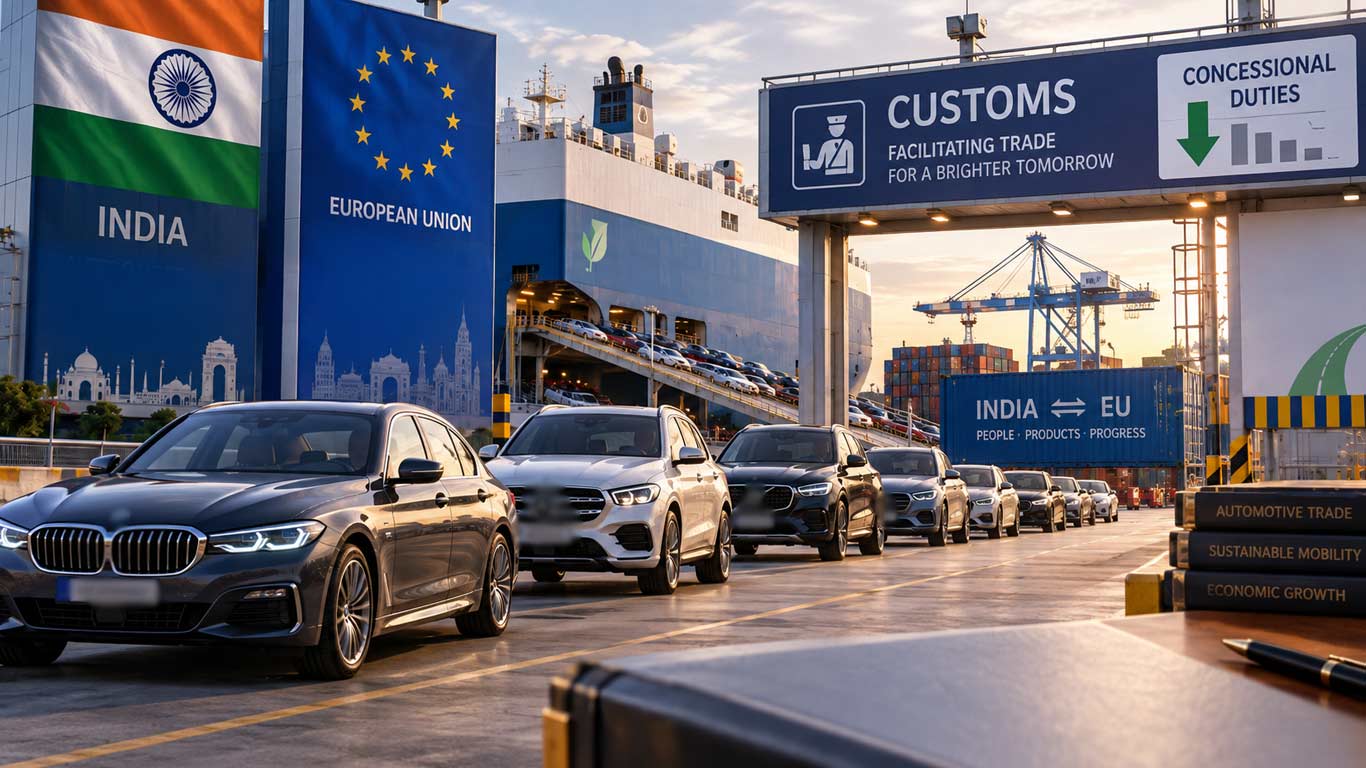
India-EU FTA Allows 100,000 European ICE, Hybrid Cars At Concessional Duties In Year 1
New Delhi, Sep 14 (KNN) European automakers will get concessional access for up to 100,000 ICE and hybrid cars in the first year of the India-EU FTA, nearly six times the 17,191 vehicles imported from the bloc in 2025.
The agreement could intensify competition for domestic automakers while creating greater export opportunities for Indian manufacturers such as Maruti Suzuki, Tata Motors and Mahindra and Mahindra (M&M).
The concessional quota for European ICE and non-plug-in hybrid cars will rise to 160,000 units by Year 10, with the in-quota duty falling to 10 percent by the fifth year, reported Business Standard.
Reciprocal Access For Indian Cars
Under the agreement, the EU will receive a quota for Indian-origin ICE and hybrid cars priced up to EUR 50,000, starting at 250,000 units in the first year and rising to 400,000 by Year 10, with tariffs reaching zero by the fifth year. Imports beyond the quota will remain allowed at declining out-of-quota duties.
India has excluded ICE and hybrid cars below EUR 15,000 from concessions, protecting the mass market. European EVs will receive no concessions for four years, with benefits starting in Year 5 for models priced at EUR 20,000 or above.
European manufacturers assembling vehicles in India will also get lower-duty access, with a CKD quota of 75,000 units for the first five years, declining to 50,000 by Year 10.
Luxury Carmakers Eye Higher Imported Allocations
The agreement could improve access to imported European luxury models without significantly changing localisation strategies. Mercedes-Benz India, which derives over 90 percent of sales from locally manufactured models, does not expect immediate price cuts but sees scope to increase imports of top-end models.
BMW Group India said the FTA would make its CBU business more viable and expand flexibility for imported high-performance and niche models. It added that localisation would remain the preferred strategy where volumes justify domestic production, with the two approaches complementing each other.
Wider Export Opportunity For Indian Automakers
The reciprocal concessions could open a substantial new European export market for Indian vehicle manufacturers. Maruti Suzuki, which exported a record 447,774 vehicles in FY26, is well positioned to benefit from its established European presence, including exports of over 25,000 e VITARA electric SUVs to 44 countries.
Tata Motors and M&M could also expand India-made vehicle exports, while the four-year delay in concessional access for European EVs gives domestic manufacturers time to scale.
The agreement could further strengthen India as an export base for global automakers, subject to rules-of-origin requirements. GTRI said the concessions were significant relative to existing trade flows and could gradually expand European access to India as out-of-quota tariffs decline.
(KNN Bureau)











 Loading...