India-EU FTA Includes CBAM Safeguards, Work Plan For SMEs: Govt
Updated: Jul 31, 2026 04:12:56pm

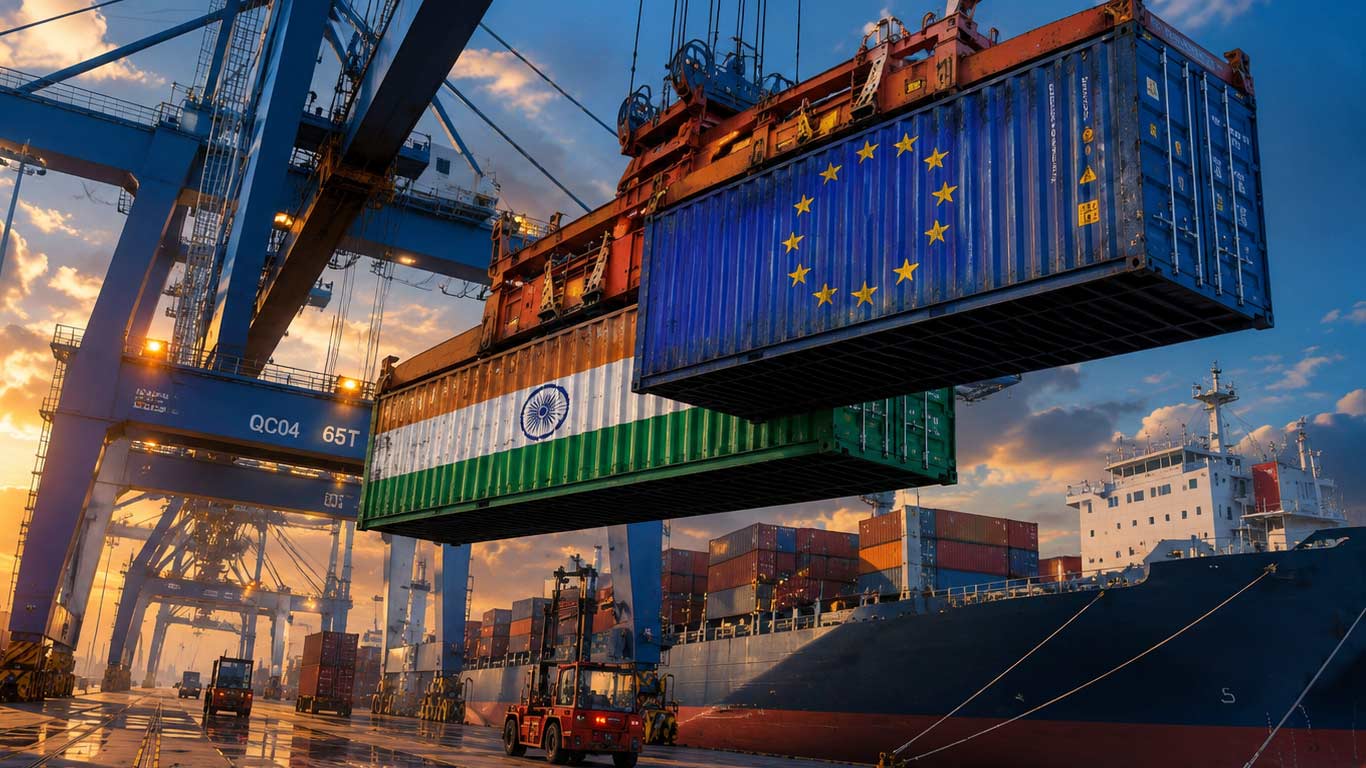
India-EU FTA Includes CBAM Safeguards, Work Plan For SMEs: Govt
New Delhi, Jul 31 (KNN) The proposed India-European Union Free Trade Agreement (FTA) has incorporated provisions to address Carbon Border Adjustment Mechanism (CBAM) concerns after extensive negotiations, including a comprehensive work plan to mitigate its impact, especially on small and medium enterprises (SMEs), according to the Commerce Ministry.
Department of Commerce Additional Secretary Darpan Jain said, “CBAM took a lot of negotiating capital…In the text, there is a separate annexure on dealing with CBAM, and there are certain pillars on that.”
“The first pillar is the case of flexibility in the future that will be available to India. So, there is an obligation in that,” he added.
Safeguards and Flexibility for Indian Exporters
The agreement includes provisions to ensure that any future flexibility in the European Union’s carbon tax regime is extended to India. It also allows for consideration of carbon pricing mechanisms developed domestically.
“So, there are separate provisions, and we also have a provision in which we can engage with EU authorities on taking into account the carbon price, which is paid in India. As you would know, India also is developing its own carbon pricing mechanism. So, how to offset what is paid in India from what is paid in Europe, so even that is part of it,” Jain noted, as quoted by PTI.
Concerns of SMEs Addressed
CBAM compliance has been a major concern for SMEs, especially around verification processes, embedded carbon calculations, and EU recognition of verifiers.
He said, “There is a comprehensive work plan under annexure on CBAM in FTA and we are working on it and I am very hopeful that SMEs will not face any problem.”
FTA Legal Review Completed
Jain highlighted that the legal review of the trade agreement has been completed, and the text will now be placed before the European Council for approval.
Once cleared, the agreement is expected to be signed later this year and subsequently sent to the European Parliament for ratification. It is likely to come into force in 2027.
(KNN Bureau)






 Loading...


