India Flags Inconsistencies In US Forced Labour Tariff Proposal At USTR Hearing
Updated: Jul 09, 2026 03:44:52pm

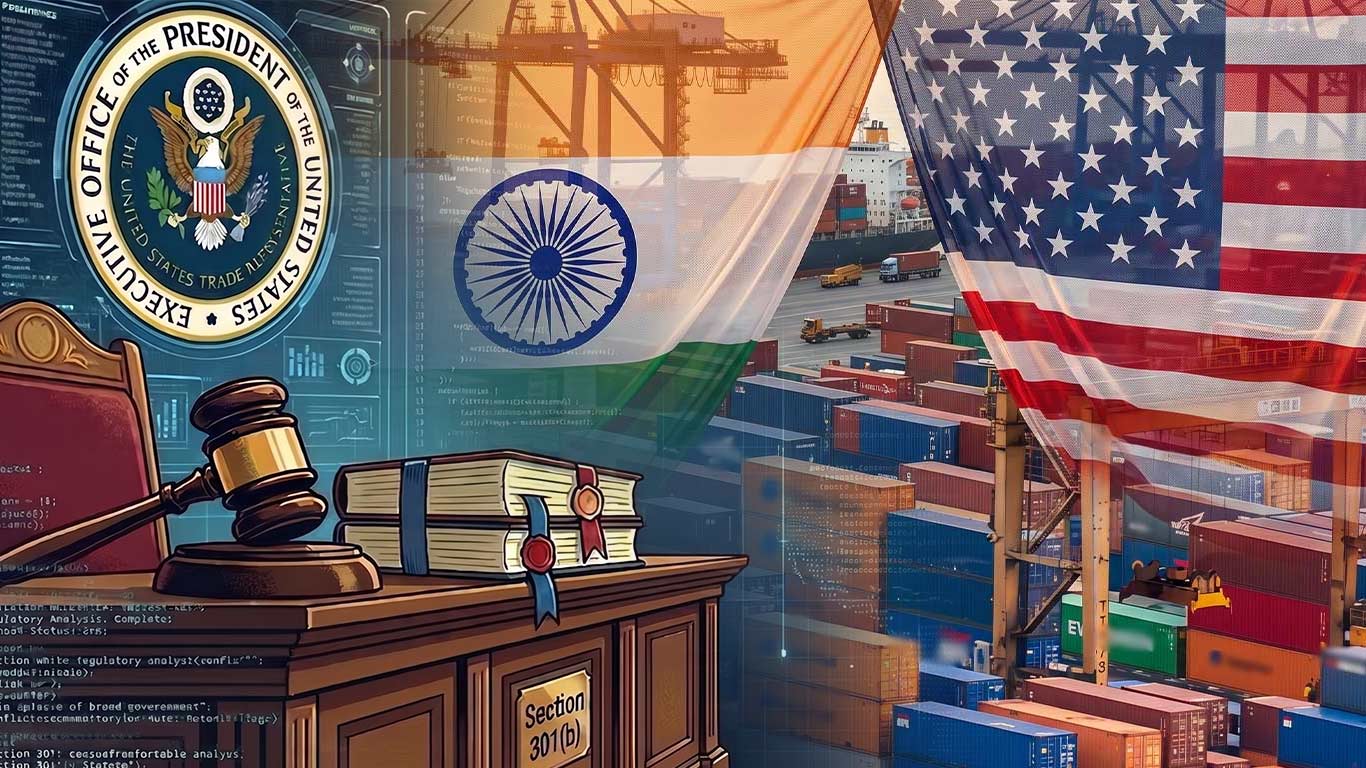
India Flags Inconsistencies In US Forced Labour Tariff Proposal At USTR Hearing
New Delhi, Jul 9 (KNN) India has raised concerns over contradictions in the United States’ tariff policy at a public hearing on the Office of the US Trade Representative's (USTR) proposal to impose levies on goods linked to forced labour, arguing that US's own exemptions undermine the policy rationale behind the move.
Testifying before a USTR panel on Wednesday, Brij Mohan Mishra, Joint Secretary, Ministry of Commerce, noted that the US exempts around 1,600 items that cannot be produced or grown domestically from scrutiny under its forced labour framework.
Responding to a question, Mishra said, "What we submit is that the exemptions provided by the USTR not only undermine the policy rationale of addressing forced labour impact in the global supply chain but also of preventing such impact caused by circumvention practices," PTI reported.
Textiles Mechanism Flagged
He also flagged preferential tariffs by the United States for textile exports using US cotton and related inputs.
"By providing reduced tariff rates on the basis of imports of U.S.-origin textile inputs, the textiles mechanism operates as an arbitrary requirement that influences and constrains the sourcing decisions of foreign manufacturers, without fully addressing the concern of forced labour," Mishra noted.
He added that India prefers such issues be resolved through bilateral talks rather than unilateral Section 301 investigations.
Industry Bodies Respond
Representatives of Federation of Indian Chambers of Commerce & Industry (FICCI) and Confederation of Indian Industry (CII) also weighed in on the United States plan to levy 10-12.5 per cent tariffs on imports from 60 economies over forced labour concerns.
Poornima Shenoy, FICCI's US representative, said an additional tariff would raise costs not only for Indian exporters but also for US manufacturers, importers, retailers and ultimately consumers, noting that many US industries rely on long-standing sourcing relationships with Indian suppliers for quality, reliability and compliance.
"Higher tariffs for these established supply chains will raise costs for businesses that already follow compliance standards. It will not help in identifying goods produced with forced labour. It would simply make trusted supply chains more expensive," she added.
CII representative Suchita Sonalika noted that India's policy framework does not qualify as ‘unreasonable’ or ‘discriminatory’ under Section 301(b) of the Trade Act of 1974, asserting that India has a robust constitutional and statutory framework ensuring Indian companies cannot practice forced labour.
Background
The Office of the USTR initiated two Section 301 investigations in March 2026 covering 60 economies and later proposed tariffs on 54. India argued that the findings lack sufficient evidence to prove market distortion or unfair advantage due to the absence of forced labour import bans, and criticised the lack of economy-specific analysis.
(KNN Bureau)






 Loading...