India, Germany Reaffirm Renewable Energy Cooperation To Strengthen Energy Security
Updated: Jun 20, 2026 02:24:55pm

India, Germany Reaffirm Renewable Energy Cooperation To Strengthen Energy Security
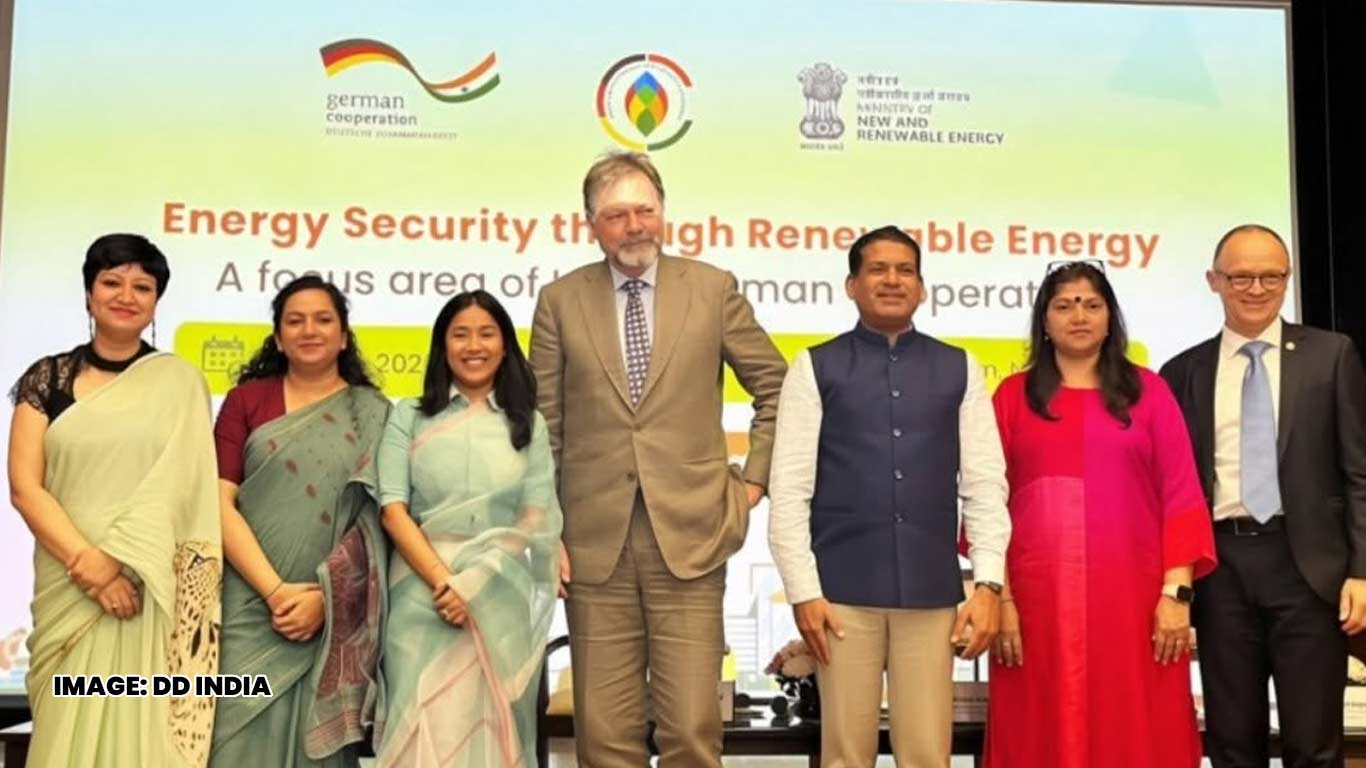
New Delhi, Jun 20 (KNN) India and Germany reaffirmed their commitment to expanding renewable energy cooperation to enhance energy security, reduce reliance on fossil fuel imports and advance sustainable development under the Indo-German Partnership for Green and Sustainable Development (GSDP).
Focus of 10th GSDP Conversation Series
The focus emerged during the 10th session of the GSDP Conversation Series on ‘Energy Security Through Renewable Energies’, organised by the Ministry of New and Renewable Energy (MNRE).
Discussions centred on accelerating India’s clean energy transition and strengthening resilience to volatility in global fossil fuel markets amid recent geopolitical disruptions, reported ANI.
Renewable Energy as Economic and Strategic Necessity: Germany
German Ambassador to India Dr. Philipp Ackermann said renewable energy has become an economic and strategic necessity, with reducing dependence on imported fossil fuels remaining a shared challenge for India and Germany.
He noted that the convergence of climate action, economic opportunity and energy security makes the clean energy transition imperative, while highlighting expanding Indo-German cooperation across renewable energy, battery storage, grid integration, energy efficiency, green mobility, biodiversity, climate adaptation and vocational training.
India’s Energy Security Concerns and Clean Energy Push
MNRE Secretary Santosh Kumar Sarangi said geopolitical uncertainties, particularly recent developments in West Asia, have heightened global energy security concerns and exposed the risks of fossil fuel dependence.
He noted that solar, wind, battery storage systems and green hydrogen can drive sustainability while strengthening long-term energy security.
India’s Renewable Energy Targets and Climate Commitments
Sarangi said non-fossil sources now account for nearly 54 percent of India's installed power capacity, with a target of 500 GW by 2030.
He reiterated India's commitment to achieving net-zero emissions by 2070, highlighting the critical role of solar, wind and storage technologies in building a low-carbon energy system.
Need for Investment and System Integration
Experts stressed the need for greater investment in energy storage, grid modernisation and public-private partnerships to meet rising electricity demand and ensure reliable supply.
They said India’s next phase of energy transition requires an integrated approach spanning generation, transmission, distribution, storage, financing, domestic manufacturing and industrial electrification.
Citing NITI Aayog’s Pathway to Net Zero report, they noted that the key challenge lies not in the availability of clean technologies, but in the ability to integrate, finance and effectively deploy them.
Indo-German Partnership for Green Growth
Established in 2022, the Indo-German Partnership for Green and Sustainable Development serves as a strategic platform to advance climate-aligned development and support global climate and Sustainable Development Goals (SDGs).
Officials noted that as India targets developed nation status by 2047, energy security and the expansion of clean energy will be critical to sustaining long-term economic growth.
(KNN Bureau)







 Loading...


