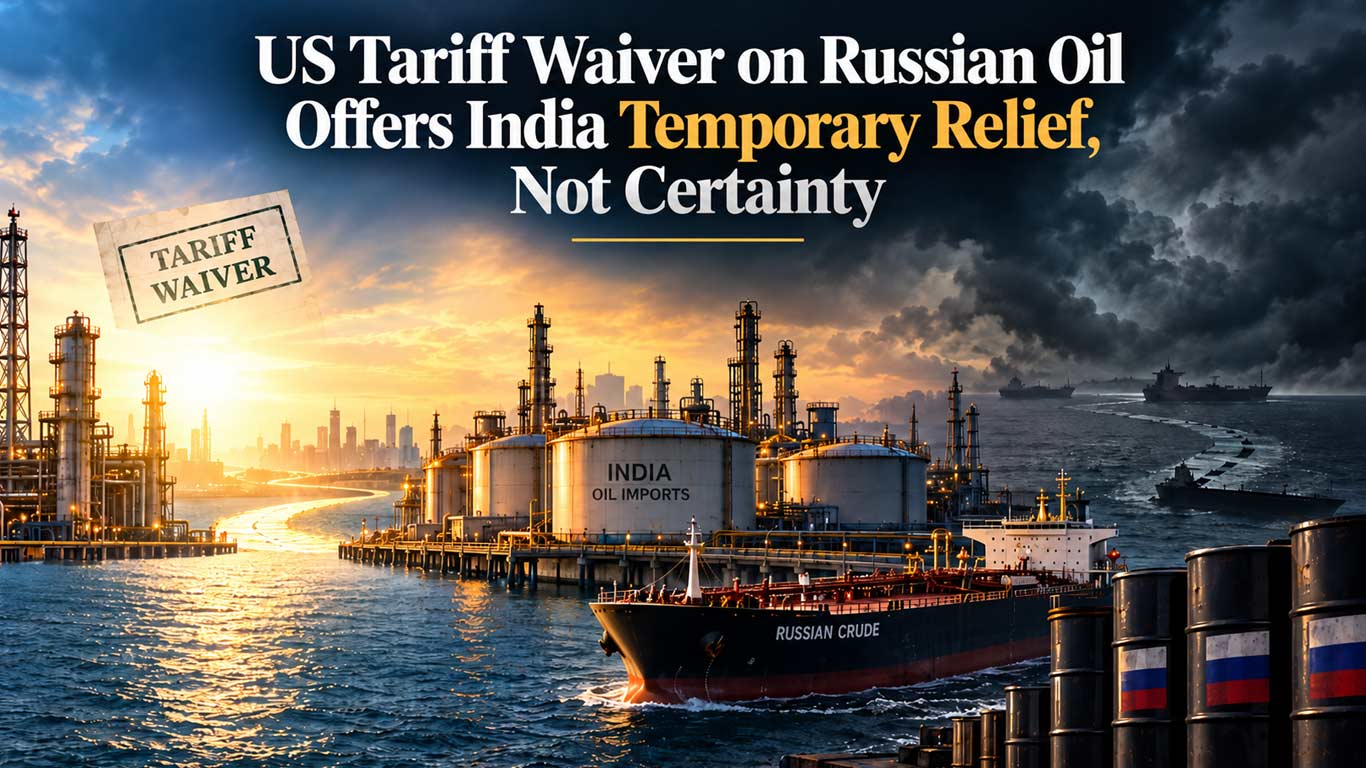
US Tariff Waiver on Russian Oil Offers India Temporary Relief, Not Certainty: GTRI
Updated: Oct 17, 2026 03:28:33pm

US Tariff Waiver on Russian Oil Offers India Temporary Relief, Not Certainty: GTRI
New Delhi, Oct 17 (KNN) US President Donald Trump's decision to waive tariff penalties linked to purchases of Russian oil gives India temporary relief but offers no lasting certainty, with Washington retaining the option to reinstate the duties, the Global Trade Research Initiative (GTRI) said on Saturday.
The think tank said, “The move gives India relief from threatened additional duties of up to 100 per cent linked to Russian oil purchases. But the relief is reversible. Washington can restore the tariffs anytime, leaving India and other buyers uncertain about future U.S. action.”
In an executive order issued on October 16, Trump invoked provisions of the newly enacted Lindsey O. Graham Sanctioning Russia and Iran Act of 2026 (SRIA) to withhold certain sanctions and tariff penalties, citing US national interests.
Tariff Threat Remains Despite Waiver
According to GTRI, the order provides for a 500 per cent tariff increase on Russian goods and additional duties of up to 100 per cent on goods from major buyers of Russian oil that make new purchases from October 18, 2026.
However, Trump invoked Section 115 of the Act to waive these duties. The waiver has no fixed expiry date, but Washington can withdraw it, while the US Trade Representative will continue monitoring Russian energy purchases.
GTRI emphasised that this leaves the US with the option of reviving the tariff threat and using it as leverage in future negotiations.
India Should Prioritise Energy Security
GTRI Founder Ajay Srivastava noted that Russia's share of India's oil imports declined from 51 per cent in July to 44 per cent in August, as India increased purchases from the US and the UAE. He added that India bought more oil from the US despite higher prices.
He said the waiver buys India time but does not remove the risk of renewed US pressure.
“India should protect its energy security, buy oil on commercial terms and prepare for renewed US pressure. Temporary tariff relief is no basis for permanent trade concessions,” Srivastava said.
He also cautioned that the episode highlights uncertainty in US trade policy, with Washington threatening penalties but withdrawing them when enforcement conflicts with its own interests.
US Energy Needs, China Deal May Explain Move
Srivastava highlighted that several factors may have influenced Washington's decision to suspend the penalties weeks after SRIA became law on September 18.
Under an October 9 agreement with Russia, the US decided to buy Russian diesel to address domestic shortages and high fuel prices. Penalising other countries for purchasing Russian energy while making such purchases itself could invite accusations of double standards, he said.
Washington has also agreed not to raise tariffs on China until January 10 under a deal reached last month.
“The message is clear: U.S. interests determine when penalties apply, while the ability to retaliate helps secure protection. China can push back. India risks repeated pressure unless it demonstrates that coercion carries a cost,” he said.
(KNN Bureau)




 Loading...