WTO Warns Trade Fragmentation Could Cut Global GDP 5.1%, Exports 18.6% By 2050
Updated: Sep 21, 2026 04:05:56pm

WTO Warns Trade Fragmentation Could Cut Global GDP 5.1%, Exports 18.6% By 2050
New Delhi, Sep 21 (KNN) Global trade is at a critical juncture as geopolitical tensions, industrial policies, technological competition, AI, environmental measures and supply-chain concerns reshape international commerce, the WTO said in its World Trade Report 2026.
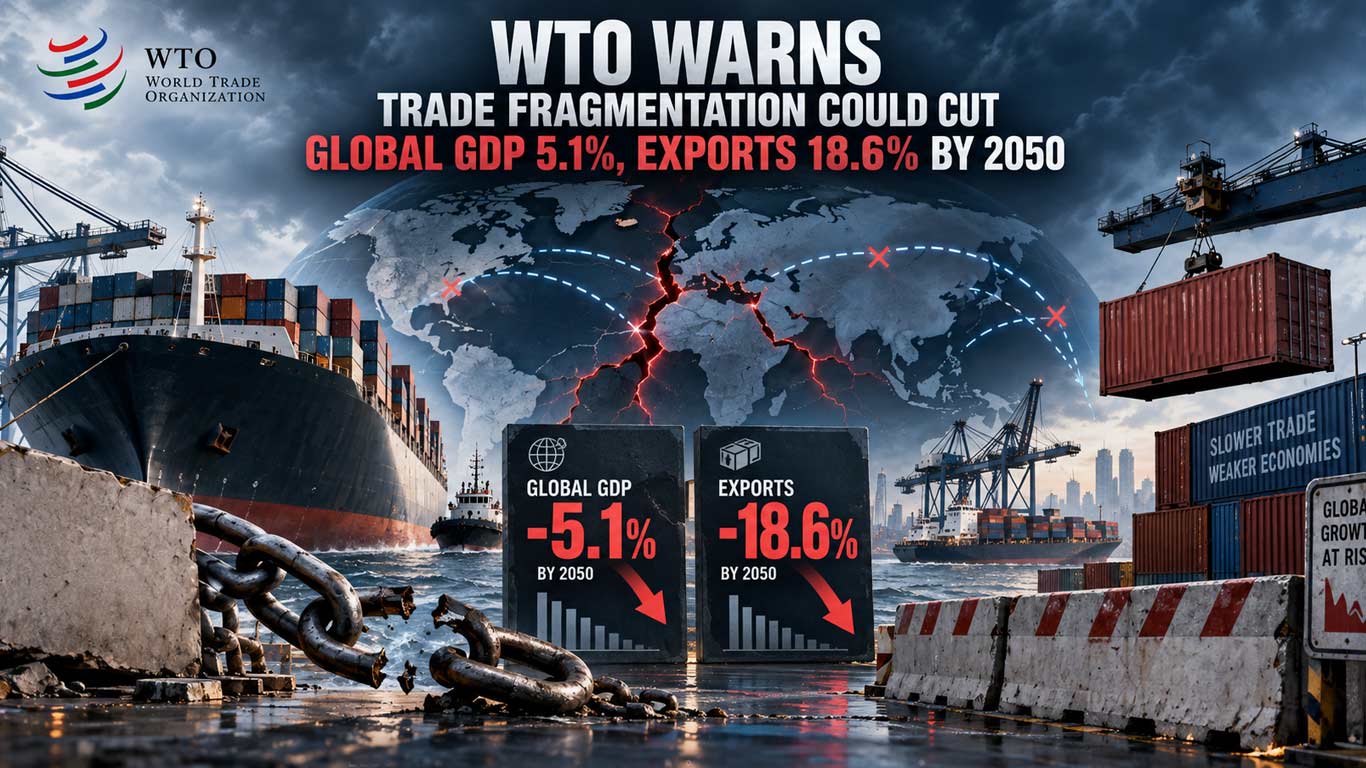
WTO simulations show that geopolitical fragmentation could reduce global GDP by 5.1 percent and exports by 18.6 percent by 2050 from the baseline.
The report said policymakers must address economic-security concerns while preserving the benefits of open markets, international cooperation and rules-based trade.
AI, Digital Trade Create New Opportunities
The WTO said global value chains, digitalisation, AI and environmental policies are creating new cross-border trade challenges.
Its simulations suggest AI could raise global trade by 40 percent by 2040, with digitally deliverable services expected to see the largest gains and potentially add over 13 percent to global GDP over the following 15 years.
Commercial services accounted for an estimated 27.6 percent of global trade in 2025, while digitally delivered services grew 10 percent. The report warned that differences in data, privacy, cybersecurity, competition and AI regulations could create new trade costs and barriers.
WTO Rules Face New Pressures
The report said the multilateral trading system has not kept pace with major economic changes since the 1986-94 Uruguay Round, which preceded the internet’s widespread adoption, global value-chain expansion and major shifts in economic power.
The WTO now has 166 members covering around 98 percent of global trade, with about 72 percent of merchandise trade still conducted on most-favoured-nation (MFN) tariff terms.
However, members remain divided over reforms covering agriculture, services, development, subsidies, transparency and national security.
Dispute settlement also faces challenges following the Appellate Body’s suspension, although panel proceedings and negotiated settlements continue.
Fragmentation Carries Uneven Costs
The WTO said trade fragmentation would affect economies unevenly, with smaller and poorer countries particularly exposed to discriminatory trade arrangements and unilateral measures.
Least-developed countries account for less than 1 percent of global trade, while their manufacturing and services trade costs remain significantly higher than those of high-income economies.
The report also flagged the growing use of subsidies, export controls, industrial policies and national-security measures, warning that such interventions can create cross-border spillovers and deepen trade fragmentation.
WTO Calls For Adaptation, Not Deglobalisation
The report argues that current trade tensions call for adapting, rather than dismantling, the multilateral trading system to reflect a more integrated and diverse global economy.
WTO simulations show that replacing multilateral cooperation with free trade agreements could reduce global GDP by 6.9 percent and exports by 26.9 percent, while enhanced cooperation could increase GDP by 2.9 percent and exports by 17.9 percent.
The WTO said preserving the system requires updating rules, improving transparency and addressing emerging issues such as digital trade, environmental policies, supply-chain resilience and economic security.
(KNN Bureau)





 Loading...