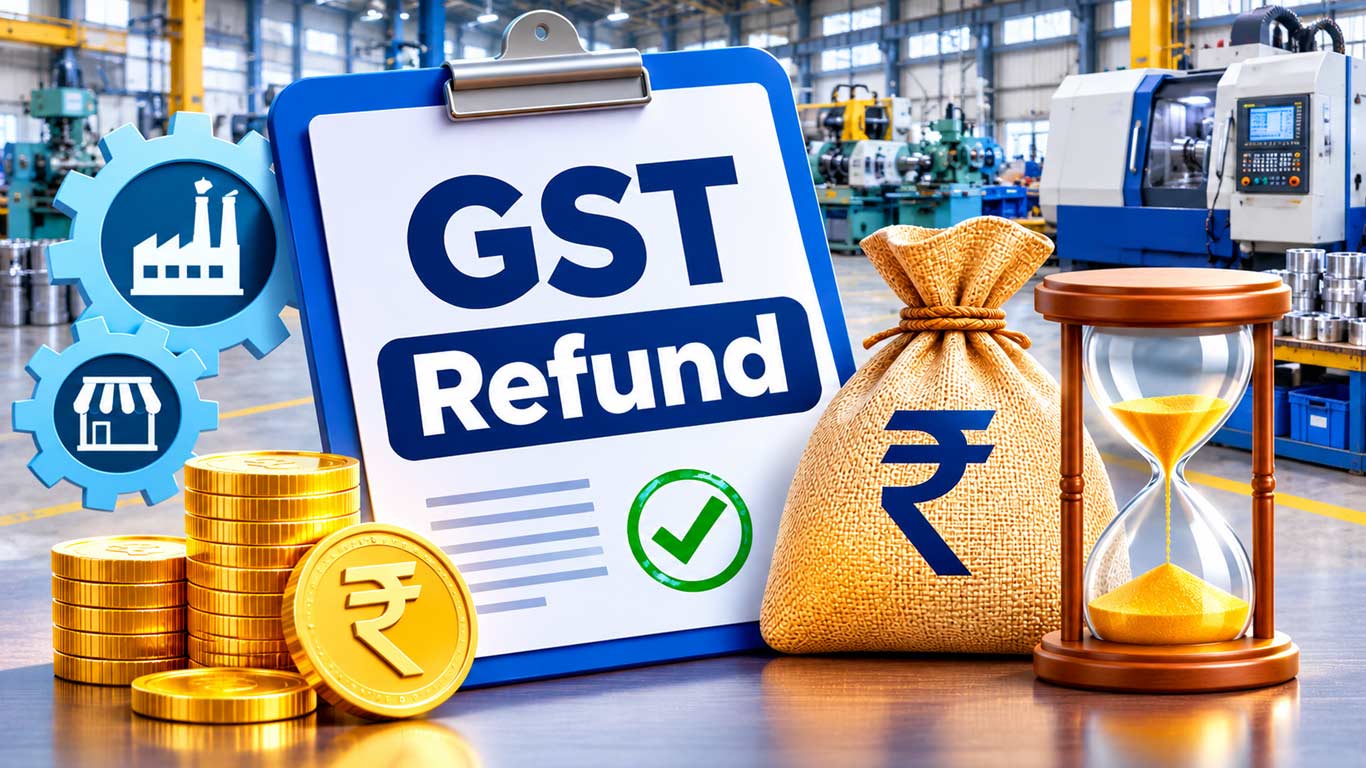
Faster GST Refund Processing Likely to Ease Working Capital Pressures, Reduce Borrowing Costs for MSMEs: FISME
Updated: Nov 05, 2026 04:04:13pm

Faster GST Refund Processing Likely to Ease Working Capital Pressures, Reduce Borrowing Costs for MSMEs: FISME
New Delhi, Nov 5 (KNN) The faster processing of GST refunds under the new reforms could ease working capital pressures on micro, small and medium enterprises (MSMEs), particularly exporters who often have to finance production and customer credit while waiting for tax refunds, the Federation of Indian Micro and Small & Medium Enterprises (FISME) said.
The industry body highlighted that delayed refunds can force otherwise profitable businesses to borrow money to meet routine expenses, limiting their ability to take up additional orders and expand production.
For small exporters, the pressure is particularly significant as they must finance raw materials, production and credit extended to overseas buyers while their tax refunds remain pending, it noted.
Faster Processing and Provisional Refunds
Section 54 of the Central Goods and Services Tax (CGST) Act governs refund claims. The reforms seek to introduce system-based processing, shorten acknowledgement timelines and facilitate risk-based provisional refunds.
According to the Government's official FAQ, the period for acknowledging refund applications or communicating deficiencies has been reduced from 15 days to 10 days.
The changes also provide for automatic provisional release of 90 per cent of acknowledged refund claims belonging to specified low-risk categories, subject to prescribed conditions.
Early Refunds Could Reduce Borrowing Costs
Faster and more predictable refunds could improve the utilisation of existing working capital by allowing businesses to finance additional production cycles without relying as heavily on external borrowing, FISME said.
For instance, receiving a refund of Rs 10 lakh 60 days earlier could save a business approximately Rs 19,700 in interest costs, assuming an annual borrowing rate of 12 per cent.
The savings could be supplemented by the additional business opportunities created when enterprises have funds available to accept and execute new orders.
MSME Beneficiary Numbers Remain Unclear
A consolidated estimate of the number of MSMEs claiming GST refunds is not available.
An official government release reported that India had 1,73,350 exporting MSMEs in 2024-25, providing an indication of the size of the country's exporting enterprise base.
However, FISME cautioned that this figure should not be treated as an estimate of GST refund beneficiaries, as not all exporters file refund claims. Businesses seeking refunds due to inverted duty structures also constitute a separate category of claimants.
The actual impact of the reforms will depend on the efficiency of processing, the application of risk-based assessments and the timely release of eligible refunds.
Tracking the financing cycle of a single export order, from raw material purchases and production to receipt of overseas payments and GST refunds, could help establish how faster refunds improve cash flow and reduce borrowing requirements for small businesses, the federation said.
(KNN Bureau)







 Loading...