CEA Seeks Review of RBI's SMA Norms, MSME-Specific Loan Rules to Reflect Cash Flow Patterns
Updated: Oct 09, 2026 05:14:51pm

CEA Seeks Review of RBI's SMA Norms, MSME-Specific Loan Rules to Reflect Cash Flow Patterns
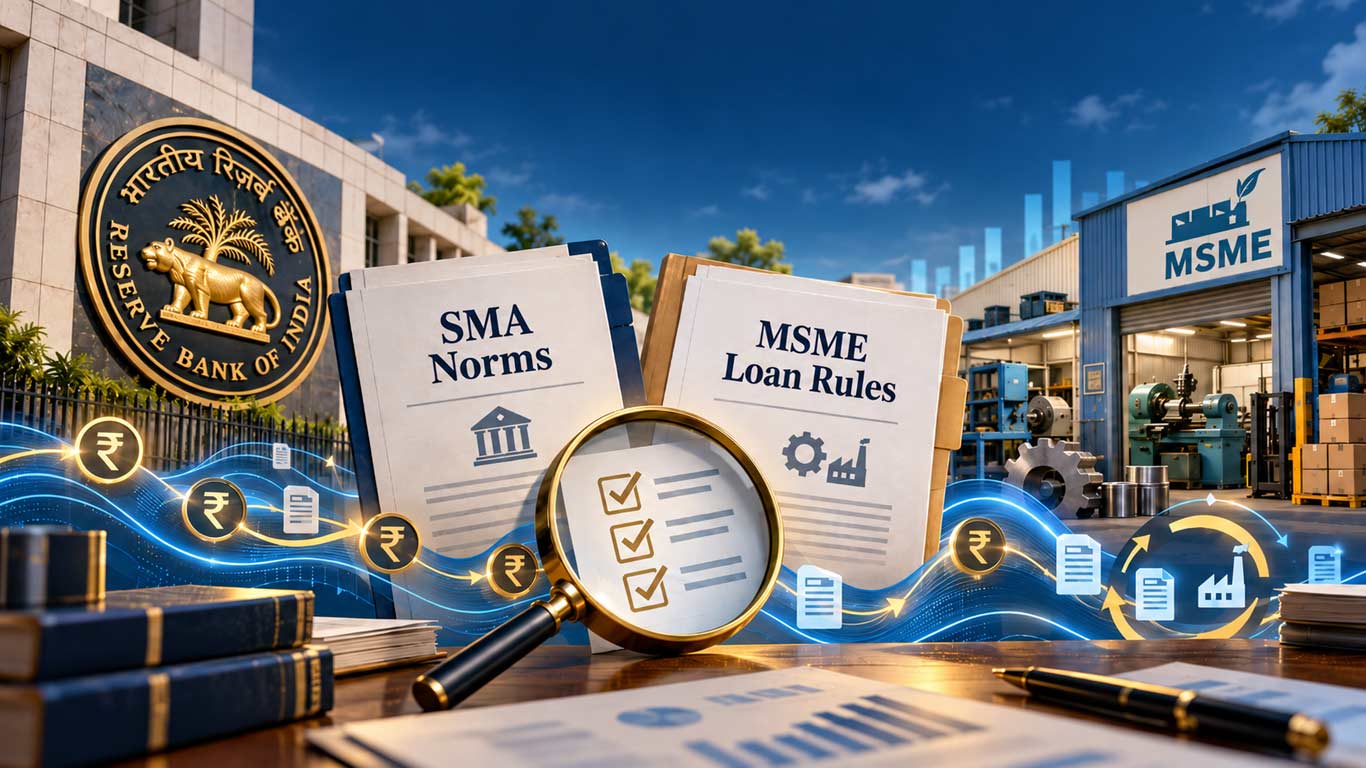
New Delhi, Oct 9 (KNN) Chief Economic Adviser (CEA) V Anantha Nageswaran on Friday called for a review of the Reserve Bank of India's (RBI) loan overdue and Special Mention Account (SMA) classification norms for micro, small and medium enterprises (MSMEs), saying the existing framework does not adequately reflect differences in businesses' cash flow cycles and working capital needs.
“The moment you are classified as SMA, then you almost end up becoming already de facto, if not de jure,” the CEA said.
Speaking at the 21st National Conference of Inclusive Growth organised by Sa-Dhan, Nageswaran highlighted that the Finance Ministry has been advocating a review of the norms to align them with India's business practices rather than follow a uniform global framework, PTI reported.
“We need to evolve such norms consistent with our practices and cash flow patterns, rather than adopting a globally uniform pattern,” he noted
Under the existing system, banks classify loan accounts as SMA-0 when payments are overdue by up to 30 days, SMA-1 for overdue periods of 31-60 days, and SMA-2 for 61-90 days. Accounts generally become non-performing assets (NPAs) when principal or interest remains overdue for more than 90 days.
Nageswaran said SMA classification itself could create difficulties for borrowers even before their accounts are formally classified as NPAs. He called for norms that account for the varying cash flow patterns of MSMEs across sectors.
Deregulation Key to MSME Growth
The CEA noted that ease of doing business was particularly important for MSMEs, which face a disproportionate compliance burden in terms of both cost and time.
He said the government's ongoing efforts to promote grassroots-level deregulation could help smaller businesses redirect resources towards business operations and employment generation.
Nageswaran identified deregulation, skill development, greater use of trade agreements and development strategies tailored to individual states as key priorities for MSME growth.
He also urged Indian businesses to make greater use of trade opportunities under agreements with the United Kingdom and the European Union, saying these could expand market access for Indian goods and services.
CEA Flags Over-Lending in Microfinance
On microfinance, Nageswaran cautioned institutions against excessive lending and mis-selling, particularly as artificial intelligence and digital platforms expand their reach.
He said the sector should prioritise savings and insurance before extending credit, adding that repeated episodes of over-lending needed to be avoided.
The CEA also stressed the need to upskill workers as AI adoption grows. He said India's large labour force could remain an important strength if supported by appropriate skills and a growth strategy suited to labour-intensive sectors.
(KNN Bureau)








 Loading...