Centre Likely To Ease E-Commerce Rules To Boost MSME Exports
Updated: Nov 11, 2026 02:02:30pm

Centre Likely To Ease E-Commerce Rules To Boost MSME Exports
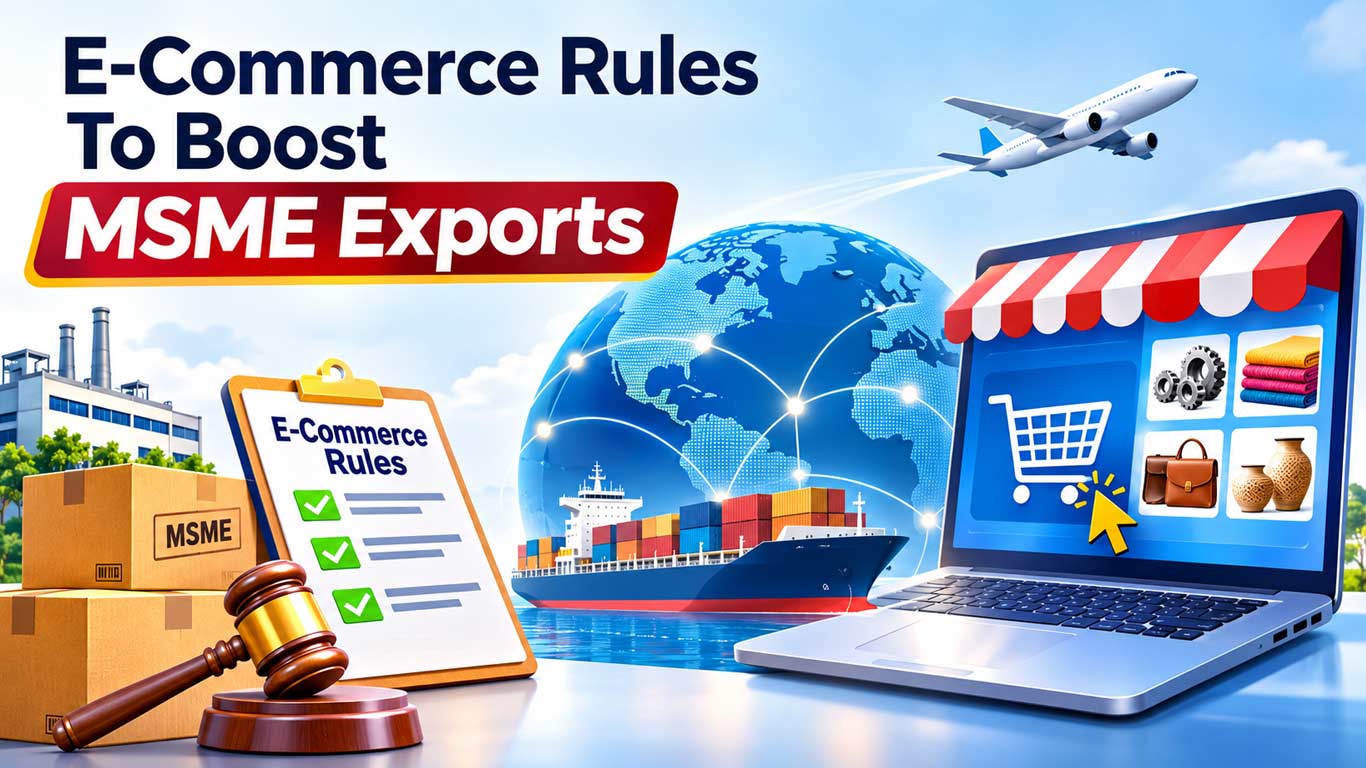
New Delhi, Nov 11 (KNN) The Centre is considering easing regulatory requirements for e-commerce platforms to help micro, small and medium enterprises (MSMEs) expand their exports through online marketplaces.
The government is encouraging domestic and international e-commerce companies to help small businesses access overseas markets by integrating them with the existing export promotion council framework. India has set a target of achieving USD 200–300 billion in e-commerce exports by 2030, The New Indian Express reported.
The Commerce Ministry has already signed a memorandum of understanding with Amazon to integrate its Export Navigator tool with the Directorate General of Foreign Trade's (DGFT) Trade Connect portal. The tool is intended to help small businesses and entrepreneurs understand export compliance requirements.
“E-commerce remained one of our priorities alongside district level exports and if both these can be enhanced simultaneously, it will benefit the overall Indian exports. We are pushing the e-commerce platforms to reach out to the exporters and build more awareness especially among the district exporters to help them get on-boarded. We have asked the states to invite the e-commerce platforms, be it the domestic players or the global players to help the exporters scale up and transit a domestic business to an exporter,” said an official.
The government has introduced several policy changes to facilitate e-commerce exports. In July, it allowed foreign-funded e-commerce companies to operate inventory-based models exclusively for exports, a provision previously restricted under the foreign direct investment (FDI) policy.
The Union Budget also removed the Rs 10 lakh per-consignment value limit on courier exports, enabling small businesses, artisans and startups to ship higher-value consignments through courier channels.
“Ease of doing business remains a continuous process. E-commerce expansion remains a priority, alongside greater utilisation of free trade agreements (FTAs). Awareness building is also in focus to ensure better utilisation of these agreements,” the official said.
The government is also addressing challenges faced by smaller exporters, including regulatory requirements, warehousing arrangements, logistics costs and limited awareness of export procedures.
At the district level, the Centre is monitoring the progress of measures aimed at increasing participation in e-commerce exports. The focus includes both major platforms, such as Amazon and Flipkart, and state governments.
At the latest GST Council meeting, a simplified registration mechanism was approved to allow eligible small sellers to use an e-commerce operator's warehouse as their principal place of business in states where they do not have a physical presence.
(KNN Bureau)





 Loading...