FISME Says Proposed GST Safeguard May Help MSMEs Resolve ITC Disputes, Ease Cash Flow Stress
Updated: Nov 11, 2026 12:54:49pm

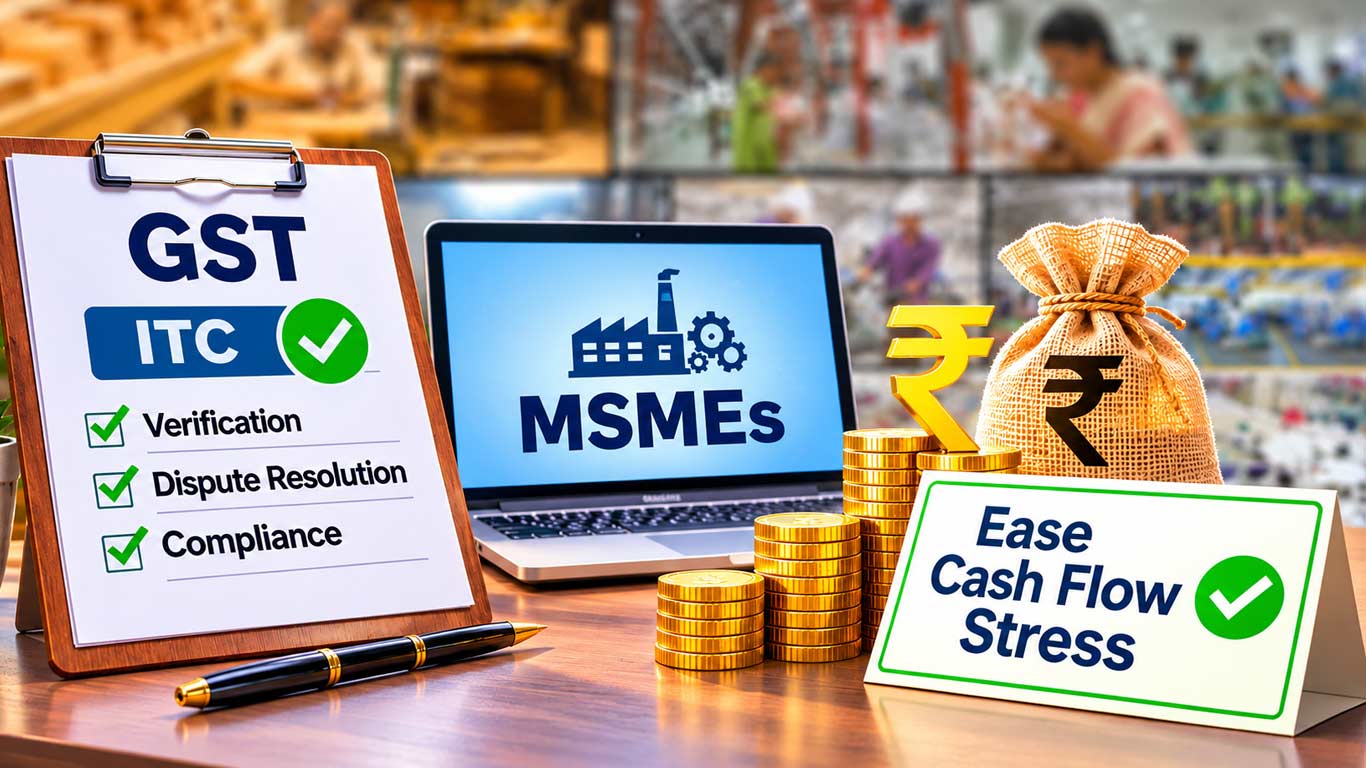
FISME Says Proposed GST Safeguard May Help MSMEs Resolve ITC Disputes, Ease Cash Flow Stress
New Delhi, Nov 11 (KNN) The GST council’s proposed safeguard allowing taxpayers to present objections and seek a personal hearing against restrictions on input tax credit (ITC) under GST Rule 86A could help micro, small and medium enterprises (MSMEs) resolve credit disputes and reduce working capital disruptions, the Federation of Indian Micro and Small & Medium Enterprises (FISME) said.
The industry body highlighted that blocking of input tax credit can force businesses to arrange additional cash to meet GST liabilities, diverting funds otherwise needed for wages, raw material purchases and debt servicing.
For genuine businesses, the ability to submit invoices, delivery records and payment evidence is important to address factual errors or misunderstandings that may lead to credit restrictions.
Proposed Safeguard Under Rule 86A
Rule 86A of the Central Goods and Services Tax (CGST) Rules allows an authorised officer to restrict the use of input tax credit where there are reasonable grounds to believe that the credit has been fraudulently availed or is otherwise ineligible.
The proposed safeguard provides taxpayers an opportunity to raise objections and seek a personal hearing before a decision is taken on those objections.
The provision should not, however, be interpreted as guaranteeing a personal hearing before the initial blocking of credit. The proposed mechanism concerns the subsequent consideration of the taxpayer's objections.
Timely Relief Could Improve Cash Flow
FISME said an effective and timely remedy could help correct factual misunderstandings, reduce prolonged credit restrictions and limit disruption to business cash flows.
For instance, if Rs 5 lakh of blocked credit is otherwise eligible and available for payment of a GST liability, a business may need to arrange up to an additional Rs 5 lakh in cash to meet that liability.
The actual financial impact would depend on the enterprise's tax liability, available credit balances and the extent to which the restricted credit could otherwise have been utilised, it added.
MSME Beneficiary Numbers Remain Unclear
The federation noted that a reliable national estimate of the number of MSMEs affected by credit restrictions under Rule 86A is not available.
The direct beneficiaries of the proposed safeguard would be businesses whose input tax credit has been blocked and which use the objection mechanism. The wider GST taxpayer base cannot be treated as an estimate of affected enterprises.
The effectiveness of the change will depend on whether objections receive reasoned decisions within reasonable timelines and whether the hearing mechanism provides a meaningful opportunity to establish the eligibility of disputed credit, FISME said.
The industry body suggested that tracking how a blocked credit balance affects a small enterprise's monthly cash requirements and whether the subsequent hearing results in a timely and reasoned decision could help assess the practical value of the safeguard.
(KNN Bureau)






 Loading...