Govt Tables MSME Development (Amendment) Bill, 2026 To Tackle Delayed Payments
Updated: Jul 29, 2026 05:03:43pm

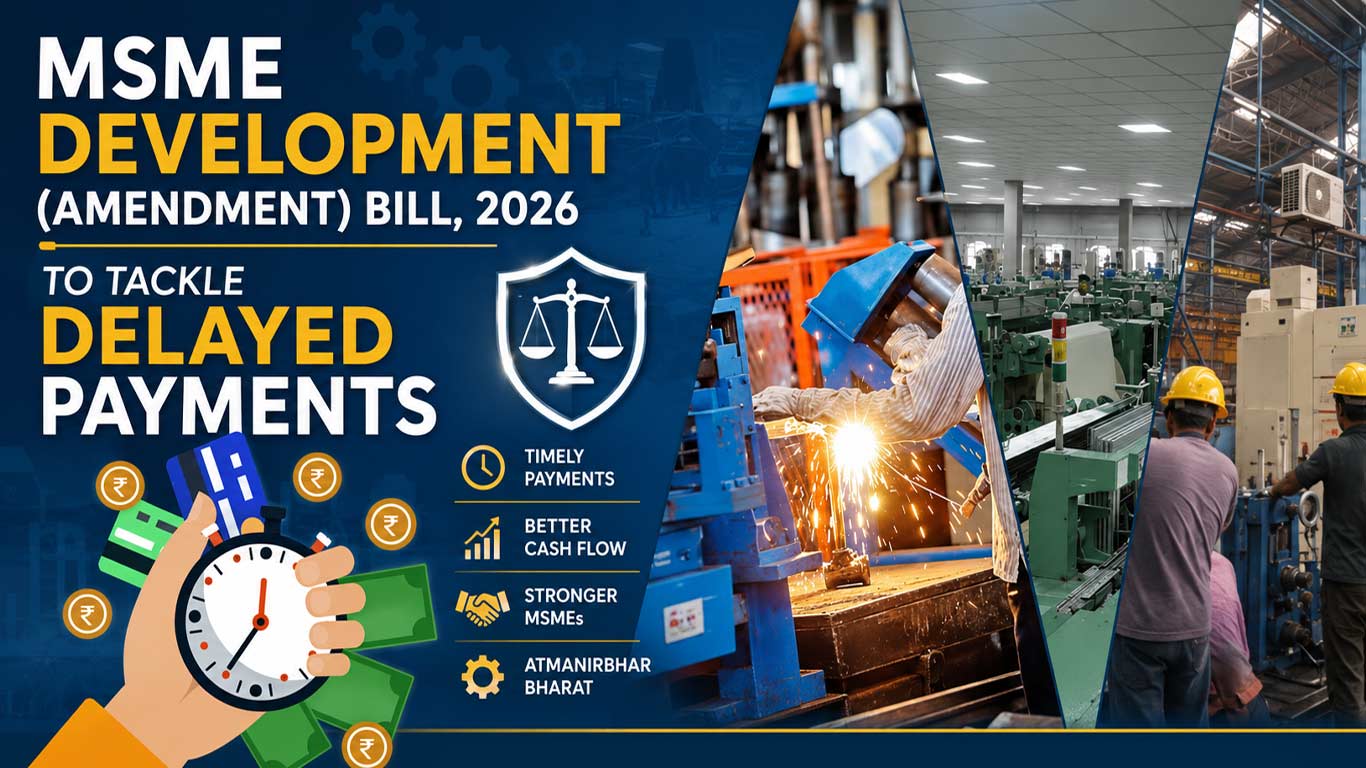
Govt Tables MSME Development (Amendment) Bill, 2026 To Tackle Delayed Payments
New Delhi, Jul 29 (KNN) The government on Tuesday introduced the Micro, Small and Medium Enterprises Development (Amendment) Bill, 2026 in the Rajya Sabha, aiming to address long-standing issues of delayed payments to small businesses and improve the overall ease of doing business.
Presenting the Bill, Union MSME Minister Jitan Ram Manjhi said that while the MSME Development Act, 2006 laid a strong foundation, evolving business environments and digital advancements necessitated reforms.
“The primary objective is to ensure timely payments, introduce stricter penalties, and make compliance easier for MSMEs,” Manjhi said, emphasising that the reforms align the 2006 Act with the needs of a modern, digital economy.
Focus on Timely Payments and Dispute Resolution
A central feature of the proposed legislation is the strengthening of mechanisms to ensure timely payments to micro and small enterprises—an issue that often affects their liquidity and operations. The Bill introduces stricter provisions to curb payment delays and improve enforcement.
It mandates that Central Public Sector Enterprises (CPSEs) route MSME invoice settlements through the Trade Receivables Discounting System (TReDS), an electronic platform authorised by the Reserve Bank of India (RBI).
The government may extend this requirement to other entities, while states can notify similar rules for their public sector units.
Time-Bound Mediation and Arbitration
To expedite dispute resolution, the Bill prescribes clear timelines, requiring mediation to be completed within 90 days, arbitration to commence within 30 days if mediation fails, and arbitral awards to be issued within 90 days of pleadings. It also enables online mediation and arbitration through digital platforms, improving accessibility and efficiency.
Stronger Enforcement and Compliance Measures
The Bill proposes that arbitral awards in favour of MSMEs be enforceable as arrears of land revenue and recognised as legally binding debt under the Insolvency and Bankruptcy Code (IBC).
Additionally, buyers challenging such awards must deposit 75 per cent of the awarded amount before courts hear their appeals, ensuring that MSMEs are safeguarded against prolonged litigation.
Flexibility for States and Institutional Strengthening
States will be given greater flexibility in determining the composition of Micro and Small Enterprises Facilitation Councils, which handle payment disputes. The Bill also mandates the establishment of adequate councils, supported by proper infrastructure and digital systems, to ensure timely resolution of cases.
Digital Push and Transparency
The proposed law includes provisions for a national digital platform for MSME registration, while allowing states to maintain their own systems. It also introduces mandatory disclosure requirements for invoice settlements through TReDS.
Penalties ranging from Rs 50,000 to Rs 1 lakh are proposed for non-compliance with reporting norms or furnishing false information.
(KNN Bureau)









 Loading...


 Bill, 2026 To Tackle Delayed Payments)