GST Refund Formula Changes May Expand Inverted Duty Refunds for Eligible MSME Manufacturers: FISME
Updated: Nov 06, 2026 03:55:55pm

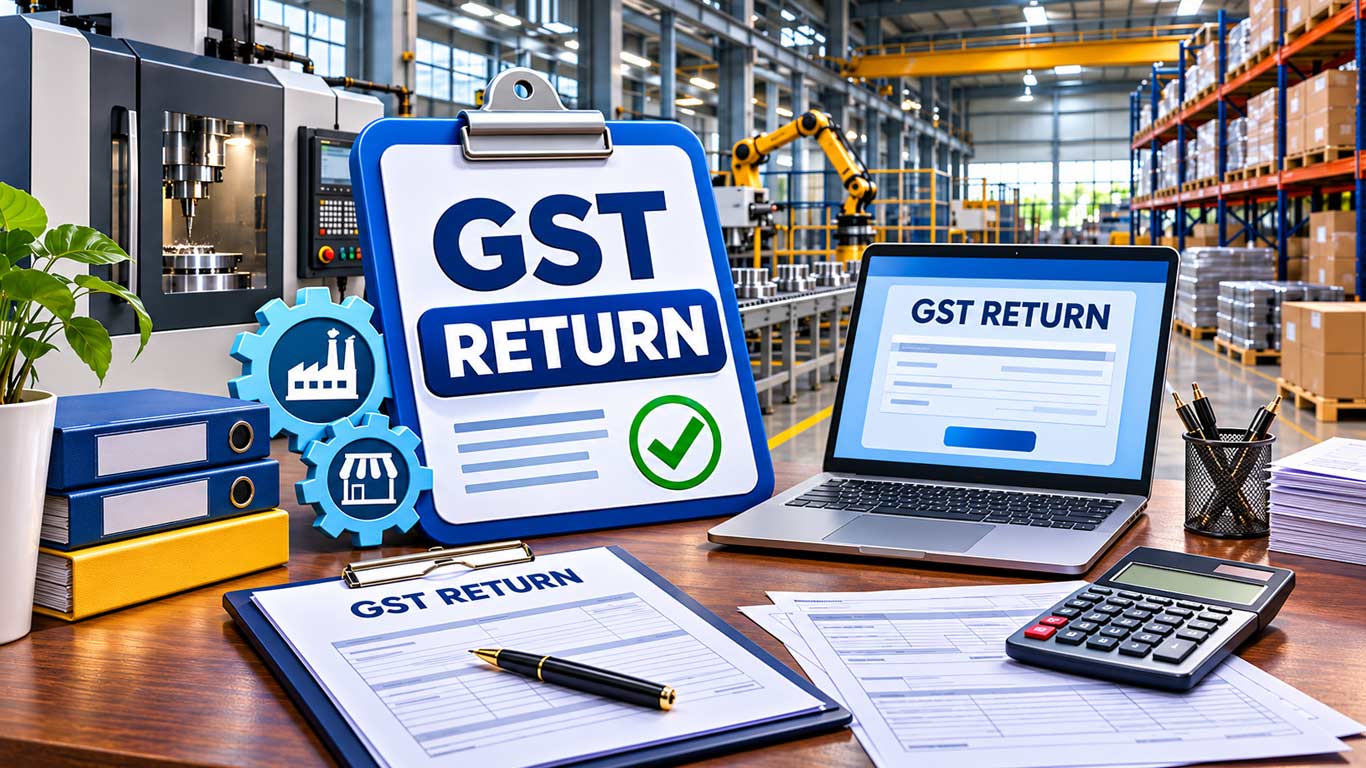
GST Refund Formula Changes May Expand Inverted Duty Refunds for Eligible MSME Manufacturers: FISME
New Delhi, Nov 6 (KNN) The Federation of Indian Micro and Small & Medium Enterprises (FISME) said changes to the GST refund formula could enable micro, small and medium enterprises (MSMEs) to recover a larger portion of their accumulated input tax credit (ITC), particularly manufacturers operating under an inverted duty structure.
The industry body also said businesses can accumulate substantial GST credit on raw materials, services and other inputs when the tax paid on purchases exceeds the tax collected on finished products. When output tax liability is insufficient to utilise the accumulated credit, funds remain blocked, limiting working capital available for wages, production and investment.
FISME highlighted that faster processing of refund applications alone cannot resolve the problem if certain categories of eligible input tax credit remain excluded from the refund calculation.
Wider Coverage Under Inverted Duty Refunds
Section 54(3) of the Central Goods and Services Tax (CGST) Act, along with Rules 89(4) and 89(5), governs refunds of accumulated input tax credit in specified circumstances.
Under the revised framework, eligible input-service credit will be included in inverted-duty refunds from the specified November 2026 date, while eligible capital-goods credit will be included from April 2027.
Capital-goods credit will be apportioned over 60 months for the purpose of calculating eligible refunds.
However, according to FISME the changes do not make every business with accumulated service-related credit eligible for an inverted-duty refund. The prescribed input-goods and output-tax-rate condition must still be satisfied. Services taxed at a rate higher than the output rate do not, by themselves, establish eligibility.
Potential to Improve Manufacturing Economics
The expanded refund calculation could help factories already eligible under the inverted-duty framework recover a wider component of their accumulated credit, the federation noted.
This could improve the economics of purchasing machinery and using specialist services by reducing the amount of eligible tax credit that remains blocked.
However, the change does not provide an immediate cash refund of the entire GST paid on machinery. Capital-goods credit will be considered through the prescribed 60-month apportionment mechanism, subject to eligibility conditions.
MSME Beneficiary Numbers Remain Unclear
FISME noted that a reliable national estimate of the number of MSMEs eligible for the expanded refund facility is not available. Counting all manufacturers or exporters would overstate the facility's potential reach, as eligibility depends on the accumulation of input tax credit (ITC) under the prescribed inverted duty conditions.
A meaningful estimate would require data on the number of distinct eligible enterprises, classified by refund category and MSME status, it added.
The impact of the changes will depend on how the revised formula is implemented and the extent to which manufacturers can recover eligible credits that were previously excluded from refund calculations.
A comparison of the actual GST rates applicable to a factory's inputs and finished products could help illustrate how credit accumulates and which input costs qualify for refunds under the revised formula, the MSME body said.
(KNN Bureau)





 Loading...