India’s MSME-Led Food Processing Sector Grapples With Heavy Compliance Burden: Report
Updated: May 15, 2026 04:41:27pm

India’s MSME-Led Food Processing Sector Grapples With Heavy Compliance Burden: Report
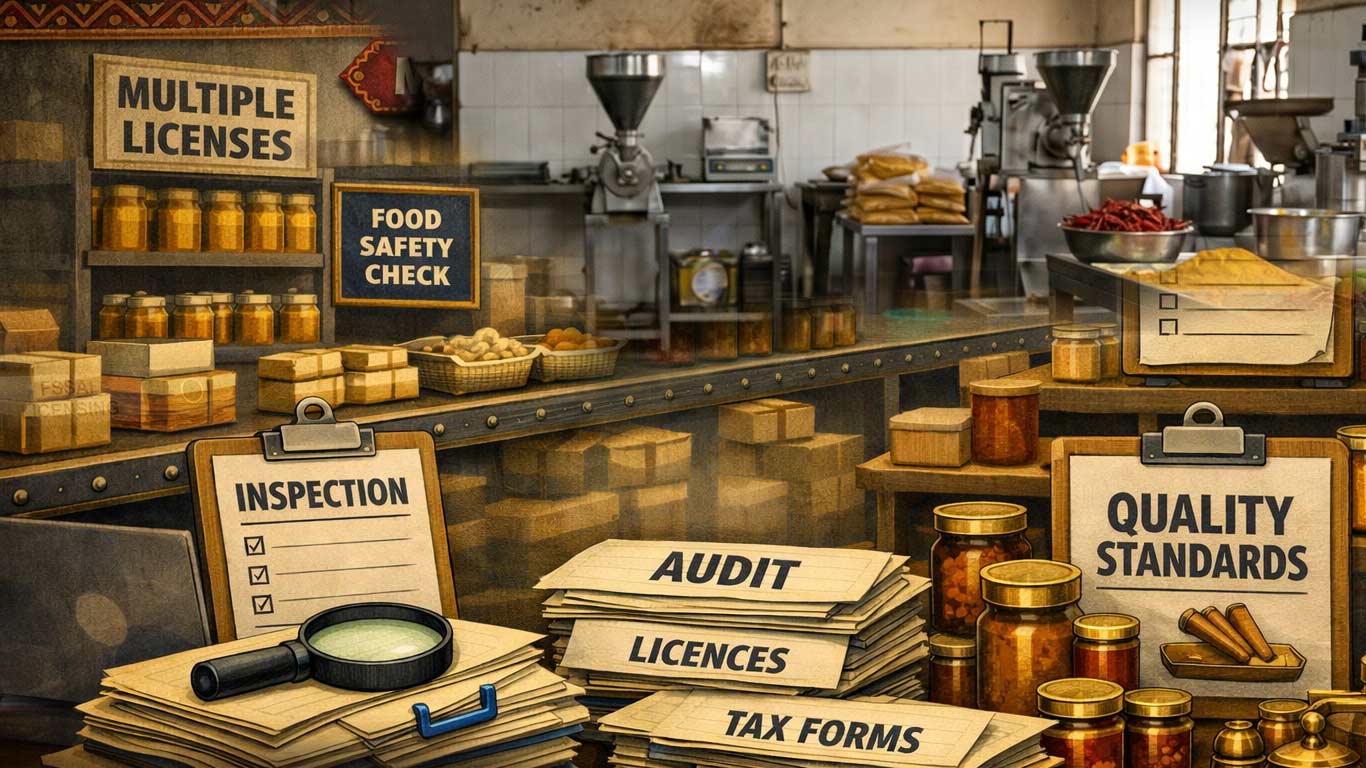
New Delhi, May 15 (KNN) India's food processing industry, dominated by micro, small and medium enterprises, is facing a severe compliance burden driven by overlapping regulations, frequent policy changes, and multi-layered enforcement across central, state, and local authorities, according to a report by TeamLease RegTech.
Scale of the Problem
The report noted that a typical mid-sized food processing company operating across multiple states faces over 3,285 unique compliance obligations, which balloon to 11,554 annual compliance actions when filing frequencies are factored in, according to ANI.
These span food safety, labour welfare, taxation, packaging, and environmental regulations. Labour laws alone account for nearly half of all compliance requirements.
Critically, approximately 29 per cent of these obligations carry criminal provisions — including imprisonment — for procedural lapses, exposing businesses to serious legal risk even for minor infractions.
The sector also witnessed more than 130 regulatory changes in the past year alone, making it difficult for businesses—particularly micro, small and medium enterprises (MSMEs)—to keep up with evolving compliance requirements.
The report stated, "This constant change is especially difficult for MSMEs, which often lack specialised legal or quality assurance teams. These smaller businesses struggle to track and implement new rules in real-time," as quoted by ANI.
MSMEs Bear the Brunt
With around 24.59 lakh food processing units operating in the unregistered segment — accounting for over 98 per cent of all units in the sector — the compliance burden falls disproportionately on small operators who lack dedicated legal or quality assurance teams. Delays in adapting to new rules raise the risk of financial penalties, licence suspensions, and costly product recalls.
Rishi Agrawal, Co-founder and CEO, TeamLease RegTech, noted that meaningful regulatory compliance demands digital systems, trained staff, third-party audits, and trusted regulatory partners — resources that are often beyond the reach of MSMEs.
"Without this strategic shift, the mounting weight of compliance becomes more than just an administrative hurdle, it becomes a tangible barrier to national and global expansion," he said.
Overlapping Jurisdictions and Infrastructure Gaps
The report emphasised that food processors must simultaneously satisfy requirements from multiple regulators, including the Food Safety and Standards Authority of India (FSSAI), Bureau of Indian Standards (BIS), AGMARK, and state enforcement bodies.
Products such as honey, ghee, and packaged water require multiple certifications, resulting in duplicate testing and higher costs.
Infrastructure constraints compound the problem, particularly in smaller cities and semi-rural clusters, where access to accredited laboratories, cold-chain logistics, and certified equipment vendors remains limited.
High-risk categories such as meat, dairy, seafood, and ready-to-eat foods now face stricter scrutiny, with regulators increasingly mandating real-time cold-chain monitoring and advanced testing — requirements that often necessitate expensive technology upgrades and infrastructure retrofitting.
Call for Reform
Piruz Khambatta, Chairman, Rasna International, said compliance has moved beyond being an administrative exercise, adding, "In today's world compliance is not a choice but absolute necessity for growth and even survival of organisations," ANI reported, citing the report.
The report called for simplification, harmonisation, and digitisation of India's regulatory compliance framework to reduce the burden on small businesses, improve ease of doing business, and unlock the food processing sector's broader growth potential.
(KNN Bureau)










 Loading...