Industry Seeks Risk-Based QCO Regime As Certification Burden Weighs On MSMEs
Updated: Aug 31, 2026 01:13:21pm

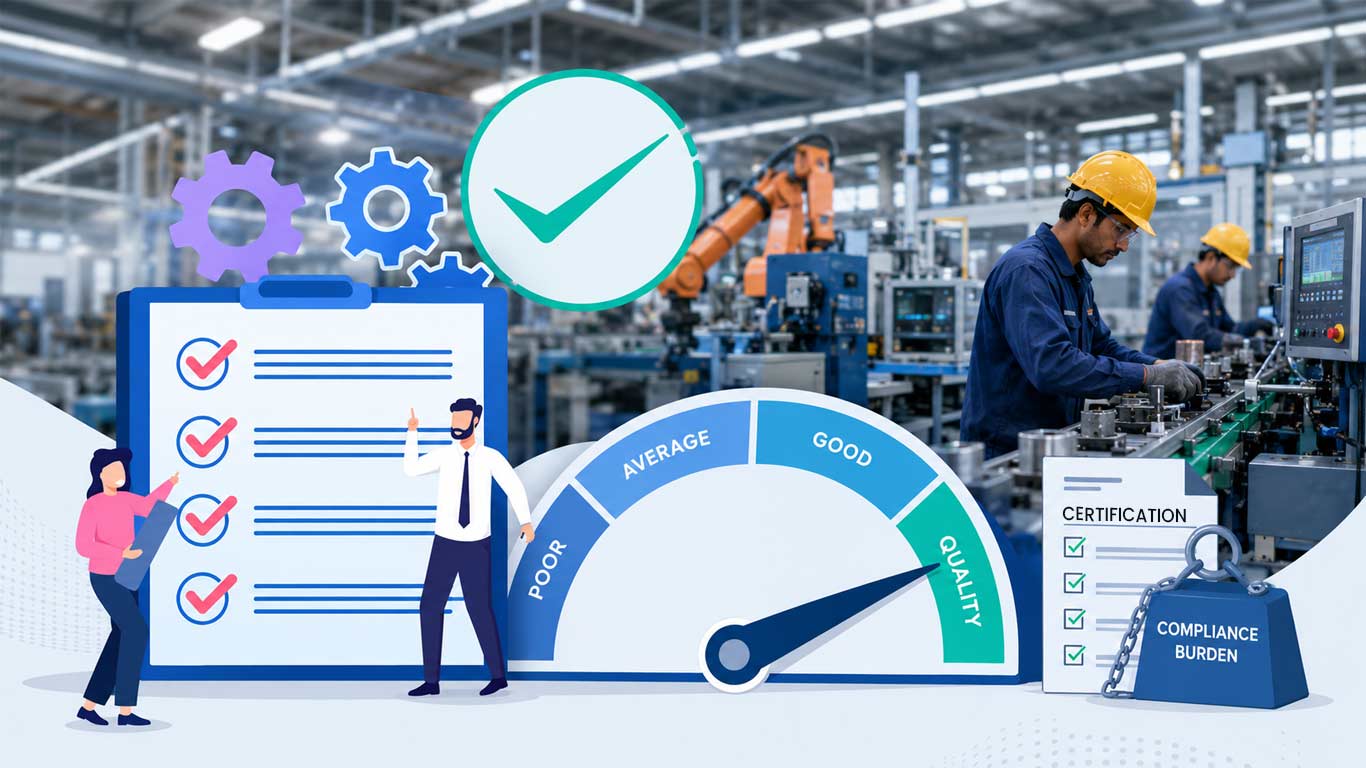
Industry Seeks Risk-Based QCO Regime As Certification Burden Weighs On MSMEs
New Delhi, Aug 31 (KNN) As the Union government considers further relaxations in Quality Control Orders (QCOs), industry leaders and experts have called for a comprehensive review rather than piecemeal exemptions, citing high compliance costs and supply-chain disruptions.
The demand follows Commerce and Industry Minister Piyush Goyal’s recent remarks in Japan that the government is considering industry, product, project and company-specific exemptions from mandatory QCOs to support high-tech manufacturing.
Industry Calls For Risk-Based QCO Framework
Trade experts said mandatory quality standards should primarily target consumer-facing products with significant safety, health or environmental risks, rather than being broadly imposed on intermediate goods, capital equipment and raw materials.
They warned that overlapping certification requirements raise costs and create uncertainty for manufacturers reliant on specialised imported components and equipment, reported Financial Express.
Semiconductor Industry Seeks Equipment Exemptions
The India Electronics and Semiconductor Association (IESA) has sought QCO exemptions for specialised semiconductor equipment such as lithography, deposition, etching, cleaning, metrology and inspection systems, which already meet global safety and quality standards.
IESA President Ashok Chandak said the issue was not BIS certification but uncertainty, delays and duplication. He called for risk-based exemptions and fast-track approvals to ease compliance for high-tech manufacturers.
QCOs Surge, Raising Supply Chain Concerns
A Japan External Trade Organisation (JETRO) survey found that nearly 72 per cent of Japanese manufacturers operating in India said BIS certification requirements had affected or were likely to affect their operations.
The impact was particularly pronounced among general-machinery manufacturers at 92.3 per cent and transportation-equipment companies at 76.8 per cent, with most respondents rating the impact as serious or very serious.
Number Of QCOs Rises Sharply
CSEP fellow Prerna Prabhakar’s research shows QCOs surged from 88 in 2019 to 790 in 2025, before recent relaxations reduced them to around 600.
About 45.7% cover intermediate goods, led by metals (40%), machinery and electronics (21%), textiles (9.2%), chemicals (6.8%), and plastics and rubber (5.6%).
Industry representatives warned that extensive QCO coverage of intermediate inputs could disrupt supply chains in sectors such as semiconductors, EVs, railways and high-voltage infrastructure.
A recent report by the High Level Committee on Non-Financial Regulatory Reforms, headed by former Cabinet Secretary Rajiv Gauba, also flagged the broad application of QCOs to downstream production inputs.
MSMEs Bear The Heaviest Compliance Burden
Industry experts said certification fees, factory audits, testing and lengthy approvals disproportionately burden MSMEs, especially those importing specialised products in small volumes.
GTRI founder Ajay Srivastava warned that prolonged procedures could turn quality assurance into a costly licensing regime, with approvals taking 6-12 months.
However, industry representatives cautioned against broad QCO dilution, which could hurt firms investing in domestic R&D, manufacturing and testing.
They called for a risk-based, predictable QCO framework that maintains strict standards for high-risk products while easing requirements for specialised inputs, capital goods and non-hazardous products.
(KNN Bureau)










 Loading...