MSMEs can play a key role in achieving vision of 'self-reliant India': Report
Updated: Jun 15, 2020 11:19:33am

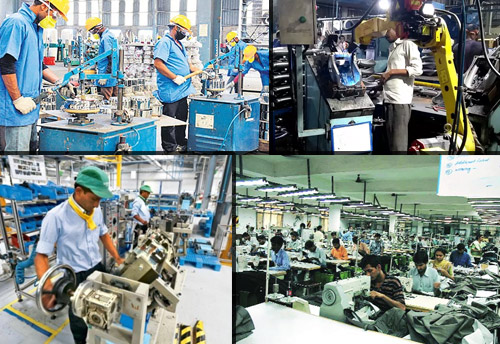
MSMEs can play a key role in achieving vision of 'self-reliant India': Report
New Delhi, Jun 15 (KNN) Micro, Small and Medium Enterprise (MSME) sector in India can play a significant role in achieving the vision of self-reliant India, however, a lot more needs to be done for MSMEs to become a growth driver for India, said a report by Nomura Research Institute (NRI) Consulting & Solutions.
The outbreak of the pandemic will make countries do a rethink on strengthening their local supply chains. India has already stated a vision of ‘Atmanirbhar Bharat’ or a self-reliant India, which will need strengthening of the local industries and their standing on a global stage.
The outbreak of COVID-19 pandemic has drastically changed the global economic landscape. The World Trade Organisation estimates that global merchandise trade will reduce by 13% to 32% in 2020 due to COVID-19 pandemic.
“The Indian MSMEs have traditionally been catering to the domestic market either through directly selling to the consumers (B2C) or are a part of the value chain driven by large organised private players (B2B). Factors like evolving consumption and increasing competition have led to the increasing relevance of integrating customers’ voice in product design for MSMEs to stay relevant,'' said Ashim Sharma, Partner and Group Head, NRI Consulting & Solutions.
''Therefore, it becomes extremely important for the MSMEs to design, manufacture and sell products which the customers need. They need to be connected to a demand led environment, where their business strategy and processes are aligned to the changing market dynamics through a market-oriented strategy,” he added.
Three key parameters that are vital for the success of MSMEs include financial stability, availability of skilled labour in MSME clusters, and market competitiveness of their products to achieve import substitution as well as exports.
The report also identified five key areas that need stronger focus such as:
-- 1: It is essential to improve the capability of Indian MSMEs to supply quality products especially with new norms of operations being introduced due to COVID 19. Maintaining social distancing, running on reduced capacity, etc. would further aggravate the situation for the cash stripped MSMEs. Hence, it is imperative to provide immediate support for ensuring they keep up their capability of supply.
-- 2: To remain relevant in the market, MSMEs need to be adaptable with changing market and variable demand scenarios.
-- 3: Ensuring the capacity and availability of raw materials to MSMEs is also crucial. The disruption in global logistics has broken the chain for some key raw materials. Low working capital availability also makes it difficult for MSMEs to restore raw material supply.
-- 4: The impact of COVID 19 on business operations will require innovative methods to reduce cost. MSMEs could be introduced to low-cost automation techniques which work in tandem with the human workforce while implementing distancing and also for quality control.
-- 5: Branding and advocacy will also be needed to leverage the positive connotations associated with certain Indian products and assess negative connotations that can be removed.
The report also highlighted multiple manufacturing clusters across India to help create a conducive environment for development of small and medium enterprises, as identified by the United Nations Industrial Development Organisation (UNIDO). Clusters across India hold the key for developing a self-reliant ecosystem based on local skills and expertise. The cluster approach becomes all the more important with the localised nature of lockdown opening policies. Measures for development of MSME clusters can be aligned with the strategy to fight the impact of COVID 19.
“E.g. The state of Punjab has multiple MSME clusters with majority of them located around Jalandhar and Ludhiana. These MSME clusters provide an opportunity to significantly upgrade the overall manufacturing economy of the state. Jalandhar for example has clusters for sports goods, agricultural implements, hand tools, leather works, etc. Similarly, Ludhiana has clusters for bicycle parts, hosiery, forging, hand and machine tools, etc. All these MSMEs, if developed in a collaborative approach while keeping a market-oriented strategy, can provide a significant boost to the economy as well as employment in the state of Punjab. “added Sharma.
The report further emphasizes on the fact that clusters can also be used for identifying synergies between various stressed MSMEs which can then be used to create collaborating firms. MSMEs that cannot stand alone might be able to succeed as combined firms by utilising various synergies. These synergies can be across various areas such as demand synergies, geographic synergies, logistics synergies, etc.






 Loading...