SC Allows TTZ Authority To Review 400 MSME Setup Proposals With Expert Oversight
Updated: Jul 23, 2026 04:16:04pm

SC Allows TTZ Authority To Review 400 MSME Setup Proposals With Expert Oversight
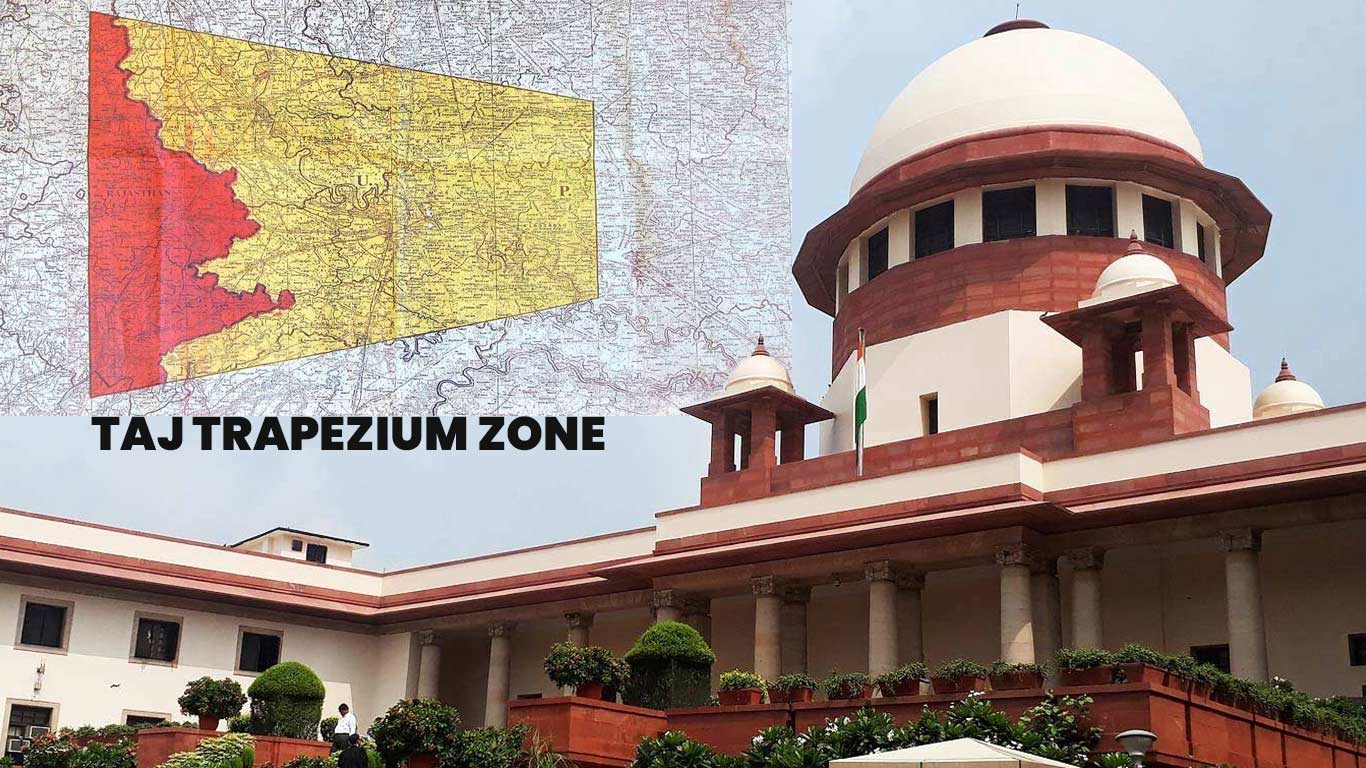
Lucknow, Jul 23 (KNN) The Supreme Court has allowed the Taj Trapezium Zone (TTZ) Authority to process around 400 pending applications for setting up non-polluting micro, small and medium enterprises (MSMEs) in the ecologically sensitive area surrounding the Taj Mahal.
Conditional Clearance with Expert Oversight
The court directed that all proposals must be examined by experts from the Central Empowered Committee (CEC) and the National Environmental Engineering Research Institute (NEERI). It clarified that if either expert raises objections, the application cannot be approved without prior permission from the court.
A bench led by Chief Justice of India (CJI) Surya Kant, along with Justices Joymalya Bagchi and V. Mohana, on Thursday passed the order while hearing a long-standing case on industrial activity in the 10,400 sq km TTZ, where strict pollution control measures have been in place since 1996.
Pending Studies Not to Delay Applications
The bench noted that key studies, including the TTZ Vision Document, a cumulative impact assessment, and NEERI’s report defining non-polluting industries, are still pending. However, it said these delays should not halt the processing of already submitted applications.
At the same time, the court stressed that the ‘precautionary principle’ must be strictly followed, with decisions guided by expert advice and supervision.
Clear Approval Mechanism
The court mandated that meetings to consider applications must include one expert each from the CEC and NEERI, and no meeting can proceed without their presence. If both experts and the TTZ Authority agree on a proposal, it can be approved in accordance with the law without further reference to the court.
However, in case of disagreement, the matter must be placed before the court for approval.
Transparency and Public Participation
To ensure transparency, the court directed that all decisions be uploaded on the CEC website. This will allow the public to submit objections or suggestions, which must be considered before final decisions are made.
Concerns Over Livelihoods and Environment
During the hearing, Additional Solicitor General Aishwarya Bhati, appearing for the Central government, informed the court that only non-polluting MSMEs, such as small units like flour mills, are being considered, and no heavy industries are involved. It also highlighted that a complete ban on new industries affects livelihoods.
Senior advocate Aparna Bhat, appearing for an intervenor, opposed any dilution of environmental safeguards, alleging that industries had earlier been permitted in Firozabad despite the Ministry of Environment, Forest and Climate Change (MoEFCC) advising against it.
The CJI said a workable solution with preventive measures was needed, noting consensus that only non-polluting industries should be allowed in the TTZ.
The bench suggested case-by-case assessment by experts from the CEC and the NEERI, while acknowledging livelihood concerns.
Justice Bagchi called for a practical mechanism to avoid routing every application through the top court, proposing inclusion of TTZ and NEERI representatives to reduce delays.
The bench referred to its December 30, 1996 order restricting polluting fuels in the TTZ and directed 293 industries in the Agra region to switch to natural gas to reduce pollution.
(KNN Bureau)







 Loading...