Delhi Leads In Low Debt Burden, Arunachal Pradesh Highest: State Fiscal Tracker
Updated: Aug 31, 2026 03:04:45pm

Delhi Leads In Low Debt Burden, Arunachal Pradesh Highest: State Fiscal Tracker
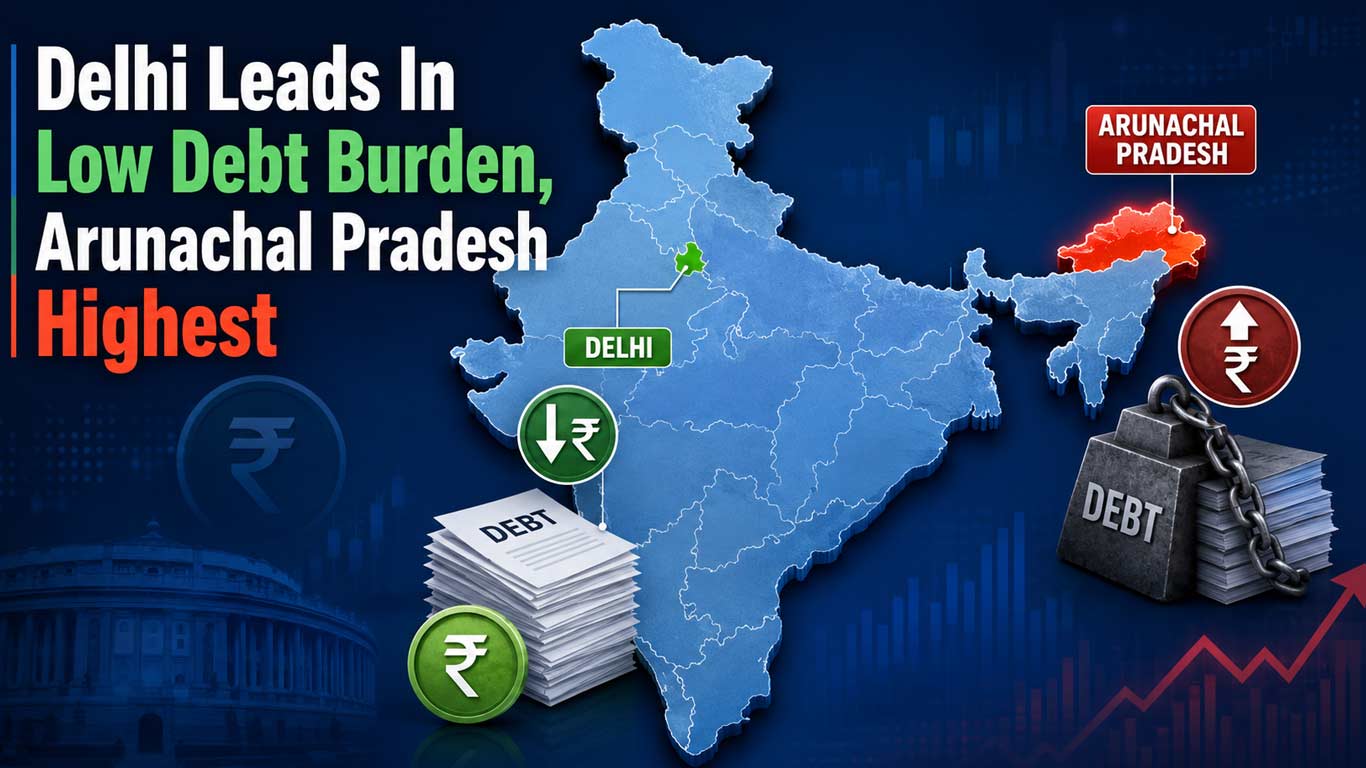
New Delhi, Aug 31 (KNN) Delhi recorded the lowest debt burden among states and Union Territories with comparable data in 2024-25 Budget Estimates (BE), with outstanding liabilities equivalent to 1.3 per cent of its Gross State Domestic Product (GSDP), according to the Business Standard India State Fiscal Health Tracker.
It was followed by Odisha at 16.3 per cent, Gujarat at 17.9 per cent, Maharashtra at 19 per cent and Uttarakhand at 24.2 per cent. All five states and UTs had debt burdens below 25 per cent of GSDP.
Arunachal Pradesh Has Highest Debt Burden
At the other end of the ranking, Arunachal Pradesh had the highest debt burden at 57 per cent of GSDP, followed by Punjab at 46.6 per cent, Himachal Pradesh at 45.2 per cent, West Bengal at 39.3 per cent and Meghalaya at 38.8 per cent.
Wide Variation In State Debt Burdens
The difference between Delhi and Arunachal Pradesh was 55.7 percentage points, highlighting the wide variation in outstanding liabilities relative to the size of state economies.
Debt-To-GSDP Ratio Offers Better Comparison
Debt burden measures a state's outstanding liabilities as a share of its GSDP. Expressing debt as a proportion of economic output provides a more meaningful comparison than looking at absolute debt, as larger economies can naturally carry higher liabilities.
A higher debt-to-GSDP ratio generally indicates greater accumulated debt pressure and can limit fiscal space if a larger share of government resources is required for debt servicing.
Delhi Leads On Debt Indicator
According to the Reserve Bank of India's 2025 Handbook of Statistics on Indian States, the figures are based on 2024-25 Budget Estimates. The India State Fiscal Health Tracker compares states and UTs across eight fiscal indicators.
Debt Ranking Does Not Reflect Overall Fiscal Health
The debt-burden ranking, however, does not represent an overall assessment of the fiscal health of individual states.
Revenue performance, economic growth, interest costs, expenditure patterns and other fiscal indicators also influence a government's capacity to manage its liabilities.
Budget Estimates May Differ From Actual Outcomes
The figures are based on Budget Estimates rather than final accounts, meaning actual borrowing and expenditure outcomes may differ from the estimates prepared when state budgets were presented.
(KNN Bureau)








 Loading...