Draft National Steel Policy Targets 604 Million Tonnes Of Steel Capacity By 2047
Updated: Oct 12, 2026 02:47:52pm

Draft National Steel Policy Targets 604 Million Tonnes Of Steel Capacity By 2047
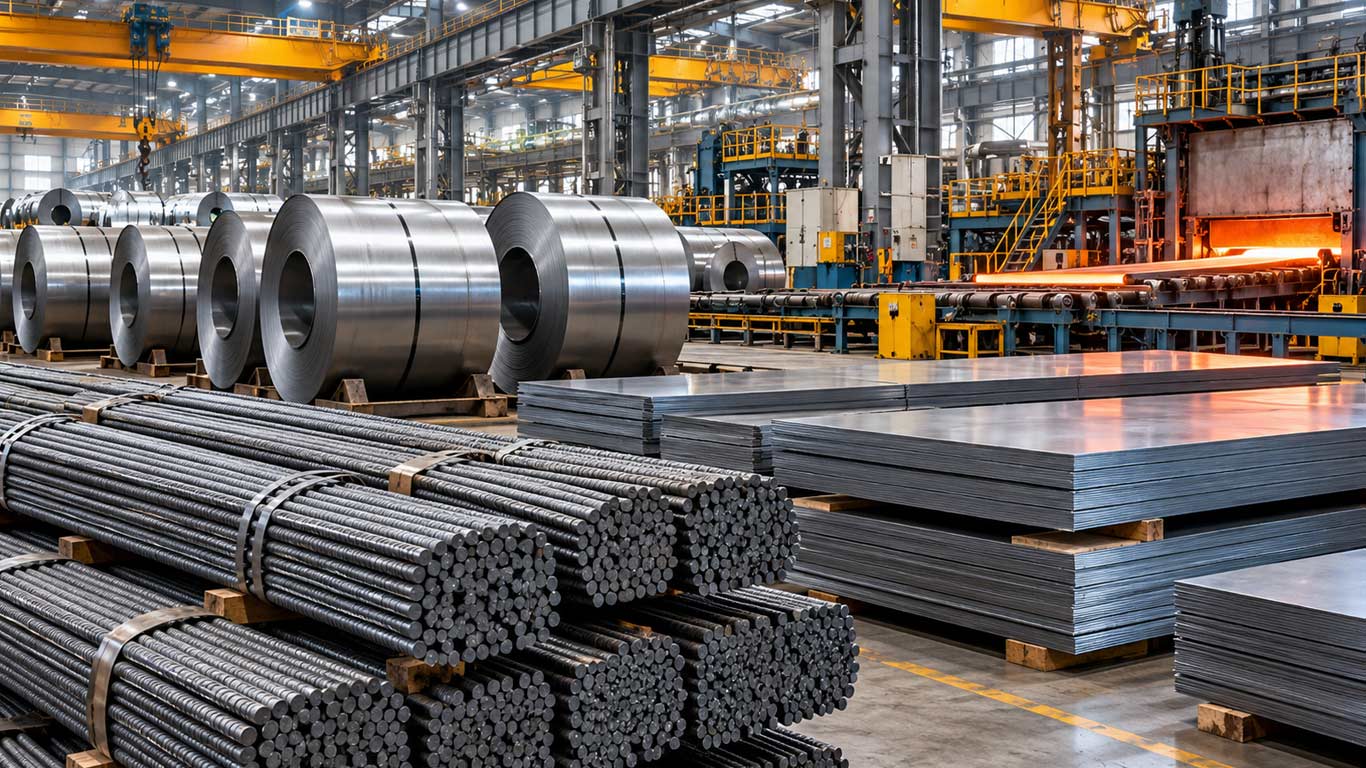
New Delhi, Oct 12 (KNN) India aims to raise finished steel demand to 505 million tonnes by 2047, requiring annual crude steel production capacity of 604 million tonnes, according to the draft National Steel Policy–Vision 2047.
The policy seeks to boost competitiveness, reduce import dependence and cut emissions in line with the government’s Viksit Bharat vision.
It projects per capita steel consumption of 302 kg and steel exports of 45 million tonnes by 2047, with measures covering raw materials, technology, manufacturing, trade, skills and workplace safety.
Steel Production And Consumption Rise
India’s crude steel production rose from 89 million tonnes in 2014-15 to 170 million tonnes in 2025-26, while finished steel consumption increased from 77 million tonnes to 164 million tonnes, reported Business Today.
India’s share of global crude steel production grew from 5.2 per cent in 2014 to 8.9 per cent in 2025. The country currently has an annual steelmaking capacity of 220 million tonnes.
Construction and infrastructure account for around 67 per cent of domestic steel consumption, while automobiles, engineering goods, appliances and packaging contribute another 28 per cent.
The policy projects further demand growth driven by urbanisation, renewable energy, clean mobility and digital infrastructure.
Reducing Dependence On Coking Coal Imports
Raw materials account for 65–70 per cent of steelmaking costs. While India is largely self-sufficient in iron ore, it imports nearly 92 per cent of its coking coal needs.
The draft proposes expanding domestic mining and coal washeries, acquiring overseas assets, securing long-term supplies and using AI to optimise coal blends.
It also aims to improve raw material access, technology adoption, skills and workplace safety in the secondary steel sector, which comprises around 2,550 units and accounts for nearly 47 per cent of crude steel production capacity.
Decarbonisation And Technology Upgrades
The steel sector accounts for an estimated 10-12 per cent of India’s carbon dioxide emissions, with average emission intensity of 2.54 tonnes of CO₂ per tonne of crude steel, compared with the global average of 1.92 tonnes.
The policy outlines a phased transition towards net-zero emissions by 2070 through improved energy efficiency, renewable electricity, greater scrap utilisation and hydrogen-based technologies.
Focus On Specialty Steel And Quality
The draft policy seeks to boost domestic production of value-added products, including stainless and specialty steel, while reducing reliance on imported raw materials and technology.
Proposed measures include developing a domestic scrap ecosystem, promoting downstream manufacturing clusters, setting up Centres of Excellence, advancing indigenous technologies and aggregating demand.
It also proposes strengthening steel quality through revised Indian Standards and conformity assessments. AI-based import monitoring and other trade measures would help curb substandard steel imports, while quality steel exports would be encouraged.
(KNN Bureau)





 Loading...