Govt Cuts Kharif 2026 Fertiliser Requirement Estimate To 38.39 MT Amid El Niño Concerns
Updated: Jun 02, 2026 03:54:58pm

Govt Cuts Kharif 2026 Fertiliser Requirement Estimate To 38.39 MT Amid El Niño Concerns
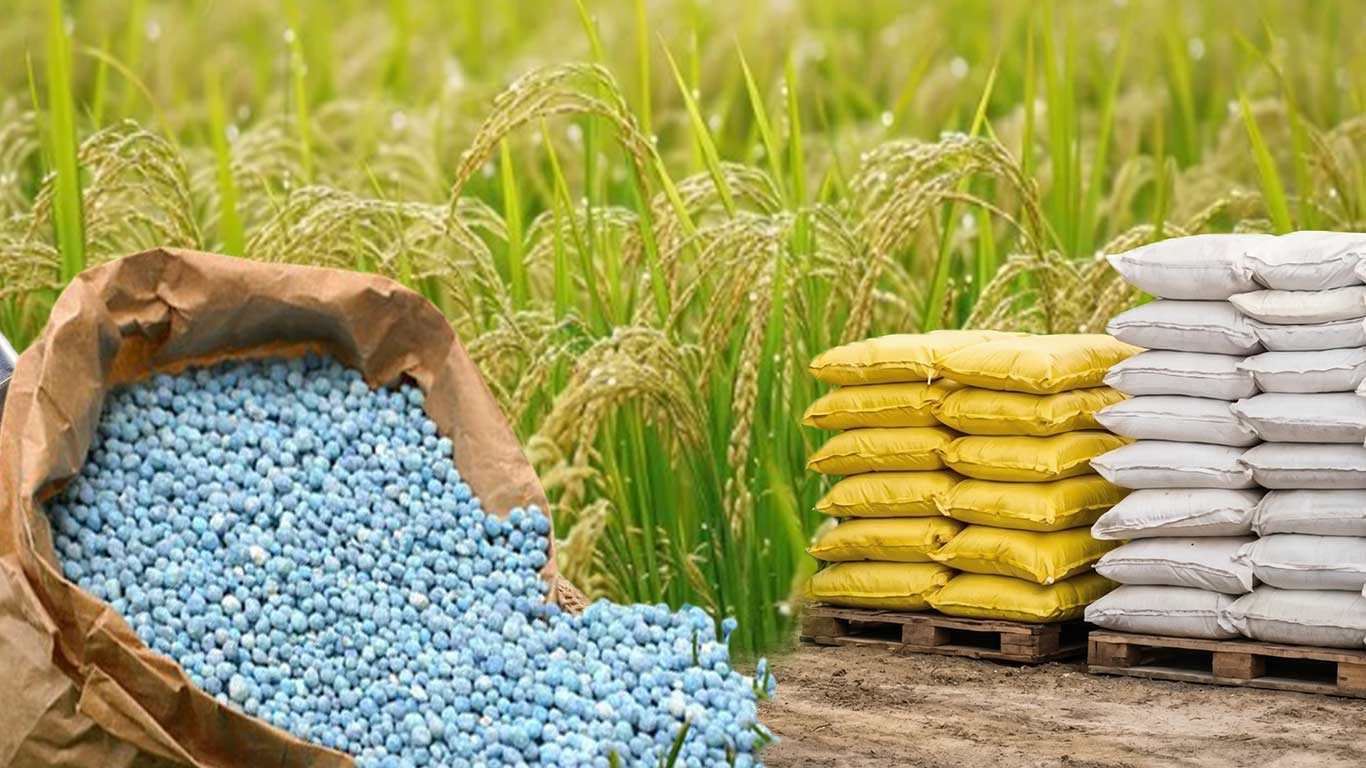
New Delhi, Jun 2 (KNN) The government has revised downward its fertiliser requirement for the 2026 kharif season to 38.39 million tonnes (MT), from the earlier estimate of 39.05 MT, following consultations with state governments and in view of evolving monsoon forecasts linked to El Niño conditions.
Urea And DAP Demand Estimates Revised Lower
According to official data, the revised assessment pegs urea requirement at 19.03 MT, lower than the earlier estimate of 19.40 MT, while demand for Di-Ammonium Phosphate (DAP) has been reduced to 5.62 MT from 5.91 MT, reported Business Standard.
The government said India currently holds around 19.98 MT of fertiliser stocks, equivalent to nearly 52 percent of the total reassessed kharif requirement.
Imports And Domestic Production Strengthen Availability
Authorities also highlighted that around 13.24 MT of fertilisers have been added to the country’s total availability through imports and domestic production since the onset of the West Asia crisis.
To strengthen supplies ahead of the sowing season, India has already secured approximately 2.5 MT of urea, 1.5 MT of DAP and 1 MT of NPKS fertilisers through international tenders, with shipments expected to arrive at Indian ports during June and July.
Additionally, a global tender for 1.7 MT of urea is currently under process. Domestic production has also remained robust. Urea output in May 2026 reached 2.51 MT, exceeding production during the same month last year by 0.28 MT.
Below-Normal Monsoon Forecast Drives Policy Reassessment
The revised fertiliser requirement comes against the backdrop of a weaker monsoon outlook.
In its second-stage forecast released last week, the India Meteorological Department (IMD) lowered its monsoon projection for 2026 to 90 percent of the Long Period Average (LPA), down from the earlier forecast of 92 percent. The IMD has categorised the expected rainfall as “below normal” due to the anticipated development of El Niño conditions during the season.
If realised, the forecast would make 2026 the driest monsoon year in more than a decade. The last weaker monsoon occurred in 2015, when rainfall was nearly 12.7 percent below average.
Concerns Grow Over Rain-Fed Agricultural Regions
While the Indian Ocean Dipole is expected to remain neutral, offering limited support to monsoon activity, concerns remain over rainfall distribution across key agricultural regions. The IMD has indicated that most parts of the country, except the Northeast, are unlikely to receive normal rainfall this year.
Particularly worrying is the forecast for the core monsoon zone, which covers a large share of India’s rain-fed agricultural areas. Rainfall in this region is expected to remain below 94 percent of the LPA.
Industry observers note that deficient rainfall in these regions could affect the production of major pulses and oilseeds such as soybean, tur and urad, as well as cotton, sugarcane and certain cereals, potentially impacting agricultural output and rural incomes during the kharif season.
(KNN Bureau)








 Loading...


