Govt Rolls Out E85 Fuel For Flex-Fuel Vehicles; Nationwide Rollout Planned
Updated: Jun 06, 2026 03:20:59pm

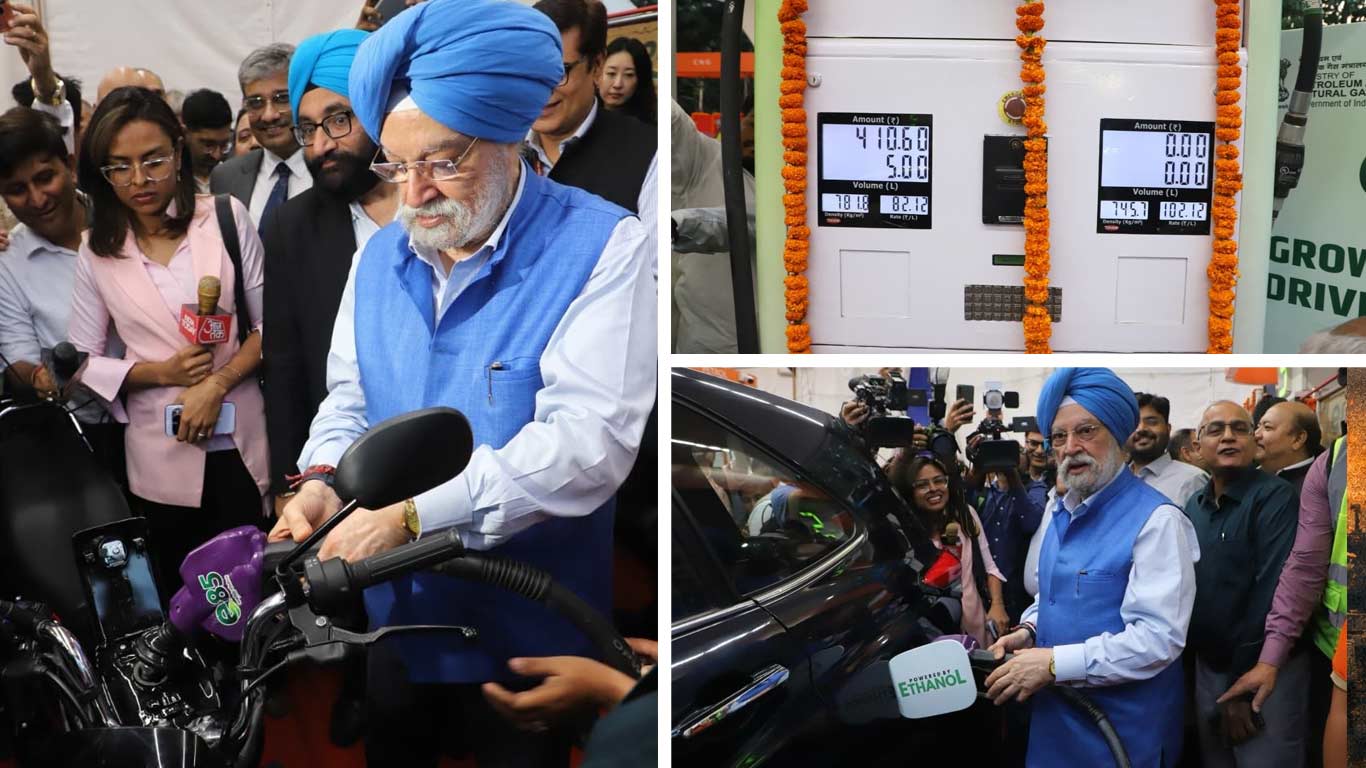
Govt Rolls Out E85 Fuel For Flex-Fuel Vehicles; Nationwide Rollout Planned
New Delhi, Jun 6 (KNN) Union Minister for Petroleum and Natural Gas (MoPNG) Hardeep Singh Puri launched E85 fuel — a high-ethanol blend comprising 80–85 per cent ethanol and 14–19 per cent petrol — at an IndianOil retail outlet in New Delhi on Friday.
The fuel is specifically designed for flex-fuel vehicles (FFVs), which can operate on ethanol blends ranging from E20 to E100.
Rollout and Scale-Up Plan
The launch commences across 48 public sector oil marketing company (OMC) retail outlets nationwide, with an ambitious expansion planned — to 500 outlets by December 2026 and approximately 5,000 outlets by December 2027. The initiative is expected to help raise India's aggregate ethanol blending level to nearly 26 per cent by 2030–31, according to the ministry.
Key Benefits of E85
E85 is priced approximately Rs 20 per litre lower than conventional petrol, ensuring the economic benefits of domestically produced ethanol are passed on to consumers. Flex-fuel vehicles running on E85 can reduce lifecycle greenhouse gas emissions by around 61 per cent compared to conventional petrol vehicles, the ministry noted.
With a Research Octane Number (RON) of approximately 108, ethanol offers superior engine performance, higher compression ratios, and near-zero particulate matter emissions — contributing to improved urban air quality.
Economic and Environmental Potential
Puri said, “If 50 per cent of new two-wheelers and four-wheelers transition to flex-fuel vehicles, it could generate demand for over 312 crore litres of ethanol and result in nearly Rs 12,403 crore flowing directly to farmers.
He added, “Such a transition could also lead to annual foreign exchange savings of nearly Rs 15,151 crore and reduction of CO2 emissions by 66.4 lakh metric tonnes.”
Flex-Fuel vs EVs
The Minister positioned flex-fuel vehicles as a competitive alternative to electric vehicles, citing lower acquisition costs and the ability to leverage existing fuel distribution infrastructure.
He noted that while EVs depend significantly on imported batteries and critical minerals, E85-powered vehicles run on ethanol produced domestically by Indian farmers.
Puri also urged states to support the transition through enabling taxation policies for both E85 fuel and flex-fuel vehicles, and addressed public misconceptions — clarifying that E85 is intended exclusively for specially designed FFVs, that no engine failures have been reported since E20 became the national standard fuel, and that E20 usage has no bearing on vehicle insurance validity.
(KNN Bureau)







 Loading...


