India Inc Remains Resilient Despite Stress In Eight Sectors: Crisil Ratings
Updated: May 28, 2026 01:12:34pm

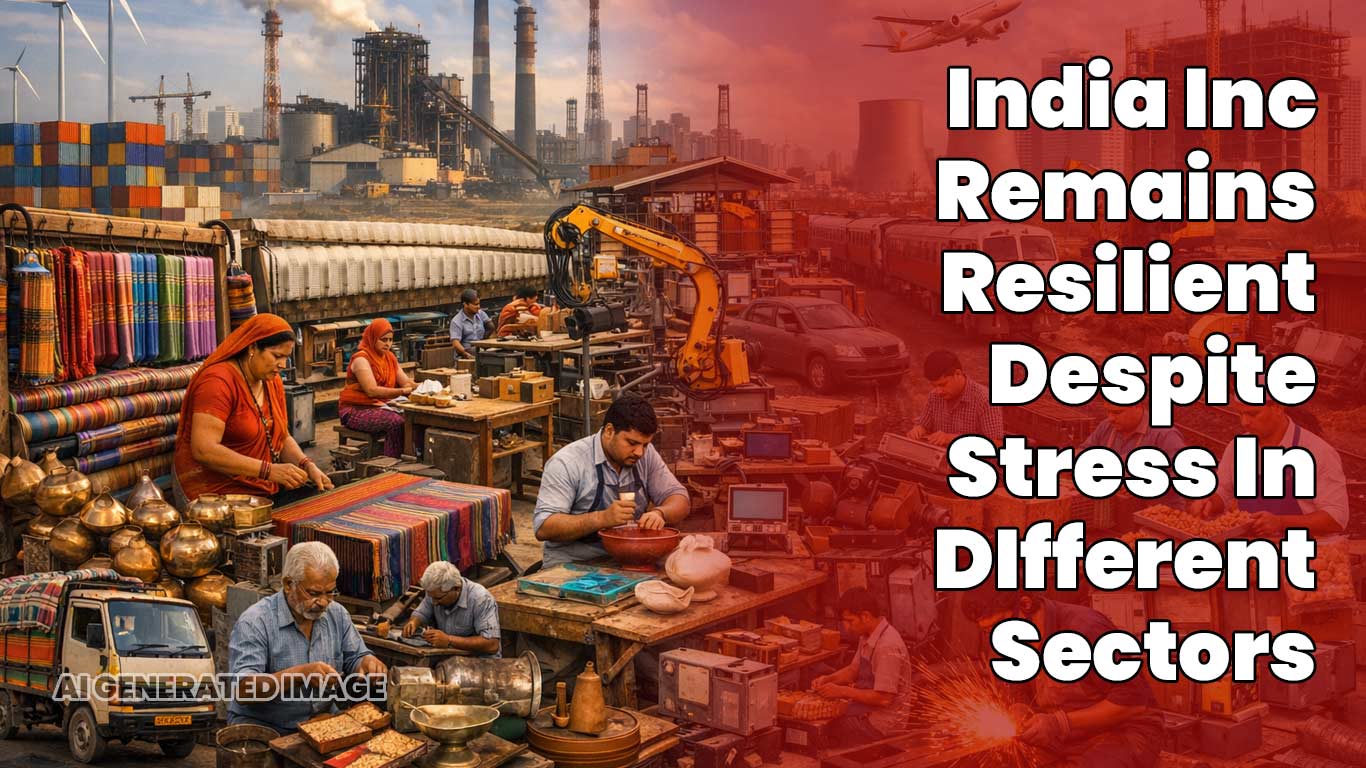
India Inc Remains Resilient Despite Stress In Eight Sectors: Crisil Ratings
New Delhi, May 28 (KNN) Indian corporates remain broadly resilient, supported by strong balance sheets and domestic demand, although 8 sectors face material credit risk, according to Crisil Ratings, which stress-tested 34 sectors.
The agency assessed the impact of the ongoing West Asia conflict on credit quality across these sectors representing 65 per cent of its rated corporate debt.
The exercise assumed supply-chain disruptions lasting nine months this fiscal and crude oil prices averaging USD 110 per barrel — more severe than its base case of six months of disruption and USD 95 per barrel.
The results indicate that prolonged disruptions could shave approximately 200 basis points (bps) off corporate operating profitability this fiscal, down from a pre-conflict expectation of around 12 per cent.
Of the 34 sectors tested, 22 would see operating profitability decline by more than 10 per cent due to higher inventory costs and limited ability to pass on the burden to consumers immediately.
Credit Profiles Remain Cushioned
Despite profitability pressures, Crisil expects the credit quality of only eight sectors — accounting for 10 per cent of rated corporate debt — to be materially impacted.
"For companies, managing costs and profitability will be a bigger challenge than achieving topline growth," said Subodh Rai, Managing Director, Crisil Ratings.
He noted that controlled gearing levels and sustained domestic demand would provide a buffer for most sectors.
India Inc's financial position has strengthened considerably over the past decade. Median corporate gearing has halved to around 0.5 times as of March 2026, while interest coverage has more than doubled to over 5 times, providing meaningful headroom to absorb near-term shocks.
Sectors Under Pressure
One sector faces a negative credit quality outlook, with ceramics likely to be the hardest hit as gas supply disruptions could cut revenue by about a third and profitability by half.
Seven sectors face a moderately negative impact. Airlines may see profitability drop by around 50 per cent due to airspace closures and higher fuel costs. Crude-linked industries are struggling to pass on rising input costs, while auto component makers face limited pricing flexibility. Diamond polishers are dealing with higher procurement costs, and basmati rice exporters are seeing weaker demand from key markets.
Rupee Depreciation: Mixed Impact
On currency risks, Crisil noted that most companies either have a natural hedge through trade or maintain forward cover for foreign exchange exposure.
Sectors without a natural hedge, such as edible oils, have historically been able to pass on higher costs to end-users.
Export-oriented sectors — including pharmaceuticals, textiles, readymade garments, shrimp processors, and electronics manufacturers — may, in fact, benefit from the rupee's depreciation.
Overall Outlook: Stable but Cautious
Somasekhar Vemuri, Senior Director, Crisil Ratings, said, "While our outlook for India Inc’s credit quality remains stable, supported by strong corporate balance sheets and steady domestic demand, we maintain a cautious stance because of the uncertain trajectory of the West Asia conflict."
“If the strife and the stabilisation period are prolonged further, supply hiccups would exacerbate inflation and amplify demand disruption. Therefore, the crucial monitorables are the magnitude of the conflict and the extent and duration of the increase in fuel prices because these can impact our assessment of overall credit quality,” Vemuri added.
(KNN Bureau)







 Loading...