India Must Deepen GVC Integration, Improve FTA Utilisation to Boost Export Competitiveness: Deloitte India
Updated: Oct 05, 2026 04:16:15pm

India Must Deepen GVC Integration, Improve FTA Utilisation to Boost Export Competitiveness: Deloitte India
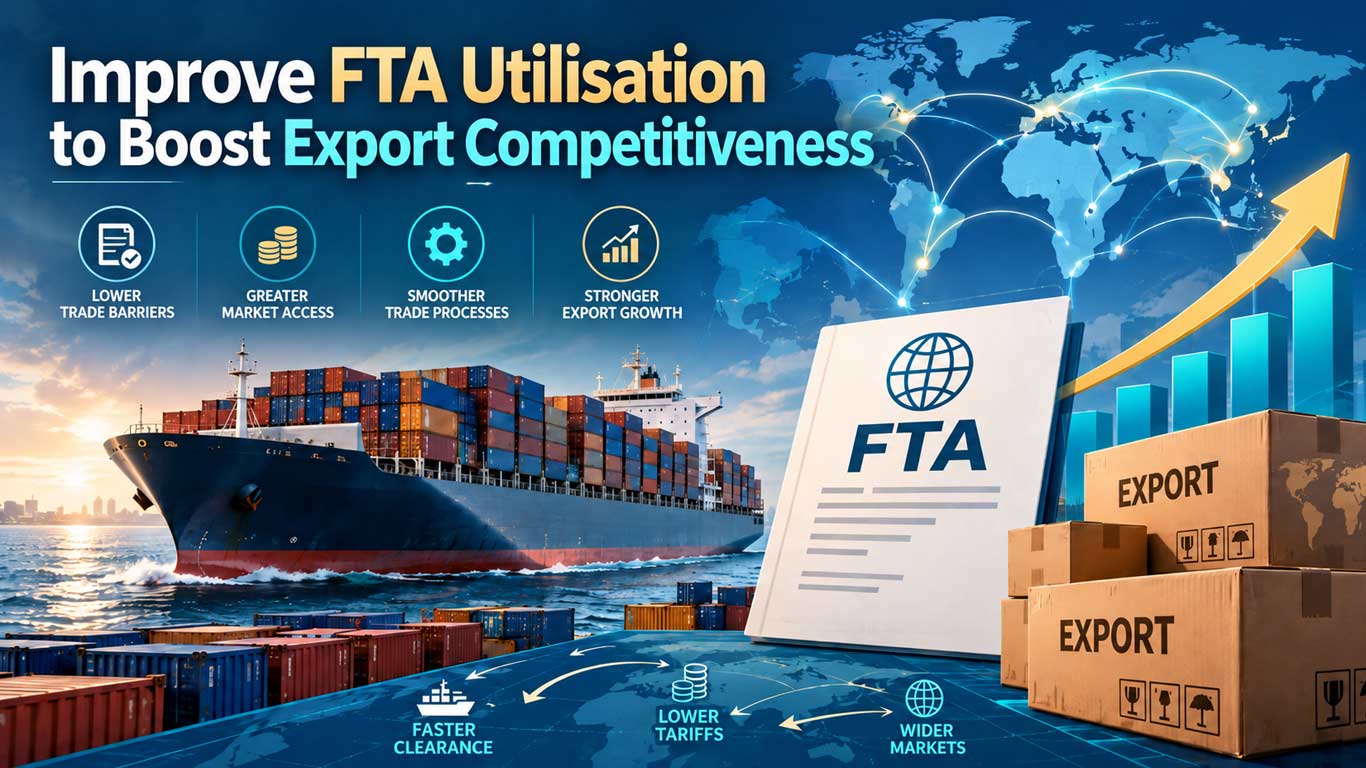
New Delhi, Oct 5 (KNN) India needs to deepen its integration into global value chains (GVCs), strengthen supply chain resilience and improve utilisation of free trade agreements (FTAs) to boost exports and high-end manufacturing, Deloitte India said.
India should further reduce logistics costs through multimodal export corridors by focusing not only on infrastructure creation but also on end-to-end supply chain efficiency, Anil Talreja, Partner, Deloitte India, noted.
Priority should be given to reducing costs related to port handling, transportation, warehousing, rail connectivity, container availability and last-mile logistics, he added.
Focus On Technology, Value Addition
“India's next phase of export-led manufacturing must move beyond scale and assembly towards technology, value addition and deeper integration into GVCs,” Talreja said, PTI reported.
He identified electronics and semiconductors, pharmaceuticals, capital goods, defence and aerospace, speciality chemicals and clean technologies as high-potential sectors.
Talreja suggested setting up a dedicated ‘Response Cell’ to monitor and analyse changes in standards, carbon border adjustment measures (CBAM), product regulations, sustainability and traceability requirements, sanctions and other emerging trade-related requirements in major export markets.
Leverage FTAs To Build Manufacturing Ecosystems
According to Deloitte India, recent FTAs finalised by India can help provide access to competitively priced intermediate inputs, technology, investment and large export markets, while enabling Indian companies to integrate into partner-country supply chains.
It called for aligning FTAs with India's industrial strategy to attract investment, develop manufacturing ecosystems and expand export opportunities.
The report also recommended reviewing inverted duty structures that raise input costs and reduce export competitiveness.
Deloitte India said India should assess vulnerabilities in critical supply chains, including dependence on key inputs, supplier concentration and geopolitical risks. These risks can be reduced through alternative suppliers, technology partnerships, domestic production and strategic reserves.
MSMEs Need Support To Use FTAs
For micro, small and medium enterprises (MSMEs), the government should provide support for compliance with rules of origin, standards and documentation requirements to help them make greater use of preferential tariffs under FTAs.
MSMEs account for about 48.58 per cent of India's total exports and around 45 per cent of the country's manufacturing, according to Deloitte India.
Talreja also highlighted challenges faced by MSMEs in accessing affordable trade finance.
“MSMEs often face challenges in securing pre- and post-shipment credit due to limited collateral, credit history, and export track record, resulting in higher financing costs,” he said.
He added that long export payment cycles and fluctuating exchange rates expose MSMEs to payment and currency risks, affecting cash flows, pricing competitiveness and profitability.
(KNN Bureau)






 Loading...


