India Tightens Trade Rules, Bans Imports Of Goods Made With Forced Labour
Updated: Jul 15, 2026 02:20:06pm

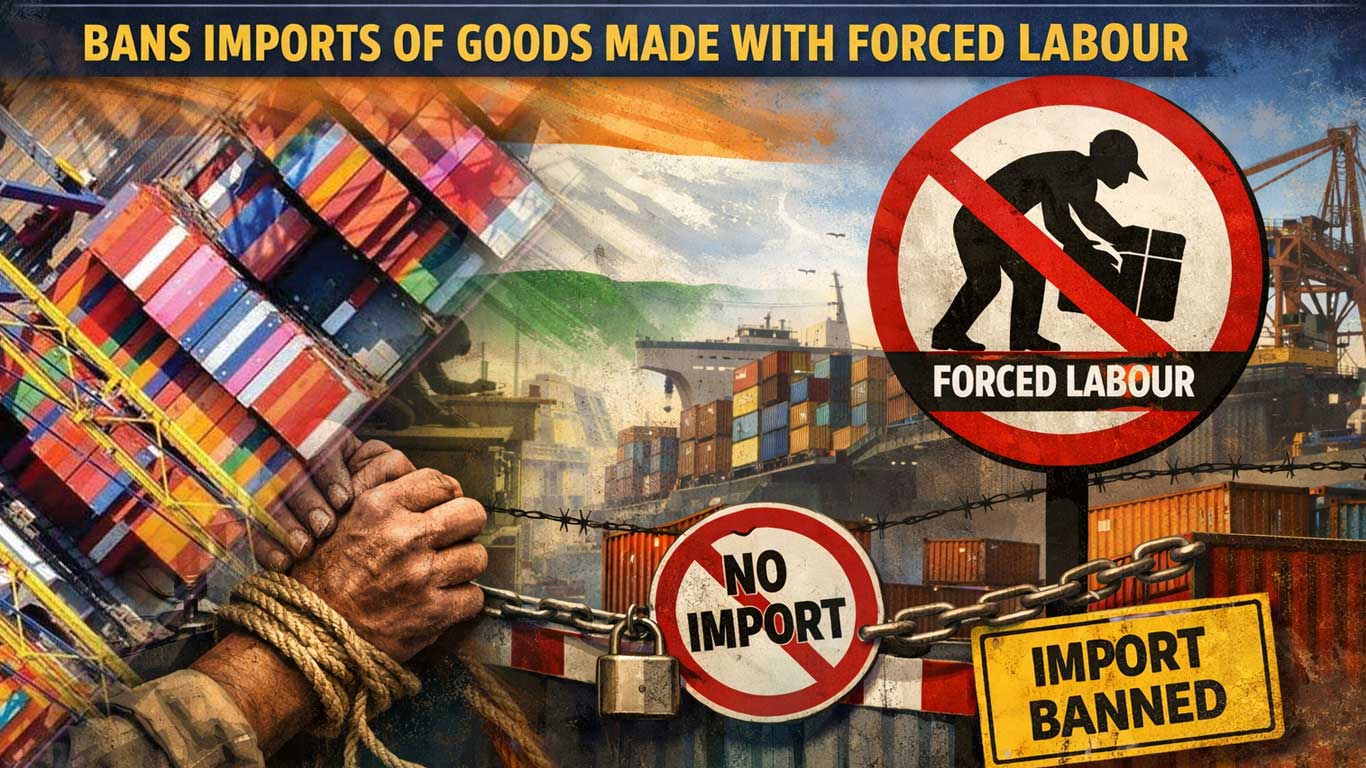
India Tightens Trade Rules, Bans Imports Of Goods Made With Forced Labour
New Delhi, Jul 15 (KNN) India has prohibited the import of goods produced using forced labour, tightening its trade framework amid rising global scrutiny.
The move follows an amendment to the Foreign Trade Policy by the Ministry of Commerce and Industry, empowering authorities to restrict the entry of such goods into the country.
A notification issued by the Directorate General of Foreign Trade (DGFT) on July 13 stated that imports of goods manufactured wholly or partly through forced labour are now banned. The new rule will come into effect after 30 days.
Alignment with Global Standards
The government has adopted the definition of forced labour under the International Labour Organization (ILO) Forced Labour Convention, which describes it as work extracted under threat of penalty and without voluntary consent.
Under the revised framework, the DGFT will investigate cases where imports are suspected to involve forced labour. If violations are established, the agency may recommend restrictions on specific products after consultations with stakeholders.
Context of US Trade Action
The decision comes amid a Section 301 investigation by the Office of the United States Trade Representative (USTR), which is examining whether countries, including India, have adequate safeguards against forced labour-linked imports. The probe covers around 60 countries.
The United States has indicated that it may impose additional tariffs of up to 12.5 per cent on imports from countries that fail to address such concerns. Indian exports are already subject to a 10 per cent tariff under existing measures.
Balancing Trade and Compliance
India has maintained that its labour and trade systems comply with global standards, even as it continues discussions with the US on trade-related issues.
The latest policy change is seen as part of broader efforts to align with evolving international practices and reduce potential trade frictions.
(KNN Bureau)



 Loading...