India’s Clean Energy Transition May Generate Over 44 Lakh Jobs By 2030: CEEW-NRDC Study
Updated: Jun 04, 2026 03:39:08pm

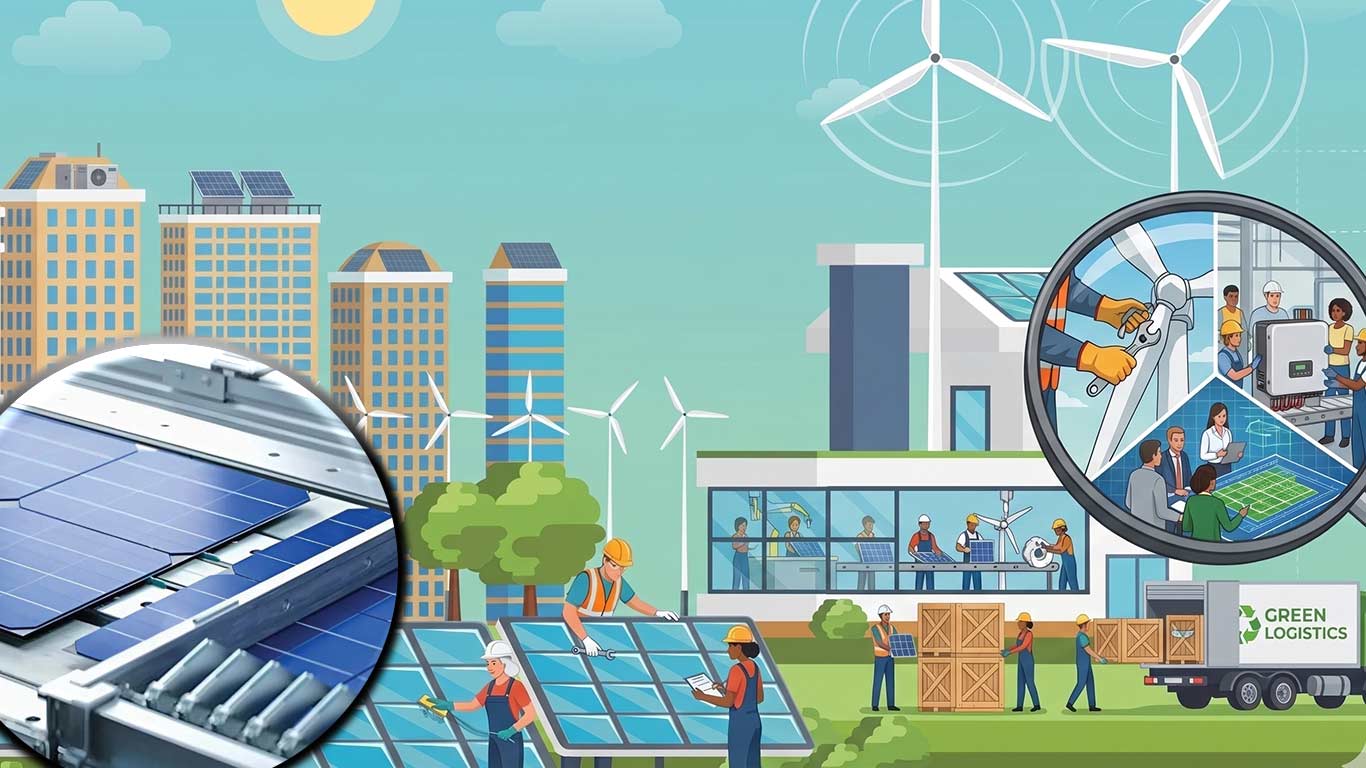
India’s Clean Energy Transition May Generate Over 44 Lakh Jobs By 2030: CEEW-NRDC Study
New Delhi, Jun 4 (KNN) India's clean energy transition could generate more than 44 lakh full-time equivalent (FTE) jobs by 2030, with rooftop solar emerging as the single largest source of employment, according to a joint study released by the Council on Energy, Environment and Water (CEEW) and National Research Development Corporation (NRDC) India on Wednesday.
The study, titled ‘Driving Energy Transition: Workforce, Skills, and Gender in India's Renewable Energy Sector’, estimates jobs linked to India's target of achieving 500 GW of non-fossil fuel power capacity and the goals under the National Green Hydrogen Mission.
Rooftop Solar Dominates the Jobs Picture
Rooftop solar is projected to account for approximately 43 per cent of all clean energy jobs under India's 500 GW target — a dominance explained by its significantly higher employment intensity compared to large-scale systems.
The study found that rooftop solar generates 44 times more FTE jobs per megawatt than utility-scale solar installations, underlining the outsized employment potential of decentralised energy systems.
Between FY2023 and FY2026, select clean energy sectors collectively added over 6.5 lakh workers, with rooftop solar contributing 62 per cent of that addition. The PM-KUSUM scheme accounted for 16.3 per cent of new workforce additions, followed by biomass power at 12.6 per cent and ground-mounted solar at 6 per cent.
India's Renewable Energy Progress
India currently ranks third globally in renewable energy installed capacity and achieved its Nationally Determined Contribution (NDC) target of sourcing 50 per cent of installed power capacity from non-fossil fuels in July 2025 — five years ahead of schedule.
Clean energy deployment and manufacturing have become central pillars of the Viksit Bharat 2047 vision and India's commitment to achieving net-zero emissions by 2070.
Gender Participation Remains a Gap
Despite the sector's rapid growth, women remain significantly underrepresented. Women account for only 11 per cent of the total workforce in solar and wind deployment and manufacturing. Of those employed, approximately 62 per cent are in non-technical roles such as human resources, accounting, and administration — highlighting the need for targeted interventions to improve gender equity in technical and operational roles.
Skills and Data Infrastructure Need Attention
The study also emphasised the need for stronger institutional mechanisms within key ministries and government bodies to regularly collect data on employment and skilling in the clean energy sector.
Accurate workforce data, the report noted, is essential for designing effective skill-building programmes, optimising job creation, and ensuring a gender-equitable energy transition.
The research was conducted through a primary survey of companies across the solar, wind, bioenergy, and hydropower sectors in 2024–25, with support from the Ministry of New and Renewable Energy (MNRE).
(KNN Bureau)






 Loading...