PLI Schemes Strengthen India’s Pharmaceutical, Bulk Drug and Medical Device Manufacturing
Updated: Sep 25, 2026 05:43:32pm

PLI Schemes Strengthen India’s Pharmaceutical, Bulk Drug and Medical Device Manufacturing
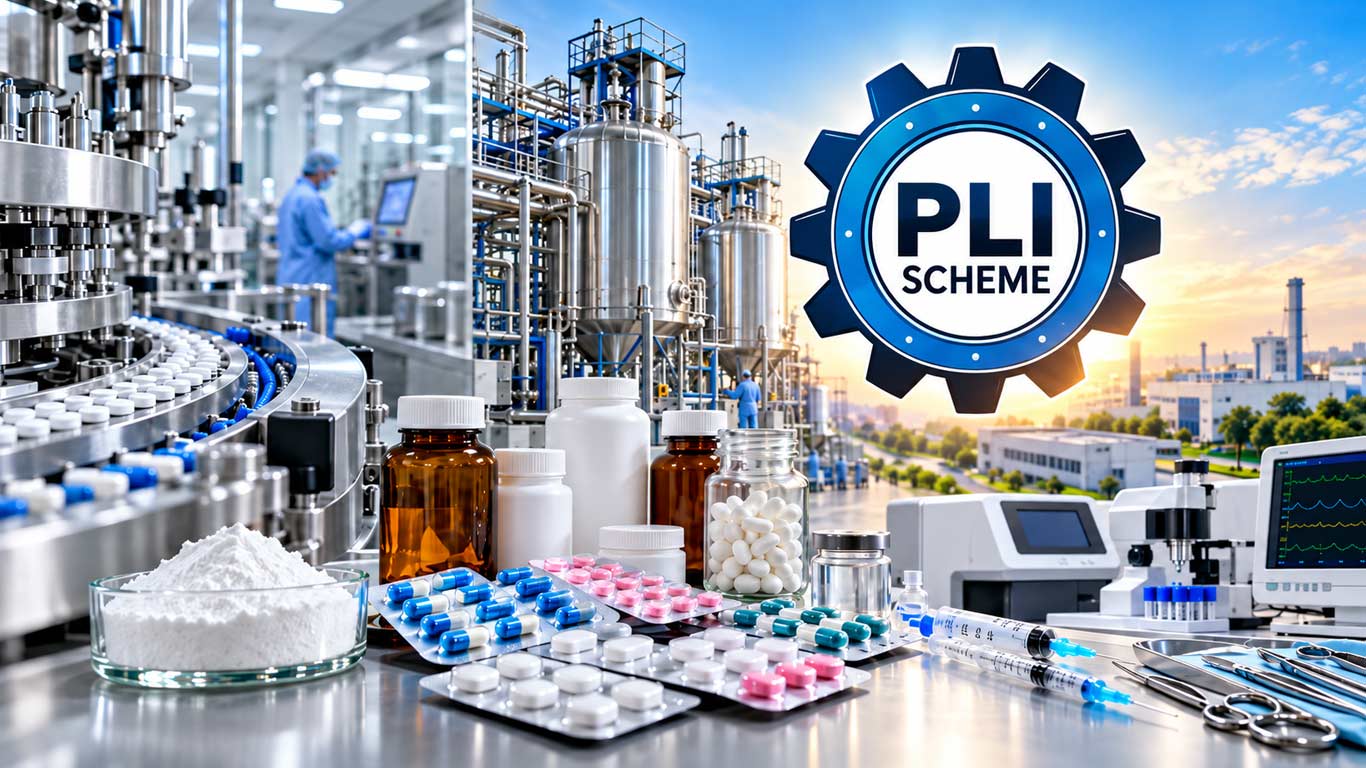
New Delhi, Sep 25 (KNN) The Government’s Production Linked Incentive (PLI) schemes are driving investment and strengthening domestic manufacturing across India’s pharmaceutical and medical devices sectors, according to the Department of Pharmaceuticals, Ministry of Chemicals & Fertilizers.
Aligned with the Make in India and Atmanirbhar Bharat initiatives, three PLI schemes support manufacturing of critical pharmaceutical ingredients, high-value medicines and advanced medical devices, while reducing import dependence and promoting technology adoption.
The PLI Scheme for Pharmaceuticals, with a financial outlay of ₹15,000 crore, aims to enhance manufacturing capabilities, increase investment and production, and promote high-value pharmaceutical products, including biopharmaceuticals, complex generics, patented and off-patent drugs, orphan drugs and auto-immune medicines.
Under the scheme, 55 applicants, including 20 MSMEs, have been selected. As of June 2026, the scheme had attracted ₹46,744 crore in actual investment against a targeted investment of ₹17,275 crore. It had also generated 1,21,294 jobs, while beneficiary companies recorded cumulative sales of ₹4,02,869 crore, including exports worth ₹2,57,370 crore, from FY 2022-23 to June 2026.
The PLI Scheme for Promoting Domestic Manufacturing of Medical Devices, approved with a financial outlay of ₹3,420 crore, aims to boost domestic manufacturing and attract investment in high-end medical technology.
The scheme provides a 5 per cent incentive on incremental sales of eligible medical devices manufactured in India for five years and covers four segments—cancer care and radiotherapy; radiology and imaging; anaesthesia, cardio-respiratory and renal care; and implants, including implantable electronic devices.
Production of 57 unique medical devices has commenced under the scheme, including MRI machines, CT scanners, Cath Labs, Linear Accelerators, C-Arms, mammography machines, ultrasound systems, anaesthesia machines and heart valves.
Under the PLI Scheme for Bulk Drugs, approved with a financial outlay of ₹6,940 crore, the government aims to strengthen domestic manufacturing of 41 identified critical products and reduce dependence on imports of APIs and other essential pharmaceutical building blocks.
A total of 48 projects have been approved under the scheme. As of June 2026, investments of ₹5,210.74 crore had been made against committed investments of ₹4,330 crore, while 39 projects covering 28 APIs/KSMs had been commissioned.
The scheme has enabled domestic production of critical fermentation-based products, including Penicillin-G, Clavulanic Acid and Rifampicin. As of June 2026, beneficiaries recorded sales of ₹3,792.49 crore, including exports of ₹560.16 crore, and generated employment opportunities for around 5,127 persons.
The initiative has also attracted global manufacturers and encouraged technology transfer and advanced manufacturing capabilities in India. Companies including GE Healthcare, Siemens, Philips, Varex, Nipro and Omron have established or expanded manufacturing operations in the country.
The three PLI schemes together cover the pharmaceutical and medical devices manufacturing ecosystem, from critical raw materials and APIs to high-value medicines and advanced medical technologies. The Department of Pharmaceuticals said the initiatives are contributing to supply-chain resilience and strengthening India’s position as a reliable manufacturing hub for pharmaceuticals and medical devices.
(KNN Bureau)







 Loading...