1/3rd of mall tenants shifting to smaller cities; high rentals and low footfall to blame
Updated: Mar 26, 2014 01:01:04pm

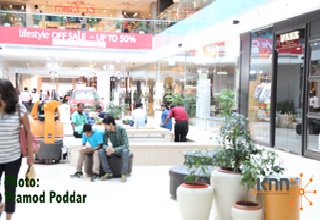
New Delhi, Mar 26 (KNN) Nearly 300-350 malls came up in the country over the last two years but 75-80 per cent of the spaces in these malls lie vacant as high rentals and low footfall put pressure on one-third of retail tenants in the large cities, forcing them to shift to small cities which promise better returns, according to a survey.
Under pressure of high rentals and low footfall, one-third of retail tenants at the shopping malls in the large cities like Mumbai, Delhi, Chennai, Bangalore, Kolkata are shifting to tier-II and III cities like Nagpur, Jaipur, Pune, Indore, Lucknow, Ludhiana and Chandigarh among other such cities, reveals an ASSOCHAM trend survey.
As per the ASSOCHAM estimates, roughly 300-350 malls came up in the country over the last two years but 75-80 per cent of the spaces in these malls lie vacant. At the same time, as many as 95 malls have shut shop, according to the ASSOCHAM latest paper on “Shopping malls increasingly loosing shine in big cities,” revealed today.
The major three core benefits if the retailer-tenants move to smaller cities are lower operational costs and comparatively lesser competition and the novelty values still left in these areas where even the nearby rural population is thronging the air-conditioned halls and getting the taste of comfortable shopping, said ASSOCHAM.
Other such cities where the mall-based retailers are moving include are Goa, Kochi, Vijayawada, Visakhapatnam, Mysore, Coimbatore, Trivandrum, Guwahati, Ahmedabad and Surat and they still hold more potential for growth, adds the ASSOCHAM paper.
“High cost of operation, economic slowdown and wearing down of the novelty values have all combined to reduce the number of foot falls in the malls in big cities. One of the main reasons for the high rentals in the big city malls is the exorbitant land prices and high development costs… Thus, in the foreseeable future, making such malls profitable ventures will remain a challenge…” said Assocham.
In tier II and tier III cities, there is greater scope for growth. Also, larger chunks of land are available in these cities compared with metros, and at lower cost, it added.
The shopping trends in metro cities have influenced the consumer behaviour in tier- II and tier-III cities that are now witnessing a major shift from conventional trader-run standalone shops to larger format retail malls.
The trend can be attributed to factors like the dynamic change in the shopping trend, average spending power of the socio-economic classes in the tier-II to tier-VI cities, demand of various products under one roof, increase in brand consciousness are a few factors that multi-brand discount franchising stores drives on, adds the ASSOCHAM paper.
The overall business is seeing a growth and Tier- II and Tier-III markets have a good scope of growth. The retail growth of about 15 per cent per year is expected through 2015 thanks to the increasing prosperity in the neighbouring rural areas, it added.
Seeing the current scenario in the metros, competition has intensified, rentals have soared and operational costs have touched the roof which has affected the overall profitability of retailers in these cities. (KNN/SD)
Under pressure of high rentals and low footfall, one-third of retail tenants at the shopping malls in the large cities like Mumbai, Delhi, Chennai, Bangalore, Kolkata are shifting to tier-II and III cities like Nagpur, Jaipur, Pune, Indore, Lucknow, Ludhiana and Chandigarh among other such cities, reveals an ASSOCHAM trend survey.
As per the ASSOCHAM estimates, roughly 300-350 malls came up in the country over the last two years but 75-80 per cent of the spaces in these malls lie vacant. At the same time, as many as 95 malls have shut shop, according to the ASSOCHAM latest paper on “Shopping malls increasingly loosing shine in big cities,” revealed today.
The major three core benefits if the retailer-tenants move to smaller cities are lower operational costs and comparatively lesser competition and the novelty values still left in these areas where even the nearby rural population is thronging the air-conditioned halls and getting the taste of comfortable shopping, said ASSOCHAM.
Other such cities where the mall-based retailers are moving include are Goa, Kochi, Vijayawada, Visakhapatnam, Mysore, Coimbatore, Trivandrum, Guwahati, Ahmedabad and Surat and they still hold more potential for growth, adds the ASSOCHAM paper.
“High cost of operation, economic slowdown and wearing down of the novelty values have all combined to reduce the number of foot falls in the malls in big cities. One of the main reasons for the high rentals in the big city malls is the exorbitant land prices and high development costs… Thus, in the foreseeable future, making such malls profitable ventures will remain a challenge…” said Assocham.
In tier II and tier III cities, there is greater scope for growth. Also, larger chunks of land are available in these cities compared with metros, and at lower cost, it added.
The shopping trends in metro cities have influenced the consumer behaviour in tier- II and tier-III cities that are now witnessing a major shift from conventional trader-run standalone shops to larger format retail malls.
The trend can be attributed to factors like the dynamic change in the shopping trend, average spending power of the socio-economic classes in the tier-II to tier-VI cities, demand of various products under one roof, increase in brand consciousness are a few factors that multi-brand discount franchising stores drives on, adds the ASSOCHAM paper.
The overall business is seeing a growth and Tier- II and Tier-III markets have a good scope of growth. The retail growth of about 15 per cent per year is expected through 2015 thanks to the increasing prosperity in the neighbouring rural areas, it added.
Seeing the current scenario in the metros, competition has intensified, rentals have soared and operational costs have touched the roof which has affected the overall profitability of retailers in these cities. (KNN/SD)







 Loading...