Nearly 4 Lakh Tonnes Of Basmati Rice Exports Stranded Amid West Asia, Middle East Conflict
Updated: Mar 05, 2026 01:55:01pm


Nearly 4 Lakh Tonnes Of Basmati Rice Exports Stranded Amid West Asia, Middle East Conflict
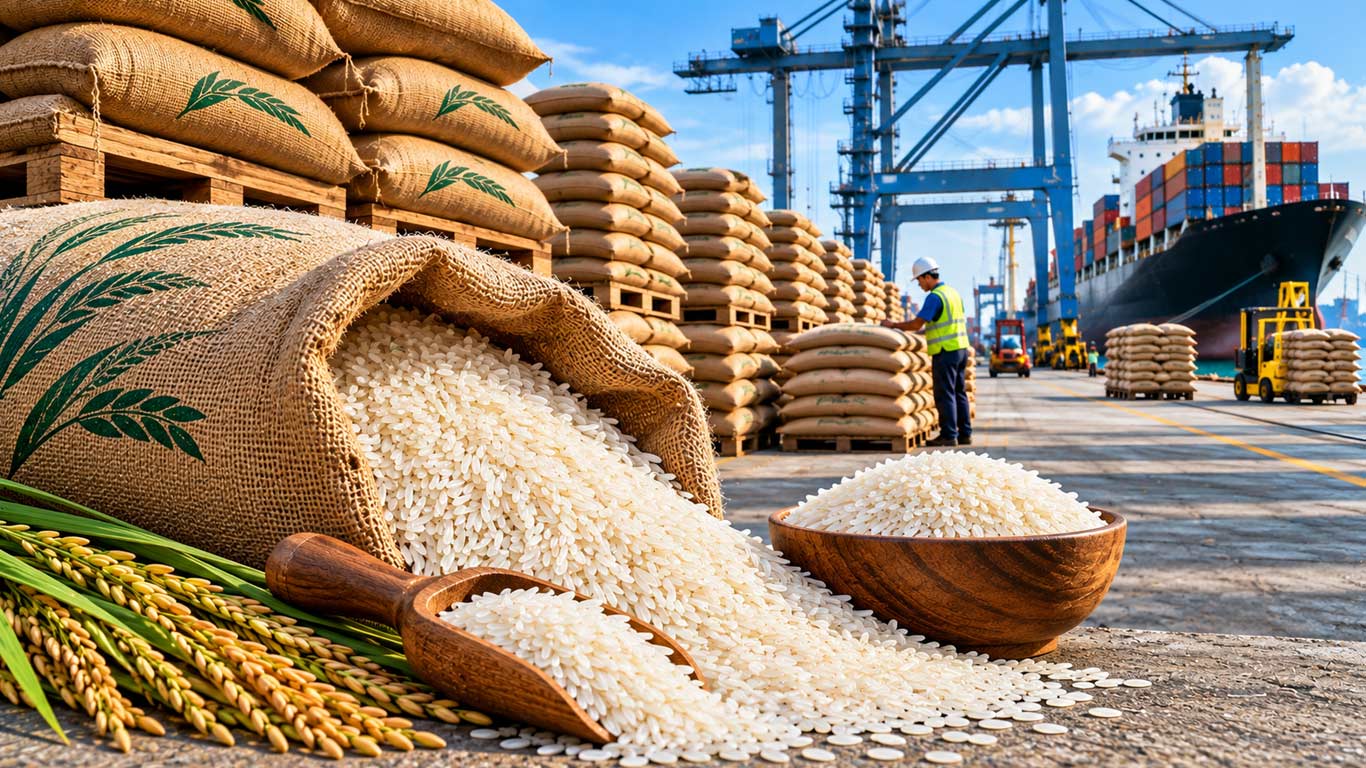
New Delhi, Mar 5 (KNN) Nearly 4 lakh metric tonnes (MT) of basmati rice exports from India are currently stranded at ports or in transit as escalating tensions in the Gulf region disrupt trade flows and raise payment-related uncertainties for exporters.
Industry representatives say around 2 lakh tonnes of basmati rice is stuck at Indian ports while a similar quantity remains in transit, creating concerns for exporters dealing with thin margins in the commodity, reported The Indian Express.
According to All India Rice Exporters’ Association President Satish Goel, exporters have held discussions with officials from the Ministry of Commerce to review the situation. Authorities are reportedly in contact with shipping lines to assess the impact of the geopolitical developments on logistics and cargo movement.
India exports nearly 60 lakh tonnes of basmati rice annually, of which about 40 lakh tonnes are shipped to Gulf countries, making the region a crucial market for Indian exporters.
Union Commerce and Industry Minister Piyush Goyal said the government has held consultations with key ministries and logistics stakeholders to review the emerging situation and its potential impact on trade. As part of the response, an Inter-Ministerial Group (IMG) for Supply Chain Resilience has been formed to coordinate monitoring and mitigation efforts.
Meanwhile, the Indian Rice Exporters’ Federation has warned of heightened volatility in basmati prices as geopolitical tensions intensify. Wholesale basmati prices have already increased by around 10–15 percent over the past month, with Iran remaining a key market for Indian rice.
In an advisory to exporters, the federation urged members to avoid entering into new CIF (cost, insurance and freight) contracts for affected destinations and instead prefer FOB (free on board) arrangements, allowing freight and insurance risks to be borne by international buyers.
Industry bodies have also cautioned that developments in Iran and the UAE could quickly influence bunker fuel prices and shipping availability. Rising oil prices may reduce the availability of container and bulk vessels, potentially driving freight costs sharply higher and exposing exporters to losses on fixed-price contracts.
Insurance premiums for shipments may also rise significantly under such conditions. Exporters have therefore been advised to exercise caution while concluding new orders and to avoid unhedged or open-ended commitments.
The Middle East remains a critical destination for Indian rice exports. Trade with Africa and the Middle East together accounts for roughly half of India’s total rice exports. During April–December 2025, India exported about 3.90 million metric tonnes to the Middle East and 7.16 million metric tonnes to Africa.
Among the leading destinations for basmati rice, several are located in West Asia, including Saudi Arabia, Iran, Iraq, the United Arab Emirates and Yemen, which together account for nearly 50 percent of India’s basmati exports and are therefore among the markets most affected by the current crisis.
(KNN Bureau)








 Loading...