Battery Storage Could Cut Daytime Rooftop Solar Exports by 85-90%: Ember Report
Updated: Oct 22, 2026 04:41:27pm

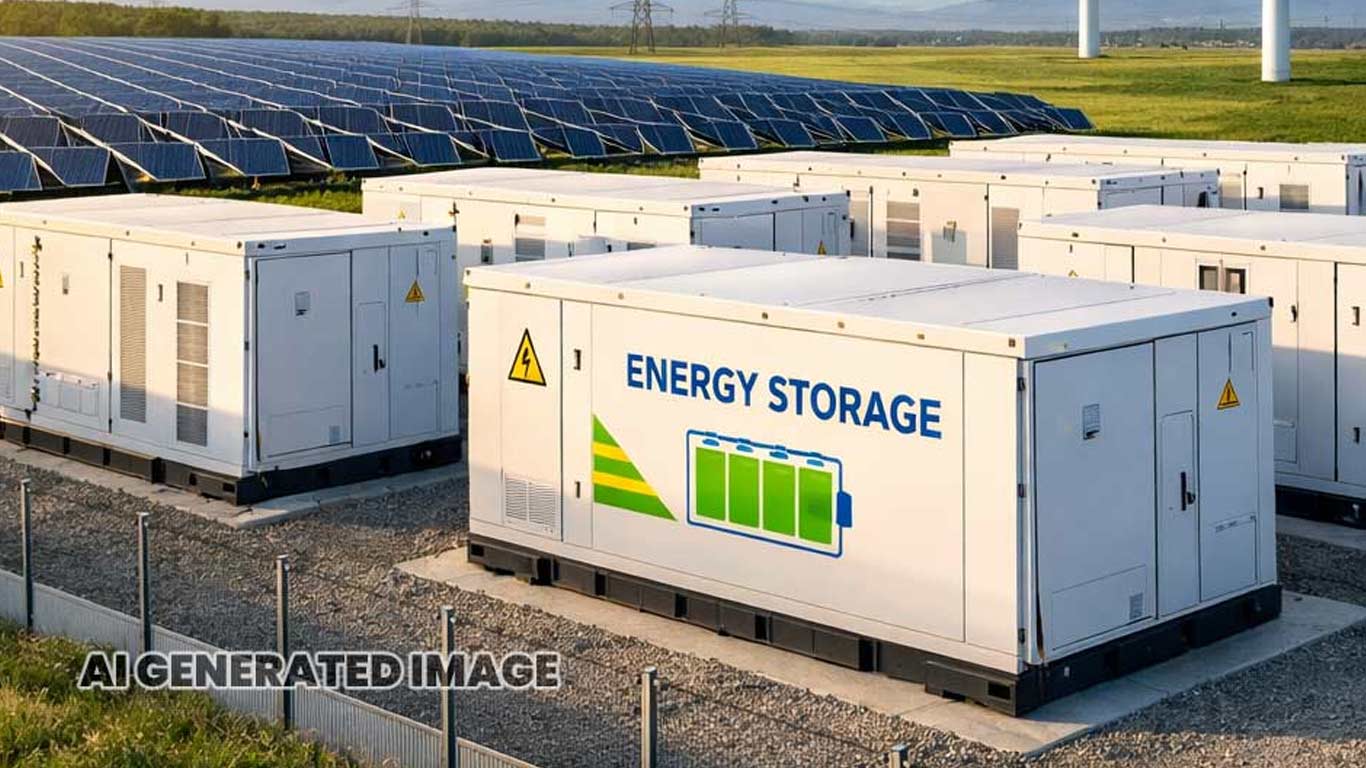
Battery Storage Could Cut Daytime Rooftop Solar Exports by 85-90%: Ember Report
New Delhi, Oct 22 (KNN) Integrating battery storage with residential rooftop solar systems could reduce daytime electricity exports to the grid by 85–90 per cent, but the higher upfront cost could extend the investment payback period to around nine years, according to a report by global energy think tank Ember.
The report said a 3-kW rooftop solar system paired with a 5-kWh battery could shift 1,600-1,800 units of electricity annually from daytime exports to evening consumption.
However, under the current net-metering framework, households have little financial incentive to invest in batteries because surplus electricity exported during the day can be credited against power consumed later, it added.
Ember modelled a household consuming 350 units of electricity a month. A 3-kW rooftop solar system costs Rs 1.65 lakh before subsidies and Rs 87,000 after the Rs 78,000 subsidy under the PM Surya Ghar: Muft Bijli Yojana. The system has an estimated payback period of 3.3 years.
Adding a 5-kWh battery raises the total capital cost to Rs 2.27 lakh and extends the payback period to around nine years. A subsidy covering 50 per cent of the battery cost could reduce it to approximately 6.3 years.
Battery Subsidy Proposal
The report highlighted the mismatch between daytime solar generation and evening electricity consumption. Under net metering, households can export surplus power during the day and withdraw equivalent credits later, while distribution companies (DISCOMs) must balance these exports against electricity that may cost significantly more during peak hours.
Day-ahead market prices in July 2026 fell to around Rs 1.56 per unit during periods of high solar generation, compared with as much as Rs 10 per unit in the evening, the report said.
Ember proposed extending battery subsidies through the next tranche of the PM Surya Ghar scheme. Supporting hybrid rooftop systems for five million households, or half of the scheme's 10-million-household target, could add 15-25 GWh of distributed storage capacity, requiring financial support of around Rs 28,000 crore.
The report also examined possible changes to solar banking rules. Under a scenario limiting banked exports to 40 per cent, the payback period for a subsidised solar-plus-battery system could be around 6.5 years.
Rooftop Solar Expansion
India's rooftop solar capacity has tripled since the launch of PM Surya Ghar in 2024, reaching 30.7 GW in July 2026, or around 19 per cent of the country's total installed solar capacity of 165 GW. More than five million households have adopted rooftop solar under the scheme.
Ember Energy Analyst for Asia Ruchita Shah said, “India’s rooftop solar boom is an opportunity to get ahead of the grid challenge, rather than wait for it to arrive. With more than 5 million households already adopting rooftop solar under PM Surya Ghar, we should be building storage alongside that capacity, not years later.”
Ember said targeted financial support could address the upfront cost barrier and encourage battery adoption without slowing the expansion of rooftop solar.
(KNN Bureau)









 Loading...