Centre Approves Rs 22 Crore Support For First Batch Of Green Hydrogen Startups
Updated: Jun 18, 2026 02:24:54pm

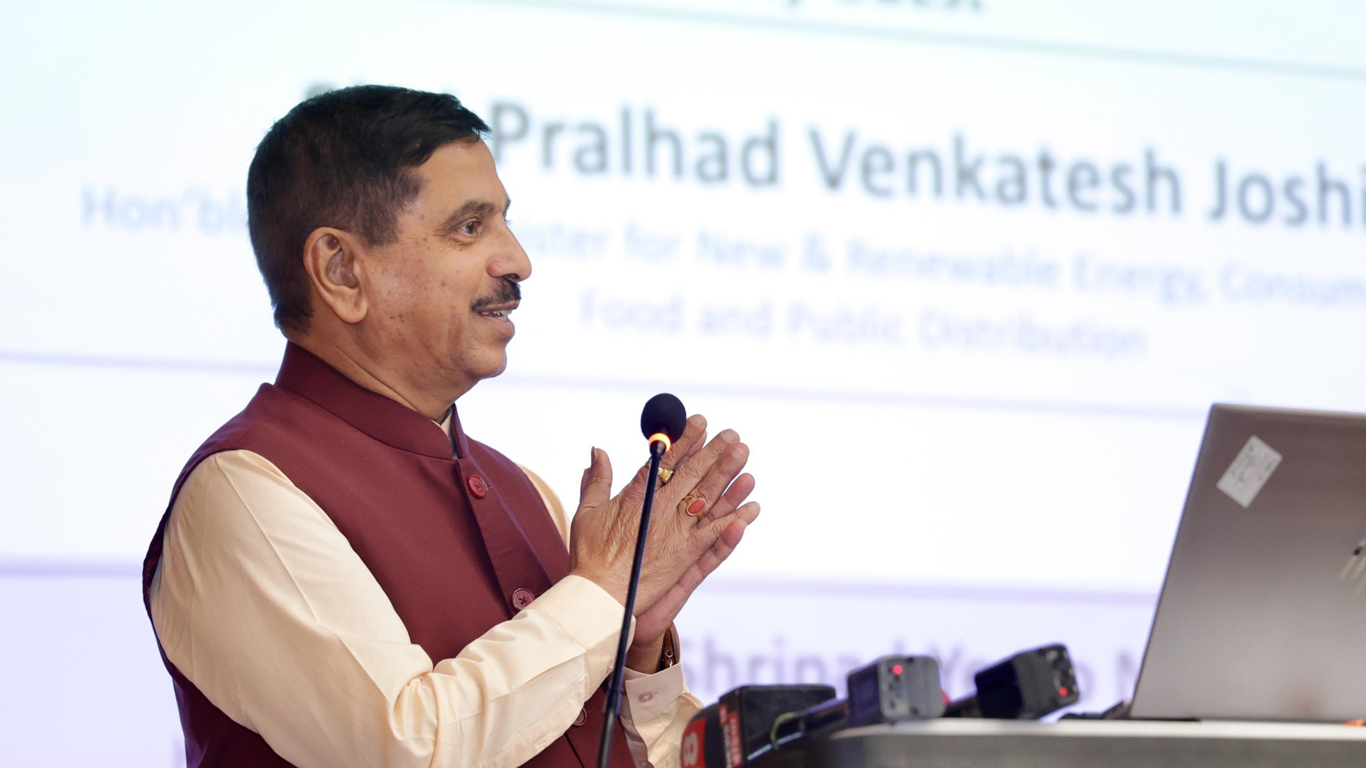
Centre Approves Rs 22 Crore Support For First Batch Of Green Hydrogen Startups
New Delhi, Jun 18 (KNN) Union Minister for New and Renewable Energy Pralhad Joshi on Wednesday announced the approval of the first tranche of support worth Rs 22 crore for nine startups under the National Green Hydrogen Mission's (NGHM) Rs 100 crore startup support programme.
Centre Clears First Funding Support For Green Hydrogen Startups
The announcement was made during a workshop on the National Green Hydrogen Mission organised by the Ministry of New and Renewable Energy (MNRE).
Launched in 2023, the National Green Hydrogen Mission has a total outlay of Rs 19,744 crore and aims to establish at least 5 million metric tonnes of annual green hydrogen production capacity by 2030.
Green Hydrogen Certification Portal Launched
Joshi also launched the Green Hydrogen Certification Portal of India (GHCI) to facilitate certification and regulatory compliance under the Green Hydrogen Certification Scheme of India, reported Business Standard.
The minister urged states to expedite the finalisation and implementation of their green hydrogen policies to achieve their respective targets, assuring them of the Centre's support.
States Accelerate Policy Frameworks
According to the government, six states have already notified dedicated green hydrogen policies, while seven others have incorporated green hydrogen provisions within their existing industrial and renewable energy policy frameworks. Four additional states are in the process of finalising their policies.
Speaking at the event, MNRE Secretary Santosh Sarangi said states have introduced various facilitation measures for the sector, including capital expenditure subsidies, electricity duty exemptions and waivers on wheeling charges.
Advancements Improve Efficiency Of Hydrogen Production
Highlighting technological advancements in hydrogen production, Sarangi noted that electricity consumption for producing one kilogram of hydrogen has declined over time.
He said alkaline electrolyser technology initially required around 55 units of electricity per kilogram of hydrogen produced, while proton exchange membrane technology has reduced the requirement to around 46-48 units.
He added that emerging solid oxide electrolyser cell technology could further lower electricity consumption to 38-42 units per kilogram, with the potential to reduce it to nearly 33 units.
(KNN Bureau)








 Loading...