College students should be allowed to start businesses: Infosys VC
Updated: Mar 31, 2014 12:37:46pm

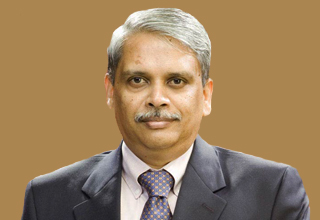
Chennai, Mar 31 (KNN) Citing examples of Microsoft founder Bill Gates and Facebook founder Mark Zuckerberg, who started their businesses as students, executive vice-chairman and one of the seven founders of Infosys, S Gopalakrishnan said that in engineering colleges, the students should be allowed to start businesses in the second year itself, so that they have three years to run these safely.
Addressing the valedictory function of Pan IIT Alumni Leadership Series 2013, organised here by Indian Institute of Technology-Madras on Saturday, he said Microsoft founder Bill Gates and Facebook founder Mark Zuckerberg started their businesses as students adding that entrepreneurship should be developed in colleges.
“Age is not a barrier. In engineering colleges, allow students to start businesses in the second year, so they have three years to run these. They could combine a real life problem by being entrepreneurs while doing engineering,” he said.
It is safe to fail as a student because there are no implications in real life, less people dependent on you and this is the time for experiments, he said, adding one could learn everything about doing business than just theory or reading textbooks.
He also gave the example of Kerala University, which is doing it as part of their curriculum. A student gets 20 per cent waiver in attendance to run a business and four per cent grace marks. Every student now wants to be a start-up engineer.
For a venture capitalist, it is cheaper to fund a student whose expectations are lower.
Gopalakrishnan further said, "we have to rethink what we are doing today. We have to reengineer, reinvent for the 21st century. I believe India can contribute back to the world new models, new pedagogy and new solutions".
He added, it is not about IT alone, our cities need to reengineered, public transport system should be encouraged. “Healthcare, education, urban design, buildings; we need a better model for everything in our life. This is what colleges can challenge their students with. This will make classrooms more interesting, and they will actually solve real life problems and contribute back to the society,” said Gopalakrishnan.
Currently there is a disconnect and it is now not just about what is being taught and what is needed but we need to think about future and this is an opportunity for India to reinvent and contribute back to the world. This includes management principles. How do we bring this to classroom?
In the 20th century, teachers were required to transfer knowledge from printed material. In the 21st century, students have a lot more knowledge, or more or less equally than the teachers as most information is available on the Internet. (KNN/SD)
Addressing the valedictory function of Pan IIT Alumni Leadership Series 2013, organised here by Indian Institute of Technology-Madras on Saturday, he said Microsoft founder Bill Gates and Facebook founder Mark Zuckerberg started their businesses as students adding that entrepreneurship should be developed in colleges.
“Age is not a barrier. In engineering colleges, allow students to start businesses in the second year, so they have three years to run these. They could combine a real life problem by being entrepreneurs while doing engineering,” he said.
It is safe to fail as a student because there are no implications in real life, less people dependent on you and this is the time for experiments, he said, adding one could learn everything about doing business than just theory or reading textbooks.
He also gave the example of Kerala University, which is doing it as part of their curriculum. A student gets 20 per cent waiver in attendance to run a business and four per cent grace marks. Every student now wants to be a start-up engineer.
For a venture capitalist, it is cheaper to fund a student whose expectations are lower.
Gopalakrishnan further said, "we have to rethink what we are doing today. We have to reengineer, reinvent for the 21st century. I believe India can contribute back to the world new models, new pedagogy and new solutions".
He added, it is not about IT alone, our cities need to reengineered, public transport system should be encouraged. “Healthcare, education, urban design, buildings; we need a better model for everything in our life. This is what colleges can challenge their students with. This will make classrooms more interesting, and they will actually solve real life problems and contribute back to the society,” said Gopalakrishnan.
Currently there is a disconnect and it is now not just about what is being taught and what is needed but we need to think about future and this is an opportunity for India to reinvent and contribute back to the world. This includes management principles. How do we bring this to classroom?
In the 20th century, teachers were required to transfer knowledge from printed material. In the 21st century, students have a lot more knowledge, or more or less equally than the teachers as most information is available on the Internet. (KNN/SD)







 Loading...