Parliamentary Panel Flags Rs 42,500 Cr Shortfall In Defence Offset Obligations
Updated: Jul 27, 2026 04:40:37pm

Parliamentary Panel Flags Rs 42,500 Cr Shortfall In Defence Offset Obligations
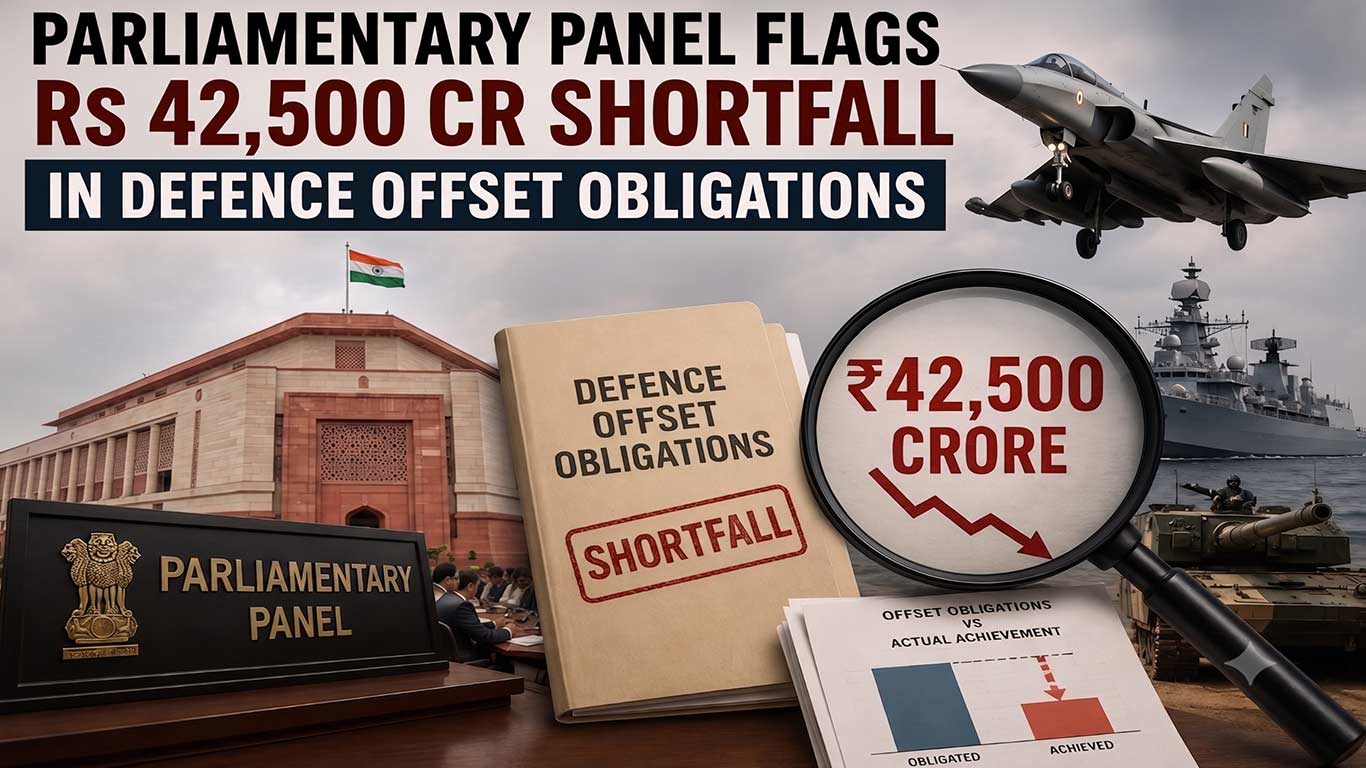
New Delhi, Jul 27 (KNN) A parliamentary committee has raised concerns over the implementation of India’s defence offset policy, noting that foreign military suppliers have yet to fulfil obligations worth about Rs 42,500 crore (around USD 4.5 billion).
In a report tabled in Parliament, the Public Accounts Committee (PAC) said nearly 45 per cent of offset commitments under 26 ongoing contracts remain pending, despite the policy being in place since 2005.
Shortfall in Current Contracts
The panel noted that total offset obligations under these contracts stand at USD 9.9 billion, of which only USD 5.46 billion—around 55 per cent—has been discharged so far. The remaining USD 4.48 billion is yet to be fulfilled.
Overall, 56 offset contracts worth USD 13.2 billion have been signed since 2005, with completion timelines extending up to 2033.
Concerns Over Planning and Oversight
The committee pointed to “loopholes and lacunae” in the finalisation of offset agreements, adding that deficiencies observed at the settlement stage reflect gaps in planning and contract management within the Ministry of Defence.
It called for immediate clearance of all pending obligations as of December 31, 2025, and recommended a special audit to assess the actual status of implementation.
Lack of Impact Assessment
The report also highlighted the absence of any formal mechanism to measure the effectiveness of the policy. It noted that no detailed study has been conducted to evaluate how defence offsets have contributed to the growth of India’s defence sector.
Policy Objectives and Way Forward
Introduced in 2005, the defence offset policy requires foreign suppliers involved in large defence deals to reinvest a portion of contract value into India through local sourcing, investments in domestic industry, and support for research and development.
The committee emphasised that the policy was intended to reduce outflow of national resources, facilitate technology transfer, and strengthen the domestic industrial base, and said its implementation needs closer monitoring to achieve these objectives.
(KNN Bureau)








 Loading...


