Developing Economies Should Not Bear Disproportionate Costs Of Clean Energy Transition: CJI Kant
Updated: Aug 29, 2026 03:21:32pm

Developing Economies Should Not Bear Disproportionate Costs Of Clean Energy Transition: CJI Kant
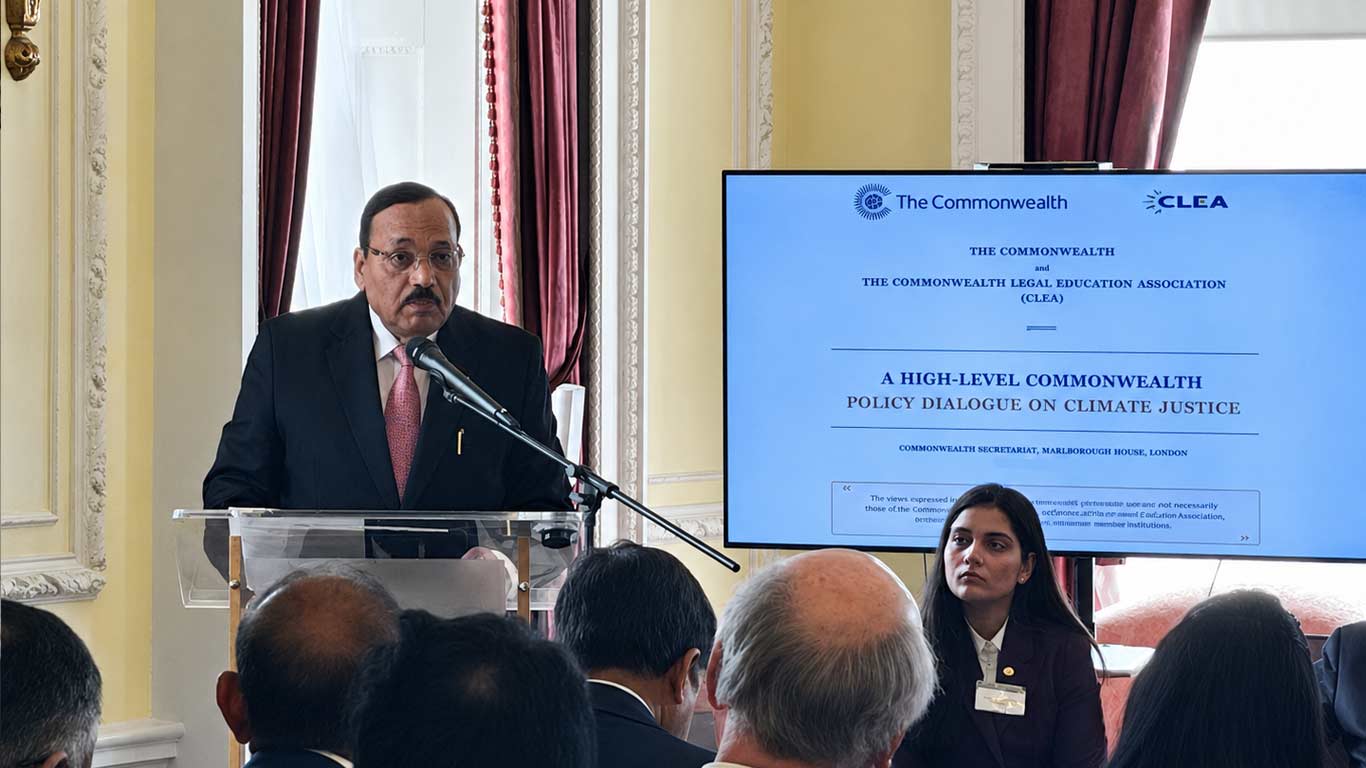
New Delhi, Aug 29 (KNN) Chief Justice of India (CJI) Surya Kant has called for a more equitable global approach to the clean energy transition, saying developing economies should not be expected to bear disproportionate costs after industrialised nations built their economies through decades of coal and oil use.
Addressing the High-Level Commonwealth Policy Dialogue on Climate Justice at Marlborough House in London, CJI Kant said the climate crisis reflected “two faces” of injustice — unequal vulnerability to climate change and unequal costs associated with the shift to cleaner energy, ANI reported.
Developing Economies Face Unequal Burden
“Countries that are finally industrialising are being asked to move rapidly towards renewable power, and often made to bear the brunt of criticism when they cannot move fast enough. In comparison, the nations urging that transition spent two centuries building their own strength on coal and oil,” Kant noted.
He said climate policies must recognise the differing circumstances of countries and ensure that the costs of the transition are distributed fairly.
The CJI also highlighted the environmental and social risks linked to minerals such as copper, cobalt and lithium that are critical to clean-energy technologies. The transition, he emphasised, should not create new forms of environmental hardship for communities in mining regions.
Climate Impacts Also Unequally Distributed
The CJI noted that climate vulnerability is also unevenly distributed, with island nations, flood-prone delta regions and drought-affected areas facing severe consequences. Small farmers and fishing communities can suffer losses of land, water and livelihoods despite having contributed relatively little to global emissions.
He said courts have an important role in addressing such inequalities. Referring to India's environmental jurisprudence, Kant noted that the Supreme Court has expanded the interpretation of the right to life to address environmental harm and climate-related concerns.
Courts Must Adapt to Climate Challenges
CJI Kant said, “Rather, the Courts should be open to borrowing ideas, approaches, and solutions that have proved useful elsewhere in the Commonwealth, while adapting them carefully to their own constitutional, social, and environmental circumstances,” as quoted by ANI.
Climate litigation, he noted, increasingly requires courts to engage with scientific evidence, technical data and policy choices, sometimes involving issues such as hydrology and emissions.
“The role of a Judge is therefore changing,” the CJI said, stressing that judges must understand not only what the law says but also the real-world context in which it is applied.
Greater Focus on Climate in Legal Education
He also called for greater emphasis on climate and environmental issues in legal education, urging closer collaboration among legal institutions, scientists and economists and greater opportunities for law students to engage with real-world environmental disputes.
The CJI said courts increasingly face the challenge of balancing developmental needs with ecological survival, particularly where legislation does not provide clear guidance.
(KNN Bureau)









 Loading...


