Green Mobility, Biofuels & EVs To Shape India’s Path To A Pollution-Free Future: Nitin Gadkari
Updated: Apr 01, 2025 12:57:41pm

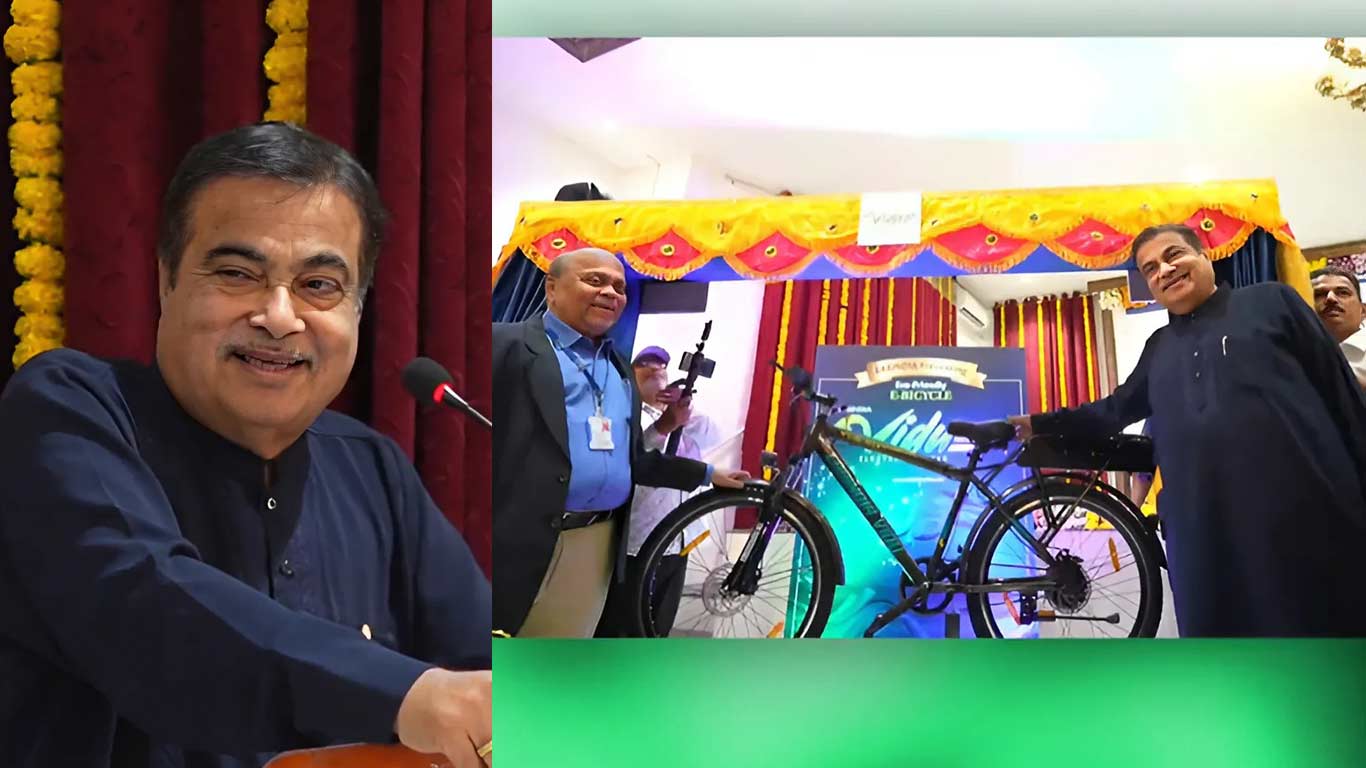
Green Mobility, Biofuels & EVs To Shape India’s Path To A Pollution-Free Future: Nitin Gadkari
Mumbai, April 1 (KNN) Pollution represents India's greatest challenge, with the transport sector being a significant contributor, according to Union Minister Nitin Gadkari, who emphasised the urgent necessity to shift from fossil fuels to alternative energy sources.
Speaking at the launch of an environmentally friendly electric cycle in Thane, the Road Transport & Highways Minister highlighted that India's dependence on fossil fuels creates both an economic burden, with annual fuel import expenses reaching Rs 22 lakh crore, and poses an environmental hazard, making the adoption of clean energy vital for the nation's advancement.
Gadkari noted that cycling should be promoted as a sustainable urban transport option considering increasing urbanisation.
He pointed out that India's automobile sector has experienced rapid growth since 2014, surpassing Japan to become the third-largest globally.
The Minister projected that by 2030, India will emerge as the world leader in electric vehicle production, significantly influencing the global automotive market.
He attributed the affordability of electric vehicles to the sharp decline in lithium-ion battery prices, which now stand at USD 100 per kilowatt-hour, bringing EVs closer to price parity with conventional fuel-powered vehicles.
"Pollution is our country's biggest challenge, and a major part of it comes from the transport sector," Gadkari stated, emphasising that the transition to electric and alternative fuels represents not merely an environmental necessity but also an economic imperative.
According to the Minister, India's young engineering talent serves as the driving force behind innovations in EV technology and alternative fuels, with startups making significant breakthroughs that position India at the forefront of the green energy revolution.
Gadkari also emphasised the growing international demand for Indian-manufactured electric two-wheelers, representing a strong export opportunity that could strengthen the economy and improve India's trade balance.
"Another key area of focus is biofuels," he added, referring to government initiatives that convert agricultural waste into biofuels, including bio-CNG and bio-aviation fuel, thereby transforming farmers into energy providers.
The Minister explained that this transformation would not only enhance rural incomes but also reduce pollution and decrease fuel import costs.
"Farmers will no longer be just food providers—they will be energy providers too," he remarked, highlighting ongoing biofuel projects aimed at reducing dependence on traditional fuels.
Gadkari called for the promotion of cycling as a sustainable urban transport option. "With increasing urbanisation, dedicated cycling infrastructure is needed to encourage environmentally friendly travel while improving road safety and decongesting cities," he added.
The Minister further stated that proactive government policies since 2014 have accelerated the growth of India's automobile sector.
"By creating a supportive ecosystem for innovation and competition, India has become an attractive hub for EV manufacturing, alternative fuels, and green mobility solutions," Gadkari noted.
He affirmed India's commitment to reducing pollution, lowering import costs, and fostering economic growth through green technologies, concluding that the combination of cutting-edge technology, young engineering talent, and agricultural innovation will ensure India's competitiveness in the evolving global landscape.
(KNN Bureau)






 Loading...


