India's Clean Energy Transition Requires USD 2.5 Trillion Investment By 2030: ASSOCHAM
Updated: Oct 31, 2026 01:12:03pm


India's Clean Energy Transition Requires USD 2.5 Trillion Investment By 2030: ASSOCHAM
New Delhi, Oct 31 (KNN) India must strengthen its electricity grid infrastructure, expand battery storage capacity and ensure the commercial viability of clean power to achieve its climate goals, industry body ASSOCHAM said on Friday, ahead of the COP31 climate summit scheduled for November 9-20 in Türkiye.
In a press statement, ASSOCHAM said that while India has made significant progress in expanding non-fossil fuel-based power capacity, greater investment in supporting infrastructure will be necessary to ensure reliable electricity supply.
"Clean energy capacity must be connected to the grid, supported by storage and made commercially viable, not just installed. Industry and government must work together to turn climate commitments into projects," said Saurabh Sanyal, Secretary General, ASSOCHAM.
Non-Fossil Capacity Crosses 300 GW
According to the industry body, India's non-fossil fuel-based power capacity reached 300.5 gigawatts (GW) in July 2026, following a record addition of 55.29 GW during FY2025-26, including 44.6 GW of solar power, reported ANI.
Non-fossil sources now account for more than 54 per cent of India's total installed electricity capacity, surpassing the country's 2030 target of 50 per cent five years ahead of schedule.
$2.5 Trillion Investment Needed For Climate Goals
ASSOCHAM highlighted the substantial investment requirements for India's clean energy transition, estimating that achieving the country's 2030 climate goals would require around USD 2.5 trillion.
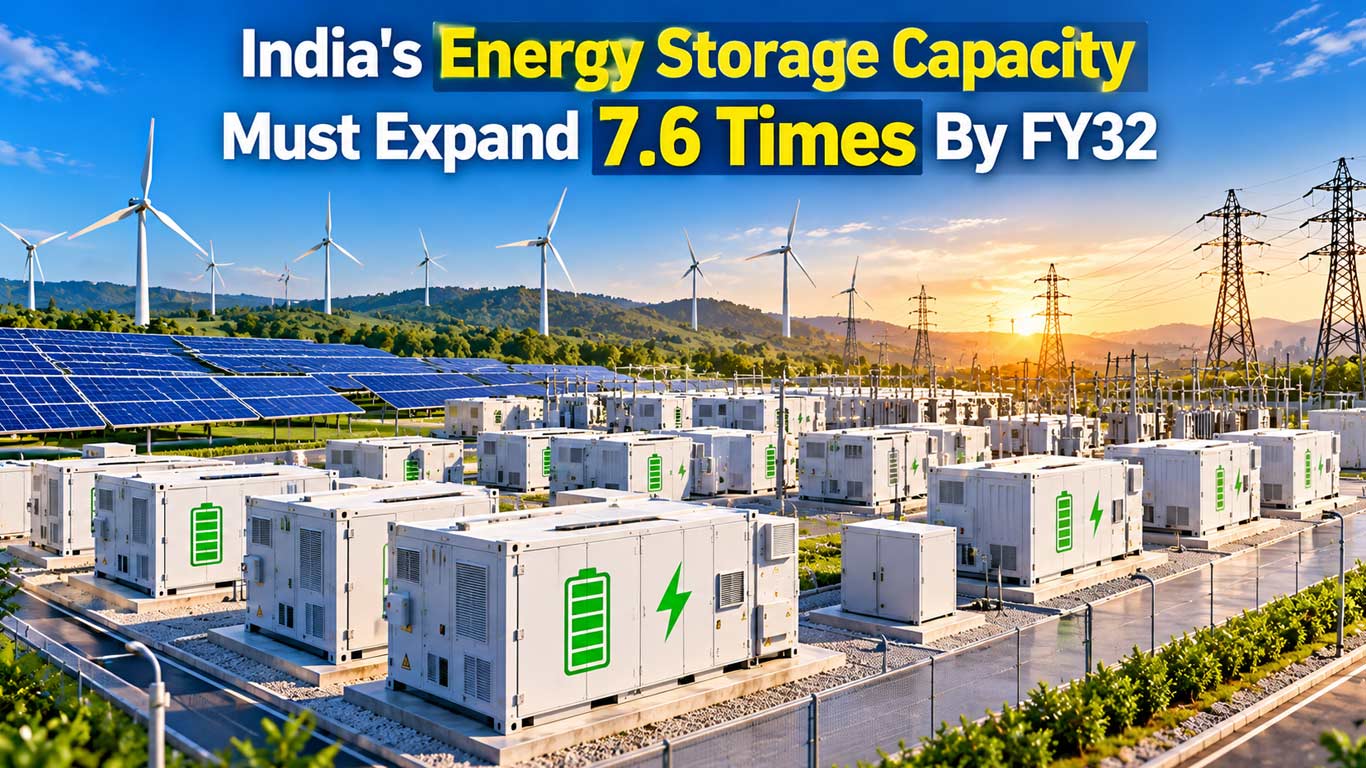
"Achieving its 2030 climate goals requires an estimated USD 2.5 trillion, while battery storage requirements are projected to rise from 37 GWh by 2027 to 236 GWh by 2031-32.
Strengthening grid infrastructure, storage and commercially viable clean power will be essential to translate installed capacity into reliable electricity," said Nirmal K Minda, President, ASSOCHAM.
The industry body said it is submitting a report titled From Pledges to Projects: India's Agenda for COP31 to the Prime Minister's Office, NITI Aayog and relevant climate-action groups.
The report outlines recommendations to mobilise climate finance, accelerate industrial decarbonisation and translate India's climate commitments into investments and implementation.
"India has demonstrated that a fast-growing economy can scale clean energy, achieving over half of its installed electricity capacity from non-fossil sources five years ahead of schedule. COP31 must now focus on implementation, with industry playing a central role," Minda said.
ASSOCHAM Plans Industry Engagement Initiatives
ASSOCHAM said it would also strengthen industry engagement through an Industry Task Force, a Business Climate Investment Agenda and representations to ministries to support clean energy investments and implementation.
(KNN Bureau)








 Loading...