India’s Ethanol Transition Key To Reducing Oil Shock Risks: KPMG Report
Updated: Jun 16, 2026 04:10:08pm

India’s Ethanol Transition Key To Reducing Oil Shock Risks: KPMG Report
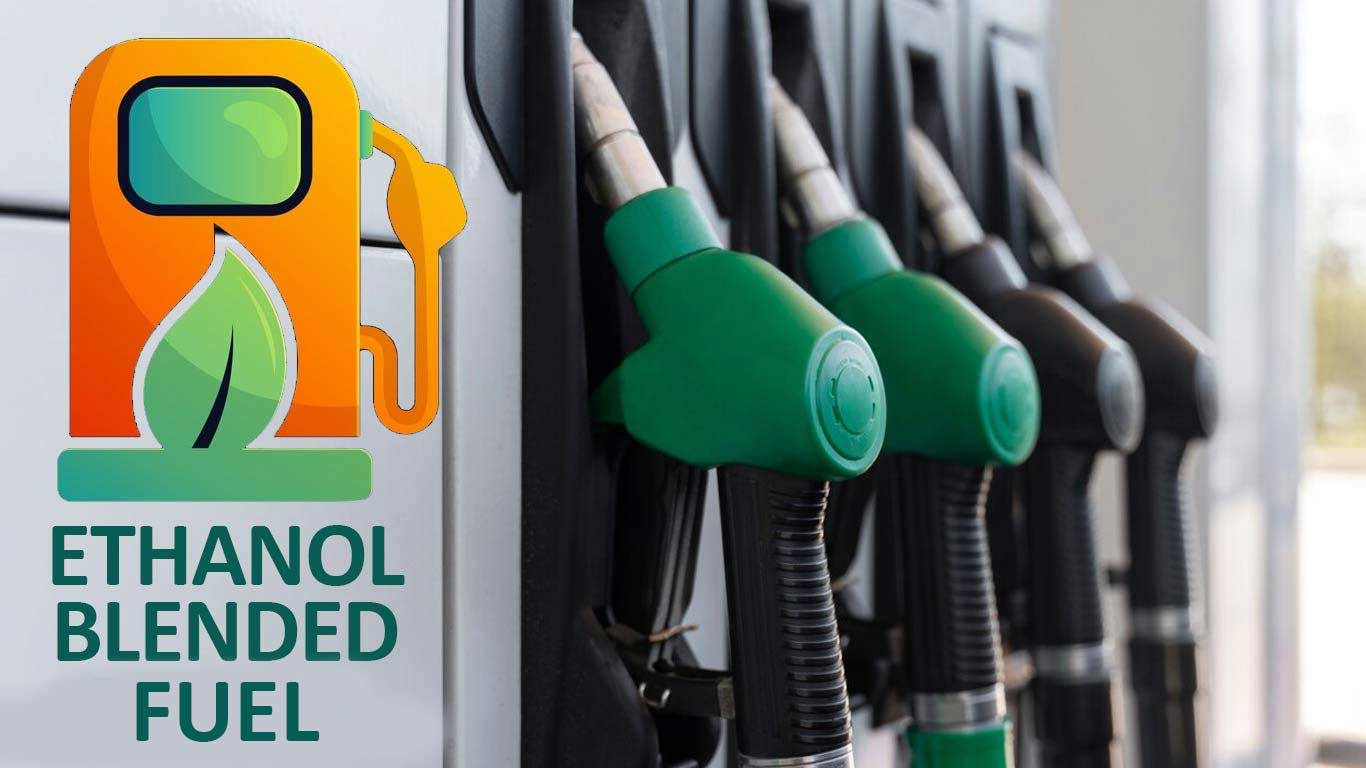
New Delhi, Jun 16 (KNN) India's ethanol blending programme has reached a significant milestone by achieving E20 — a 20 per cent ethanol blend in petrol — ahead of schedule in 2025-26, up from around 1.5 per cent in 2013-14.
However, a new KPMG report titled ‘Beyond E20: Repositioning ethanol as India's transport energy backbone’ argues that this achievement marks an inflection point rather than an endpoint, and that a fundamental shift in how ethanol is used within India's transport fuel system is now needed.
From Blending Component to Energy Backbone
The report positions ethanol as a potential “transport energy backbone” capable of reducing India's dependence on crude oil imports and moderating the impact of global price volatility.
Given that India's fuel economy remains sensitive to fluctuations in international oil markets, KPMG argues that a domestically produced and scalable fuel like ethanol can serve as a stabilising lever — particularly during periods of supply disruptions or price shocks.
KPMG introduces the concept of ethanol as a “crude shock buffer,” under which ethanol utilisation can be expanded during periods of high crude prices or supply disruptions to partially substitute petrol, and scaled back or redirected toward alternative uses such as Sustainable Aviation Fuel (SAF) when crude prices are low.
The report notes that during acute disruptions such as the Russia-Ukraine conflict and recent geopolitical tensions involving Iran, this kind of flexibility becomes especially critical.
Challenges Beyond E20
The report identifies several structural constraints that need to be addressed before India can move meaningfully beyond E20.
These include dependence on first-generation (1G) feedstocks such as sugarcane and grains, which raise concerns about scalability and pressure on food systems; E20 acting as a demand ceiling with supply beginning to exceed absorption; pricing rigidity within the current cost-based procurement framework; infrastructure not designed for multi-grade fuel distribution; and limited penetration of flex-fuel vehicles (FFVs).
Five Pillars for the Next Phase
To address these challenges, KPMG outlines a five-pillar framework: feedstock diversification, demand expansion beyond E20, pricing evolution toward greater market responsiveness, infrastructure upgrades for multi-grade fuel systems, and the development of a compatible vehicle ecosystem including wider flex-fuel vehicle deployment.
The report underscores the importance of advancing second-generation (2G) ethanol derived from agricultural residues, municipal solid waste and other non-food feedstocks to enable long-term scaling without straining food systems or natural resources.
Higher ethanol blends such as E22-E30 and flex-fuel pathways such as E85 and E100 are identified as the next steps in this transition.
(KNN Bureau)







 Loading...


